
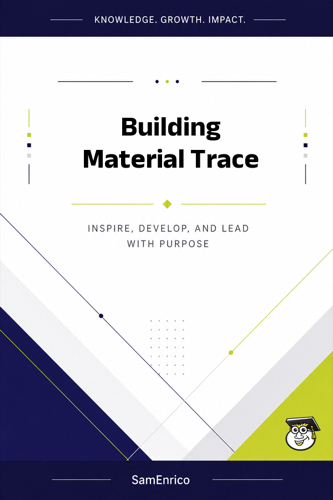
Non-FictionTrue CrimeConstruction
Building Material Trace eBook
Drywall, insulation, and concrete particle evidenc
Drywall, insulation, and concrete particle evidence.
Formats
Free sample
Chapter 1: Dust Never Lies...--–- The first thing a forensic investigator learns is this: every contact leaves a trace. The second thing—often learned the hard way—is that building materials are among the most persistent, communicative, and overlooked witnesses at any crime scene. A single fleck of drywall dust no larger than a human hair can tell you where a suspect stood, which way they moved, whether they were running or walking, and even what brand of construction board they punched through. Concrete spall—those tiny crescent-shaped chips knocked loose from a wall or floor—can trace a bullet back to its firing angle. A single fiber of fiberglass insulation, caught in a jacket zipper, can link a person to a specific attic, a specific renovation, and a specific time window.
Dust, in the built environment, never lies. It only waits to be read.This chapter opens with the foundational principle of forensic science: Locard’s Exchange Principle (“every contact leaves a trace”) applied specifically to indoor and construction-heavy environments. It argues that drywall dust, concrete spall (chipping), and insulation fibers are not merely dirt but “silent witnesses” that can link a suspect to a violent crime, burglary, or accident. The chapter provides an overview of the nine most encountered building materials in forensic casework—gypsum, cellulose, fiberglass, concrete, brick, wood, paint, glass, and asbestos—explaining why each is forensically significant (e.g., paint can be layer-matched, glass has refractive index). Note: Safe insulation (loam) is a specialty product for safes and is discussed only in Chapter 9 (Ballistics and Burglaries); it is not a general building material and thus omitted from this introductory list.
Rather than a single-material case study that would unbalance the introduction, this chapter presents a brief multi-material example: a burglary where drywall dust on a suspect’s sleeve, fiberglass fibers on a pry bar, and concrete spall from a broken foundation vent collectively placed the suspect inside a specific construction site. This sets the stage for the detailed material-specific chapters to follow. The chapter concludes with an overview of the book’s structure and a glossary preview.The Unspoken Testimony of Dust Every crime scene tells a story, but not all narrators use words. In the built environment—the world of homes, offices, warehouses, and construction sites—the most honest witnesses are the microscopic particles that cling to clothing, tools, and skin. These particles do not forget.
They do not lie. They do not confuse dates or misremember faces. They simply record, particle by particle, the physical reality of contact.Consider a typical burglary scene: a rear window pried open, a desk drawer rifled, a back door unlocked from the inside. The detective notes the pry marks. The technician lifts fingerprints from the drawer pull.
But what about the dust on the window sill? What about the tiny chips of paint embedded in the carpet near the door? What about the single strand of fiber caught on the jagged edge of the broken window frame? These are not afterthoughts. They are often the only evidence that survives a gloved, cautious intruder.Building materials are uniquely suited to forensic analysis because they are both ubiquitous and variable.
A house built in 1978 contains different drywall than a house built in 2005. An apartment renovated in 1999 has different insulation than one untouched since 1965. A concrete foundation poured in 1952 contains different air-void structures than one poured in 1985. These differences are not random—they are the product of manufacturing histories, mining sources, regulatory changes, and technological innovations. And they are precisely what allows a forensic scientist to say, with measurable confidence, that a particular dust particle came from this wall, not that one.This book is about reading those particles.
It is about understanding the geology of gypsum, the chemistry of cement, the morphology of mineral wool, and the optical properties of fiberglass. It is about the instruments that magnify, illuminate, and interrogate these materials until they reveal their secrets. And it is about the chain of custody, the courtroom testimony, and the expert report that turns a speck of dust into a conviction or an exoneration.The Nine Witnesses: An Overview of Forensic Building Materials Before we dive into the science of identification, we must first introduce the cast of characters. These nine building materials account for the vast majority of trace evidence recovered from indoor crime scenes, burglaries, accidents, and body concealments. Each has unique physical, chemical, and optical properties that make it identifiable, comparable, and sometimes dateable.1.
Gypsum (Drywall)Gypsum—calcium sulfate dihydrate, Ca SO₄·2H₂O—is the core material of drywall, also known as gypsum wallboard (GWB) or Sheetrock®. It is soft enough to scratch with a fingernail (Mohs hardness of 2), white to off-white in color, and slightly soluble in water. When drywall is cut, broken, or sanded, it produces a fine dust of angular, crystalline particles that range from 1 to 50 microns in diameter. These particles are electrostatic—they cling to clothing, hair, and tool handles with surprising tenacity. As we will explore in Chapter 4, drywall can be typed by its paper facing, its core additives (starch, fungicides, glass fibers), and its trace elemental impurities (strontium, magnesium, rare earth elements).
Moreover, synthetic gypsum (a byproduct of coal-fired power plant flue-gas desulfurization) has a different isotopic signature than natural mined gypsum, allowing a forensic scientist to distinguish between the two.Forensic significance: Drywall dust is nearly always present at indoor crime scenes involving forced entry, wall damage, or structural alteration. It persists for days to weeks on clothing (especially after dry cleaning; water-based washing dissolves it). It is easily transferred to tools, shoes, vehicle interiors, and skin.2. Cellulose (Wood Fiber Insulation)Cellulose insulation is made from shredded, chemically treated newspaper—primarily recycled paper fibers treated with boric acid or ammonium sulfate as fire retardants and insecticides. Under a microscope, cellulose fibers appear flat, ribbon-like, with characteristic inked flecks from newsprint and occasional boric acid crystals adhering to the surface.
Cellulose insulation is anisotropic under polarized light (it exhibits birefringence due to its crystalline cellulose structure).Forensic significance: Cellulose insulation is common in attics, wall cavities, and floors of homes built or retrofitted between 1950 and 1990. Its chemical treatment (boric acid) can be detected by simple spot tests or more sophisticated FT-IR analysis. Finding cellulose fibers on a suspect’s clothing suggests they were in an attic or wall cavity—common locations for hiding evidence or gaining entry between units in multifamily housing.3. Fiberglass (Glass Fiber Insulation)Fiberglass insulation consists of amorphous (non-crystalline) silica fibers drawn from molten glass, bound with a thermosetting resin (typically phenol-formaldehyde or a more modern acrylic binder), and often backed with kraft paper or foil. Under the microscope, fiberglass fibers appear as smooth, cylindrical, transparent to translucent rods with uniform diameter (typically 5–15 microns) and no internal structure.
Fiberglass is isotropic under polarized light—it shows no birefringence because it is non-crystalline. This optical property is a key diagnostic feature (see Chapter 6).Forensic significance: Fiberglass is the most common insulation in North American homes built after 1940. It is easily shed during installation or disturbance. Fibers caught in clothing zippers, tool joints, or vacuum cleaner bags can be matched to a specific roll of insulation…
This is the end of the free sample. Get the eBook to keep going. Buy now
About this book
Details
- Author
- Bader Gregorio
- Publisher
- SamEnrico
- Language
- English
- Genre
- Non-Fiction, True Crime, Construction
- Released
- 2026-06-08
- Pages (approx.)
- 158
- Available as
- eBook, Audiobook

Read better in the ZLOADR app
Your eBooks on your phone or tablet. Sign in with your SamEnrico account and start reading.
More by Bader Gregorio
 The Opioid Overdose GuideBader Gregorio$11.99
 Firefighter Stress ResilienceBader Gregorio$11.99
 Ethel Merman Broadway QueenBader Gregorio$11.99
 Child Loss Writing TherapyBader Gregorio$11.99
 Second Trimester Loss GuideBader Gregorio$11.99
 Robert Mugabe Early YearsBader Gregorio$11.99
 SRS Research EvidenceBader Gregorio$11.99
 The Iron Crown of Prussia: How Frederick the Great Forged a Military LeviathanBader Gregorio$11.99
 The Alchemists of Enlightenment: Lavoisier and the Birth of Modern ChemistryBader Gregorio$11.99
 Neapolitan Mastiff: Droopy & ProtectiveBader Gregorio$11.99
 How to Produce ScrewsBader Gregorio$11.99
 How to Produce Floor ChairsBader Gregorio$11.99
You may also like
 Hong Kong Handover 1997Dunn Johnnie$11.99
 Zumba For Postnatal Recovery CourseNeal Christian$11.99
 Zumba for BeginnersLadner Nikia$11.99
 YouTube Comment Mining GuideHumes Pandora$12.99
 Worry Box MeditationCarlin Rudy$11.99
 Workplace Stress MeditationNguyen Lynn$11.99
 Workplace Stress and Sleep RepairHawley Ivory$11.99
 Workplace Perfectionism CureDelaney Jeffry$11.99
 Workplace Injustice Anger GuideWallen Isabelle$11.99
 Work Addiction and Burnout LinkGreenwood Ester$11.99
 Women in Yoga and WellnessBeattie Galina$11.99
 Women in Stand Up ComedyChun Evangeline$11.99