
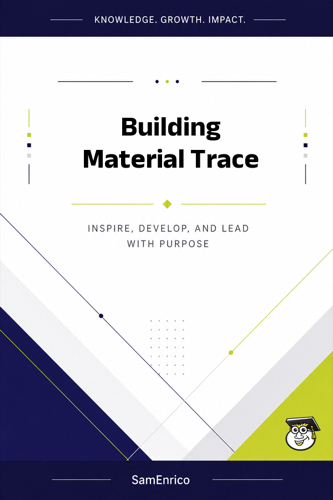
Non-FictionTrue CrimeConstruction
Building Material Trace
Drywall, insulation, and concrete particle evidenc
Drywall, insulation, and concrete particle evidence.
Formats
About this book
Free sample
Chapter 1: Dust Never Lies...--–- The first thing a forensic investigator learns is this: every contact leaves a trace. The second thing—often learned the hard way—is that building materials are among the most persistent, communicative, and overlooked witnesses at any crime scene. A single fleck of drywall dust no larger than a human hair can tell you where a suspect stood, which way they moved, whether they were running or walking, and even what brand of construction board they punched through. Concrete spall—those tiny crescent-shaped chips knocked loose from a wall or floor—can trace a bullet back to its firing angle. A single fiber of fiberglass insulation, caught in a jacket zipper, can link a person to a specific attic, a specific renovation, and a specific time window.
Dust, in the built environment, never lies. It only waits to be read.This chapter opens with the foundational principle of forensic science: Locard’s Exchange Principle (“every contact leaves a trace”) applied specifically to indoor and construction-heavy environments. It argues that drywall dust, concrete spall (chipping), and insulation fibers are not merely dirt but “silent witnesses” that can link a suspect to a violent crime, burglary, or accident. The chapter provides an overview of the nine most encountered building materials in forensic casework—gypsum, cellulose, fiberglass, concrete, brick, wood, paint, glass, and asbestos—explaining why each is forensically significant (e.g., paint can be layer-matched, glass has refractive index). Note: Safe insulation (loam) is a specialty product for safes and is discussed only in Chapter 9 (Ballistics and Burglaries); it is not a general building material and thus omitted from this introductory list.
Rather than a single-material case study that would unbalance the introduction, this chapter presents a brief multi-material example: a burglary where drywall dust on a suspect’s sleeve, fiberglass fibers on a pry bar, and concrete spall from a broken foundation vent collectively placed the suspect inside a specific construction site. This sets the stage for the detailed material-specific chapters to follow. The chapter concludes with an overview of the book’s structure and a glossary…
This is the end of the free sample. Get the eBook to keep going. Buy now
Contents
- Chapter 1
- Chapter 2
- Chapter 3
- Chapter 4
- Chapter 5
- Chapter 6
- Chapter 7
- Chapter 8
- Chapter 9
- Chapter 10
- Chapter 11
- Chapter 12
Details
- Author
- Bader Gregorio
- Publisher
- SamEnrico
- Language
- English
- Genre
- Non-Fiction, True Crime, Construction
- Released
- 2026-06-08
- Pages (approx.)
- 158
- Available as
- eBook, Audiobook

Read better in the ZLOADR app
Your eBooks on your phone or tablet. Sign in with your SamEnrico account and start reading.
More by Bader Gregorio
 The Opioid Overdose GuideBader Gregorio$11.99
 Firefighter Stress ResilienceBader Gregorio$11.99
 Ethel Merman Broadway QueenBader Gregorio$11.99
 Child Loss Writing TherapyBader Gregorio$11.99
 Second Trimester Loss GuideBader Gregorio$11.99
 Robert Mugabe Early YearsBader Gregorio$11.99
 SRS Research EvidenceBader Gregorio$11.99
 The Iron Crown of Prussia: How Frederick the Great Forged a Military LeviathanBader Gregorio$11.99
 The Alchemists of Enlightenment: Lavoisier and the Birth of Modern ChemistryBader Gregorio$11.99
 Neapolitan Mastiff: Droopy & ProtectiveBader Gregorio$11.99
 How to Produce ScrewsBader Gregorio$11.99
 How to Produce Floor ChairsBader Gregorio$11.99
You may also like
 Hong Kong Handover 1997Dunn Johnnie$11.99
 Zumba For Postnatal Recovery CourseNeal Christian$11.99
 Zumba for BeginnersLadner Nikia$11.99
 YouTube Comment Mining GuideHumes Pandora$12.99
 Worry Box MeditationCarlin Rudy$11.99
 Workplace Stress MeditationNguyen Lynn$11.99
 Workplace Stress and Sleep RepairHawley Ivory$11.99
 Workplace Perfectionism CureDelaney Jeffry$11.99
 Workplace Injustice Anger GuideWallen Isabelle$11.99
 Work Addiction and Burnout LinkGreenwood Ester$11.99
 Women in Yoga and WellnessBeattie Galina$11.99
 Women in Stand Up ComedyChun Evangeline$11.99