
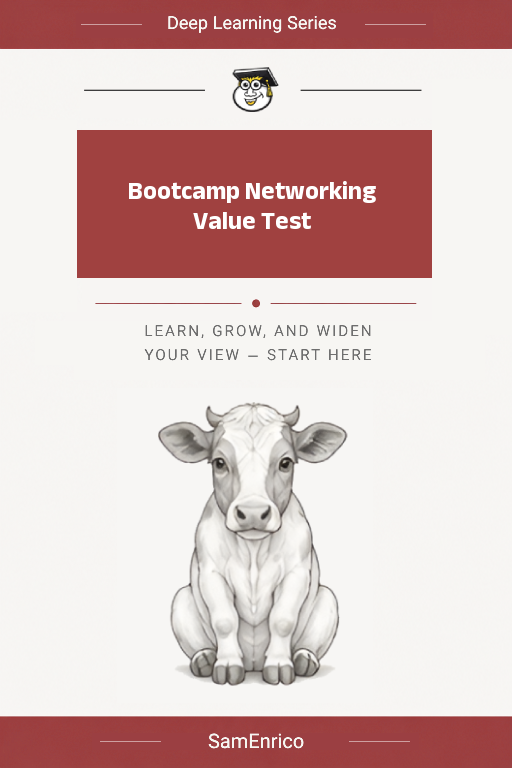
Non-FictionStudent's ShortcutNetwork Analysis
Bootcamp Networking Value Test eBook
Compare alumni networks, career fairs, and mentor
by Sawyer Ute
Compare alumni networks, career fairs, and mentor connections from bootcamps versus university CS department resources globally.
Formats
Free sample
Chapter 1: The 43.3% Rule--–- Maria had done everything right. She graduated summa cum laude from a top-twenty computer science program, completed two summer internships at Fortune 500 companies, and had a 3.9 GPA. Her university’s career center told her she was “a top-tier candidate.” She had access to 94,000 alumni on Linked In. She sent 147 carefully crafted messages over three months. She received 4 replies.
Two were recruiters who ghosted after the initial screening. One was a classmate from her data structures course asking if she knew anyone hiring. One was a professor who hadn’t worked in industry since 2008 and suggested she “try applying online.”Three months after graduation, Maria was still unemployed. She had done everything her university told her to do. She had the grades.
She had the internships. She had the alumni network. And none of it worked.Then she did something desperate. She paid $500 for alumni Slack access to a bootcamp she had never attended—a program called Codesmith that she had dismissed during her college applications as “not rigorous enough.” On her first day in the Slack channel, she posted a question about a technical interview problem she was stuck on. At 9:14 AM, she hit send.
At 9:28 AM, a stranger named Jeremy—a bootcamp graduate who had been working at a mid-sized fintech company for eight months—responded with a line-by-line explanation. At 9:32 AM, Jeremy sent her a referral link to his company’s open engineering role. By 11:00 AM, she had a screening call scheduled for the following Tuesday.Maria got the job. She never met Jeremy in person. She never took a single class at his bootcamp.
But she got more networking value in fourteen minutes from a complete stranger in a Slack channel than she got from three months and 147 messages to her university’s 94,000 alumni.This book is the reason why.The Great Unbundling For most of the last century, the four-year university degree was the only legitimate gateway to a professional career. You paid for access to three things: the curriculum (knowledge), the credential (the degree on your resume), and the community (the alumni network). These three elements were bundled together. You could not buy them separately. If you wanted the network, you had to pay for the degree.
If you wanted the knowledge, you had to sit through the lectures. The bundle was non-negotiable.That bundle is now broken.The curriculum has been unbundled by You Tube tutorials, free online courses from MIT Open Course Ware, and paid platforms like Coursera and Udemy. You can learn data structures from a Stanford professor without ever applying to Stanford. The credential has been unbundled by portfolio-based hiring, technical interviews that test actual coding ability, and employers who have realized that a Git Hub repository is often a better predictor of job performance than a transcript. And the community—the network—is being unbundled by bootcamp Slack channels, Discord servers, and paid access models that separate the social capital from the diploma.The central argument of this book is that the network was always the most valuable part of the bundle, and it is now available for purchase separately.According to Stack Overflow’s 2023 Developer Survey, 43.3% of professional developers are now self-taught or bootcamp-educated.
That number was 29% in 2018. The trend is accelerating. Employers are hiring based on what you can do, not where you learned to do it. But this statistic is often misunderstood. It does not mean that degrees are worthless.
It means that the degree as a gatekeeper is dying. The degree as a ceiling raiser for senior roles still matters, as we will explore in Chapter 8. But for the majority of developers in the workforce today—the junior and mid-level engineers who actually ship code—the degree is no longer required.If the degree is no longer required, then what separates the employed from the unemployed? What separates the person who gets a job in six weeks from the person who searches for six months?The answer is the network.But not the network you think. Not the alumni directory.
Not the career fair. Not the list of 94,000 names that your university emails you once a year. A different kind of network. One built on speed, specificity, and near-peer reciprocity. One that exists not in a database but in a Slack channel.
One where the average response time to a question is measured in minutes, not days.The Network Value Test: A New Framework Before we go any further, I need to introduce the central framework of this book: The Network Value Test. This is a simple, measurable way to evaluate any educational program—university, bootcamp, online course, or otherwise—not by its curriculum, but by the networking outcomes it actually delivers.The test has three components:1. Response Rate The percentage of people in your network who reply to a cold outreach message within 48 hours. This measures the liquidity of your network—how easily you can convert a name into a conversation.2. Referral Velocity The number of job interviews you obtain via referral within a 30-day period of active searching.
This measures the conversion power of your network—how many of your conversations turn into opportunities.3. Mentor Accessibility The average time it takes you to get a technical or career question answered by someone in your network. This measures the support density of your network—whether help exists when you need it.These three metrics form the Network Value Score, calculated as follows:Network Value Score = (Response Rate × 0.4) + (Referral Velocity × 0.4) + (Mentor Accessibility × 0.2)Why these weights? Because response rate and referral velocity are the two most important predictors of job search success. Mentor accessibility matters, but it is a lagging indicator—if you have high response rates and referral velocity, mentor accessibility will follow.Let us apply this test to Maria’s university network versus her bootcamp Slack access.Metric University Alumni (Maria’s experience)Bootcamp Slack (Maria’s experience)Response Rate4 replies / 147 messages = 2.7%1 reply / 1 message (first attempt) = 100%Referral Velocity0 interviews in 90 days1 interview in 14 minutes Mentor Accessibility Average 72+ hours (professors), no response (alumni)14 minutes Maria’s University Network Value Score: (0.027 × 0.4) + (0 × 0.4) + (0 × 0.2) = 0.0108.
Less than 1 out of 100.Maria’s Bootcamp Slack Network Value Score: (1.0 × 0.4) + (1.0 × 0.4) + (1.0 × 0.2) = 1.0. A perfect score.The university network had more people. The bootcamp network had more value per person. This is the central insight of the book: network size is a vanity metric. Network responsiveness is the only metric that matters.The Unbundling of Community Why are bootcamp communities so much more responsive than university alumni networks?
The answer lies in what I call the “near-peer advantage.”A near-peer is someone who is slightly ahead of you but not so far ahead that they have forgotten what it is like to be where you are. A tenured professor at a research university may be brilliant. They may have a Ph D. They may have published papers in top conferences. But they have not applied for an entry-level software engineering job in twenty years.
They do not know what the current interview process looks like. They do not know which companies are hiring aggressively and which are in a hiring freeze. They cannot tell you the difference between a system design interview at Google…
This is the end of the free sample. Get the eBook to keep going. Buy now
About this book
Details
- Author
- Sawyer Ute
- Publisher
- SamEnrico
- Language
- English
- Genre
- Non-Fiction, Student's Shortcut, Network Analysis
- Released
- 2026-06-01
- Pages (approx.)
- 143
- Available as
- eBook, Audiobook

Read better in the ZLOADR app
Your eBooks on your phone or tablet. Sign in with your SamEnrico account and start reading.
More by Sawyer Ute
 Personal Ing For Success Podcast GuestingSawyer Ute$11.99
 Procrastination Cure with PrioritizationSawyer Ute$11.99
 Cocaine Addiction Recovery HandbookSawyer Ute$11.99
 Opioid Induced Androgen DeficiencySawyer Ute$11.99
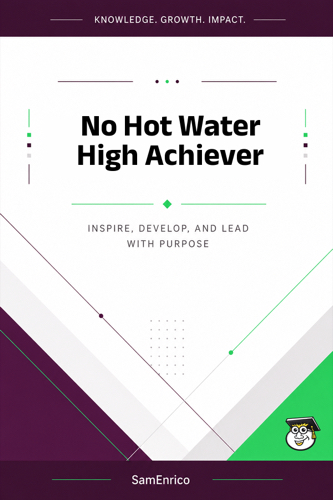 No Hot Water High AchieverSawyer Ute$11.99
 The Frozen Cure: A Scientist’s Race Against Time in the Middle East’s Arctic WastelandSawyer Ute$11.99
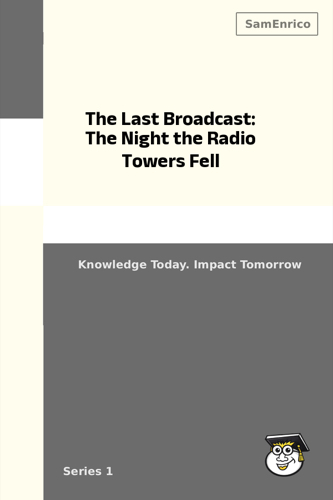 The Last Broadcast: The Night the Radio Towers FellSawyer Ute$11.99
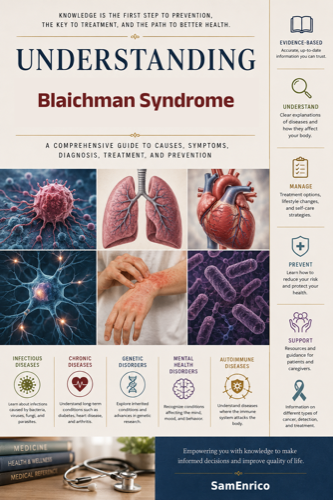 Understanding Blaichman SyndromeSawyer Ute$17.99
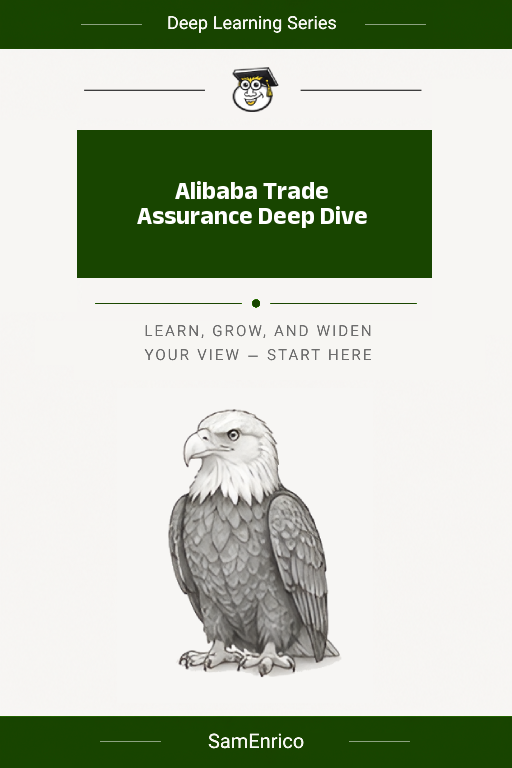 Alibaba Trade Assurance Deep DiveSawyer Ute$12.99
 Special Effects TechnicianSawyer Ute$11.99
 How to Start a Powder Made of Copper Business (Beginners Guide)Sawyer Ute$11.99
You may also like
 Hong Kong Handover 1997Dunn Johnnie$11.99
 Zumba For Postnatal Recovery CourseNeal Christian$11.99
 Zumba for BeginnersLadner Nikia$11.99
 YouTube Comment Mining GuideHumes Pandora$12.99
 Worry Box MeditationCarlin Rudy$11.99
 Workplace Stress MeditationNguyen Lynn$11.99
 Workplace Stress and Sleep RepairHawley Ivory$11.99
 Workplace Perfectionism CureDelaney Jeffry$11.99
 Workplace Injustice Anger GuideWallen Isabelle$11.99
 Work Addiction and Burnout LinkGreenwood Ester$11.99
 Women in Yoga and WellnessBeattie Galina$11.99
 Women in Stand Up ComedyChun Evangeline$11.99