
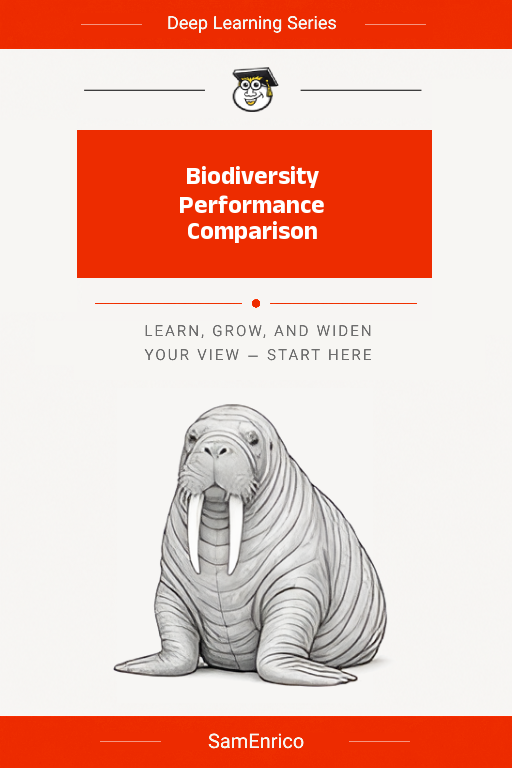
Non-FictionStrategic AtlasBiodiversity
Biodiversity Performance Comparison eBook
Benchmarks public firms on biodiversity impact, la
Benchmarks public firms on biodiversity impact, land use, deforestation commitments, and nature-based solution investments.
Formats
Free sample
Chapter 1: The Blind Portfolio--The email arrived at 6:47 AM on a Tuesday, which was already a bad sign. Good news does not travel before coffee. The portfolio manager, Sarah Chen, had been running the $12 billion Natural Resources fund at Meridian Capital for eleven years. She had seen commodity cycles boom and bust. She had navigated the 2008 financial crisis, the 2014 oil price crash, and the 2020 pandemic sell-off.
She had never, in eleven years, received an alert about bees.The Bloomberg terminal screen glowed in the dim morning light of her Manhattan office. The alert read: “ALERT: Pollination services collapse – Central Valley California. Crop yield projections revised downward 40 percent. Almond prices plus 320 percent since January 1. Exposure warning: Western Food Group – 68 percent of almond sourcing from affected region.”Sarah pulled up Western Food Group’s latest quarterly filing.
The company was a consumer staple giant. Packaged foods. Cereals. Plant-based milks. Snack bars.
It was the kind of boring, predictable business that pension funds loved. Low beta. Reliable dividend. And according to her models, fairly valued with a price-to-earnings ratio of 18.4.She scrolled to the risk factors section. Climate risk?
Yes. A brief mention of potential weather volatility. Supply chain risk? Yes. The standard boilerplate about supplier diversification.
But biodiversity? Ecosystem services? Pollinator dependency? Nothing. The word “bee” appeared zero times.
The word “pollination” appeared zero times. The word “nature” appeared exactly once, in a sentence about natural flavors.Sarah leaned back in her chair and stared at the ceiling. The fund’s largest position was Western Food Group. 4.2 percent of the portfolio. Over $500 million in market exposure.
And according to the Bloomberg alert, a key input for that company’s supply chain had just experienced a 320 percent price spike due to a biological phenomenon that was not mentioned anywhere in the company’s risk disclosures.She had a choice to make. Sell immediately and take the loss on the bid-ask spread? Hold and hope the pollination crisis was temporary? Or dig deeper into a risk that her models, and most of Wall Street, seemed to have entirely missed.She picked up the phone and called her head of research. “Cancel my morning meetings,” she said.
“I need to learn about bees.”The Most Important Statistic You Have Never Heard What Sarah Chen discovered over the following weeks would change how she managed money forever. And it begins with a statistic that every investor should memorize, yet almost none know.The World Economic Forum publishes an annual Global Risks Report, surveying approximately one thousand experts from business, government, and academia about the most severe threats facing humanity over the next decade. For years, the top risks were familiar. Infectious diseases. Weapons of mass destruction.
Fiscal crises. Asset bubbles. But starting in 2020, a new risk began climbing the ranks. By 2024, it had entered the top five and has remained there ever since.That risk is called Biodiversity Loss and Ecosystem Collapse.Not climate change, although that remains a separate top-tier risk. Not pollution.
Not resource depletion. Biodiversity loss. The systematic dismantling of the living systems that support all economic activity.Here is the statistic that puts this risk into financial terms that the most hardened chief financial officer cannot ignore. Over half of global GDP, approximately 44 trillion dollars, is moderately or highly dependent on ecosystem services. That is not a typo.
Forty-four trillion dollars. Every year. The global economy is roughly 100 trillion dollars in annual output, meaning nearly half of everything humanity produces depends, directly or indirectly, on the free work that nature performs.What is an ecosystem service? It is a term for something quite simple. The benefits that humans receive from functioning ecosystems.
These services fall into four broad categories.Provisioning services are the tangible products we extract from nature. Food. Fresh water. Timber. Fiber.
Medicinal resources. When you eat a fish, drink a glass of water, or build a house with lumber, you are consuming a provisioning service.Regulating services are the invisible infrastructure that makes civilization possible. Pollination of crops. Water filtration. Flood control.
Climate regulation. Disease suppression. Air quality maintenance. When a bee pollinates an almond tree, that is a regulating service. When a wetland absorbs storm surge and prevents coastal flooding, that is a regulating service.
When a forest sequesters carbon dioxide, that is a regulating service.Supporting services are the foundational processes that enable all other services. Soil formation. Nutrient cycling. Photosynthesis. Primary production.
Without healthy soil, crops cannot grow. Without nutrient cycling, dead organic matter piles up and ecosystems choke.Cultural services are the non-material benefits. Recreation. Tourism. Spiritual value.
Aesthetic appreciation. When you pay to hike in a national park, you are consuming a cultural service.None of these services appear on any corporate balance sheet. None of them are priced into any supply chain model. None of them are depreciated, hedged, or insured at replacement value. They are treated as infinite, free, and indestructible.
They are none of those things.The 44 trillion dollar figure comes from a landmark study published in 2020 by the World Economic Forum in collaboration with Pw C. The researchers analyzed 163 economic sectors across 190 countries, mapping each sector’s dependency on specific ecosystem services. They found that 15 out of 21 industries globally have a moderate to high direct dependency on nature. The most dependent sectors are agriculture, construction, food and beverage, pharmaceuticals, water utilities, and fisheries. But even technology companies, often perceived as clean or dematerialized, depend indirectly on ecosystem services through their supply chains for rare earth minerals, water for semiconductor fabrication, and timber for packaging.The researchers also calculated something even more alarming.
Not only is 44 trillion dollars of economic output dependent on nature, but approximately 13 trillion dollars of that output is at high or very high risk of disruption due to ecosystem decline. That means that for one out of every eight dollars in the global economy, the underlying natural infrastructure is degrading at a rate that will likely cause direct economic harm within the next decade.To put that in perspective, the 2008 financial crisis wiped out approximately 15 trillion dollars in global wealth over two years. The COVID-19 pandemic caused roughly 12 trillion dollars in economic losses in 2020 alone. The projected losses from nature-related business disruption over the next decade are of the same magnitude as the two worst economic shocks of the twenty-first century combined.And unlike those shocks, which were acute and temporary, biodiversity loss is chronic and accelerating. Once a species is extinct, it does not come back.
Once a forest is converted to a palm oil plantation, the soil structure, hydrology, and species composition are altered for centuries. Once a coral reef bleaches and dies, the fisheries that depended on it collapse permanently.The Silent Collapse Sarah Chen’s bee problem was not hypothetical. Between 2015 and 2024, commercial beekeepers in the United States reported average annual colony losses of 35 to 45 percent. A level that is economically unsustainable. The primary drivers were a combination of factors.
Neonicotinoid pesticides. Habitat loss. Parasites, particularly the Varroa destructor mite. And climate-related shifts in flowering patterns.The consequences for agriculture were immediate and measurable. According to a 2023 study in the journal Environmental Research Letters, pollinator decline has already reduced global agricultural output by approximately…
This is the end of the free sample. Get the eBook to keep going. Buy now
About this book
Details
- Author
- Mcfadden Jazmin
- Publisher
- SamEnrico
- Language
- English
- Genre
- Non-Fiction, Strategic Atlas, Biodiversity
- Released
- 2026-05-30
- Pages (approx.)
- 151
- Available as
- eBook, Audiobook

Read better in the ZLOADR app
Your eBooks on your phone or tablet. Sign in with your SamEnrico account and start reading.
More by Mcfadden Jazmin
 Remote Review for Finance TeamsMcfadden Jazmin$11.99
 Loci for Travel PackingMcfadden Jazmin$11.99
 Romantic Interest Nonverbal CluesMcfadden Jazmin$11.99
 Carbon Capture Investment OutlookMcfadden Jazmin$11.99
 Adoption Trauma TriggersMcfadden Jazmin$11.99
 Sumo in America: The Unlikely Rise of a Japanese TraditionMcfadden Jazmin$11.99
 HR Mentor LinkedIn Search GuideMcfadden Jazmin$12.99
 Understanding Parathyroid CancerMcfadden Jazmin$17.99
 Game Warden WorkMcfadden Jazmin$11.99
 How to Become a Set-up MechanicMcfadden Jazmin$11.99
You may also like
 Hong Kong Handover 1997Dunn Johnnie$11.99
 Zumba For Postnatal Recovery CourseNeal Christian$11.99
 Zumba for BeginnersLadner Nikia$11.99
 YouTube Comment Mining GuideHumes Pandora$12.99
 Worry Box MeditationCarlin Rudy$11.99
 Workplace Stress MeditationNguyen Lynn$11.99
 Workplace Stress and Sleep RepairHawley Ivory$11.99
 Workplace Perfectionism CureDelaney Jeffry$11.99
 Workplace Injustice Anger GuideWallen Isabelle$11.99
 Work Addiction and Burnout LinkGreenwood Ester$11.99
 Women in Yoga and WellnessBeattie Galina$11.99
 Women in Stand Up ComedyChun Evangeline$11.99