
Non-FictionInformativeEducational
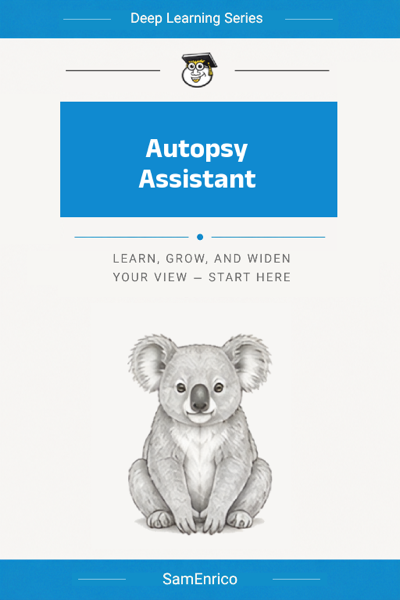
Autopsy Assistant eBook
A Coursebook on Autopsy Assistant
A Coursebook on Autopsy Assistant
Formats
Free sample
Chapter 1: The Silent Witness…–– The first body you ever meet in a professional capacity will not speak to you. It will not introduce itself, offer a handshake, or explain why it arrived on your stainless steel table. Yet, if you learn to listen correctly, that silent form will tell you everything—the last meal, the final heartbeat, the secret trauma hidden beneath unbroken skin, and sometimes, the name of a killer. This is the fundamental paradox of the autopsy assistant’s vocation: you work with the voiceless, but you become their most powerful advocate. Welcome to the medicolegal system, where the dead do not rest until the living have answered every possible question about how and why they died.This chapter establishes the legal, professional, and ethical framework in which the autopsy assistant operates.
It is not merely an academic overview; it is the foundation upon which every incision, every photograph, and every chain-of-custody signature rests. By the end of this chapter, you will understand the difference between a Coroner and a Medical Examiner, know exactly where you stand in the autopsy suite hierarchy, master the legal protocols for evidence handling, and appreciate the cultural and religious sensitivities that transform a routine procedure into a respectful final rite. Most importantly, you will recognize that the autopsy assistant is not a mere technician but a guardian of truth—a role that demands precision, integrity, and profound respect for the dead.The Two Pillars of Medicolegal Death Investigation: Coroner vs. Medical Examiner Every jurisdiction in the United States, and indeed most countries, operates under one of two systems for investigating deaths that fall outside natural causes. These systems are not interchangeable, and understanding their differences is essential because they dictate who you report to, what legal standards you follow, and how your autopsy findings will be used in court.The Coroner System is the older of the two, tracing its roots to medieval England where a “crowner” (coroner) was a county official responsible for protecting the crown’s financial interests in deaths—essentially ensuring that no taxable property vanished due to foul play.
Today, the Coroner system persists in many rural and some urban jurisdictions, but with a critical characteristic: the Coroner is often an elected official who is not required to be a physician. In fact, in several states, the only qualifications for becoming a coroner are age minimum, residency, and perhaps a training course. This means the person ultimately responsible for determining cause of death may have a background in law enforcement, funeral direction, or even politics, not medicine. Coroners typically have the authority to order autopsies, but they must hire forensic pathologists to perform them. The autopsy assistant in a coroner’s jurisdiction works under a pathologist who is contracted by the coroner, creating a dual-chain of command that requires careful navigation.The Medical Examiner System emerged in the late 19th century as a reform movement driven by physicians who argued that death investigation should be a medical, not political, function.
In an ME system, the Medical Examiner is a licensed forensic pathologist, usually appointed rather than elected. The ME has direct medical training and often board certification in forensic pathology. This system is predominant in larger metropolitan areas and is widely considered the gold standard for medicolegal death investigation. Under the ME system, the entire operation—from the janitor who cleans the suite to the pathologist who signs the death certificate—falls under a single medical authority. For the autopsy assistant, this typically means clearer protocols, better training opportunities, and more direct supervision by physician colleagues who understand the nuances of dissection and evidence preservation.Why does this matter to you?
Because the assistant must adapt their documentation, chain of custody, and even their dissection techniques to the system they serve. In a coroner’s jurisdiction, you may need to preserve more extensive photographic records because the coroner, lacking medical training, will rely heavily on visual evidence to understand the pathologist’s verbal report. In an ME system, you may work more efficiently because the pathologist can directly observe and instruct. Moreover, the legal weight of your work differs: in both systems, the autopsy report is admissible in court, but in a coroner’s jurisdiction, the coroner—not the pathologist—may be the one called to testify about the cause of death, meaning your assistant notes could be entered as evidence without your direct testimony. This is a rare but important distinction.The Hierarchy of the Autopsy Suite: Roles and Responsibilities The autopsy suite is not a democracy.
It is a carefully structured hierarchy designed for efficiency, safety, and legal defensibility. Every person in that room has a defined role, and stepping outside that role—no matter how well-intentioned—can compromise the case or, worse, endanger lives. Let us walk through the chain of command from highest authority to supporting roles.The Forensic Pathologist sits at the apex. This is a physician—a medical doctor (MD) or doctor of osteopathy (DO)—who has completed four years of medical school, four to five years of residency training in anatomic or clinical pathology, and an additional one to two years of fellowship training specifically in forensic pathology. They are board-certified by the American Board of Pathology.
The pathologist alone has the legal authority to determine cause of death (the disease or injury that initiated the lethal sequence) and manner of death (homicide, suicide, accident, natural, or undetermined). The pathologist performs the primary external and internal examination, dictates the final report, signs the death certificate, and testifies in court as an expert witness. From the assistant’s perspective, the pathologist is your direct supervisor for all medical decisions. When they say “stop,” you stop. When they ask for a specific angle of dissection, you comply instantly.
You are their hands, eyes, and often their memory for details during a long case.The Autopsy Assistant (Diener or Prosector) is the second most critical person in the suite—and that is you. The term “diener” comes from the German word for “servant” or “attendant,” but do not let that humble etymology fool you. In practice, the assistant performs the majority of the physical labor: lifting and positioning the body, making the initial incisions, removing the organ blocks, dissecting individual organs under the pathologist’s guidance, collecting toxicology specimens, and reconstructing the body after the autopsy is complete. You are the one who ensures the Stryker saw has a fresh blade, that the formalin jars are properly labeled, and that the camera battery is charged. In many busy medical examiner offices, the assistant may perform entire eviscerations while the pathologist observes, dictating findings.
The assistant also bears responsibility for maintaining chain of custody for trace evidence—bullet fragments, fibers, glass shards—that might otherwise be lost in the chaos of dissection. A skilled assistant anticipates the pathologist’s needs, keeps the workspace orderly, and maintains a quiet, respectful demeanor regardless of the case’s difficulty.The Forensic Technologist is a relatively new but increasingly vital role, particularly in offices with in-house radiology capabilities. The technologist operates and maintains imaging equipment—portable X-ray units, O-arm fluoroscopy, and full-body CT scanners—to locate bullets, document fractures, or identify foreign bodies before the first…
This is the end of the free sample. Get the eBook to keep going. Buy now
About this book
Details
- Author
- Eason Roxanna
- Publisher
- SamEnrico
- Language
- English
- Genre
- Non-Fiction, Informative, Educational
- Released
- 2026-05-04
- Pages (approx.)
- 138
- Available as
- eBook, Audiobook

Read better in the ZLOADR app
Your eBooks on your phone or tablet. Sign in with your SamEnrico account and start reading.
More by Eason Roxanna
 Pregnancy Anxiety ReliefEason Roxanna$11.99
 Resource Denial Anger GuideEason Roxanna$11.99
 Cloud Infrastructure Capital GuideEason Roxanna$12.99
 The Parenting Nonverbal GuideEason Roxanna$11.99
 End of Day Confidence RitualEason Roxanna$11.99
 Line App Sticker Addiction GuideEason Roxanna$11.99
 The Great Canadian Bank Heist: The Inside Job That Shocked a NationEason Roxanna$11.99
 Understanding Microtia, Meatal Atresia and Conductive DeafnessEason Roxanna$17.99Cloud Infrastructure Capital GuideEason Roxanna$12.99
 Non Disclosure Agreement ReviewEason Roxanna$12.99
 How to Start a Bulldozer and Angle-dozer Blades Business (Beginners Guide)Eason Roxanna$11.99
You may also like
 Hong Kong Handover 1997Dunn Johnnie$11.99
 Zumba For Postnatal Recovery CourseNeal Christian$11.99
 Zumba for BeginnersLadner Nikia$11.99
 YouTube Comment Mining GuideHumes Pandora$12.99
 Worry Box MeditationCarlin Rudy$11.99
 Workplace Stress MeditationNguyen Lynn$11.99
 Workplace Stress and Sleep RepairHawley Ivory$11.99
 Workplace Perfectionism CureDelaney Jeffry$11.99
 Workplace Injustice Anger GuideWallen Isabelle$11.99
 Work Addiction and Burnout LinkGreenwood Ester$11.99
 Women in Yoga and WellnessBeattie Galina$11.99
 Women in Stand Up ComedyChun Evangeline$11.99