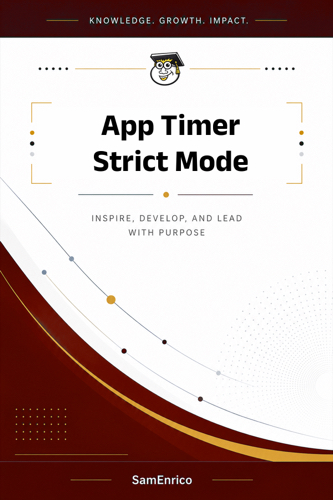
App Timer Strict Mode eBook
Set hard limits on social apps and actually stop w
Set hard limits on social apps and actually stop when the timer hits zero.
Formats
Free sample
Chapter 1: The Deadbolt Deception--–- The alarm shrieks. You glance at the screen. Fifteen minutes have evaporated. Your thumb hovers over the button labeled "Ignore for today" – a button you have pressed four hundred and seventy-three times in the past year. You do not remember deciding to press it.
Your thumb simply moves. The timer resets. The scroll resumes. And somewhere beneath the glaze of infinite content, a quiet voice whispers: You cannot even keep a promise to yourself.This is not a failure of character. It is a failure of design.Every person who has ever set an app timer has experienced this exact moment.
You download Screen Time or Digital Wellbeing with genuine enthusiasm. You configure limits with the precision of a budget-conscious accountant. Fifteen minutes for Instagram. Ten minutes for Tik Tok. Twenty minutes for Twitter.
You feel a rush of control, a satisfying click of governance over the chaotic impulse machine in your pocket. Then the first alert arrives. You tap "Ignore." Then the second alert. You tap "+5 minutes." Within a week, the timer has become a ghost – present in theory, powerless in practice. You stop noticing the alerts altogether.
Your thumb develops muscle memory for dismissal before your conscious brain even registers the interruption.The technology industry has sold you a solution that was never designed to work. This is not a conspiracy theory. It is a straightforward analysis of incentives.The Business of the Snooze Consider the economic reality of smartphone operating systems. Apple and Google generate hundreds of billions of dollars in revenue from app ecosystems. Social media applications pay no direct fees to remain on the App Store, but they drive device sales, engagement metrics, and user retention.
When you scroll Instagram for forty-five minutes instead of the fifteen you intended, Apple does not lose money. It gains value. You are more likely to buy the next i Phone. You are more likely to stay within the ecosystem. You are more likely to describe your phone as "essential" rather than "problematic."Now consider what would happen if Apple introduced a true hard limit – a timer that simply locked the application with no override, no "Ignore," no five-minute grace period.
The company would face immediate backlash from users who panicked when locked out of their social feeds. More critically, it would face quiet pressure from the very app developers who drive the platform's value. A hard limit is bad for engagement. Bad engagement is bad for business. And bad business is not something trillion-dollar companies pursue out of altruism.The built-in timers are not weapons against distraction.
They are pacifiers. They give you the feeling of control without the reality of consequences. You can tell yourself you have a system. You can tell your partner you are managing your screen time. You can even tell a therapist you are working on it.
But when the alert arrives and you dismiss it with a single tap, the timer has served its true purpose: it has made you feel responsible for a failure that was engineered to occur.This is what I call the Deadbolt Deception. You believe you are installing a lock. In reality, you are hanging a sign that reads "Please do not enter" on a door with no latch.The Five-Second Window Let us examine the specific mechanism of failure. Open your phone's Screen Time settings right now – I will wait. Navigate to any application with an active timer.
Now observe what happens when the timer expires.On i OS, you receive a notification that takes up approximately one-third of the screen. It offers two options: "Ignore Limit" and "One More Minute." The first option dismisses the timer entirely for the rest of the day. The second option grants a sixty-second extension, after which the same notification reappears, offering the same choices. You can repeat this cycle indefinitely. There is no limit to the number of "One More Minute" extensions.
There is no point at which the system says "No" and means it.On Android, the interface is slightly different but functionally identical. The warning appears. You tap "OK" or "Dismiss" or "Use app anyway." The timer resets or pauses. The app remains open.The critical variable here is time – specifically, the five seconds between the alert and your response. Neuroscientists have studied this window extensively.
When a notification interrupts your attention, your brain requires approximately 500 milliseconds to register the interruption, another 500 milliseconds to recognize the source, and then approximately three to four seconds to engage your prefrontal cortex – the rational, decision-making part of your brain. The problem is that your impulsive midbrain does not wait for the prefrontal cortex to arrive. It sees an obstacle to reward (the alert) and a solution (the dismiss button) and executes the solution in under one second.By the time your rational brain wakes up, your thumb has already acted. You are not deciding to ignore the timer. You are discovering that you have ignored the timer.
The decision happened below the level of conscious awareness.This is not a metaphor. Functional MRI studies of habitual social media users show that the anticipation of opening an app activates the same neural circuits as anticipating a drug dose in addicted subjects. When the timer alert appears, the brain treats it as a threat to anticipated reward. The response is rapid, automatic, and nearly impossible to override in real time. You are not weak.
You are operating with a handicap that the timer was designed to exploit.The Suggestion Versus the Sentence Here is the distinction that will define everything that follows in this book. A soft limit is a suggestion. It asks politely for your compliance. It offers alternatives when you deviate. It assumes that you are a rational actor who simply needs a gentle reminder to stay on track.
Soft limits are the default timers on your phone. They are the "take a break" notifications in your gaming apps. They are the "you have been scrolling for a while" messages on Instagram itself. Every one of these features can be dismissed with a single tap. Every one of them assumes that you are in control and simply forgot.A hard limit is a sentence.
It does not ask. It does not negotiate. It does not offer extensions, grace periods, or exceptions. When a hard limit says zero, the app closes. When a hard limit says fifteen minutes, the fifteenth minute is the last minute.
There is no sixteenth minute. There is no "Ignore for today." There is no button to press that makes the lockout disappear.Hard limits are rare in consumer technology because they are unpopular. Users hate being told "no" by their own devices. They complain, they uninstall, they leave bad reviews. But here is the question you must answer honestly: Do you want to be comfortable, or do you want to change?Because the truth – the uncomfortable, unfiltered truth – is that you cannot have both.
The soft timer keeps you comfortable. It lets you feel responsible while remaining helpless. The hard limit is uncomfortable. It creates friction, frustration, and genuine withdrawal symptoms. But it also works.The One-Week Diagnostic Before we go any…
This is the end of the free sample. Get the eBook to keep going. Buy now
About this book
Details
- Author
- Flynn Georgetta
- Publisher
- SamEnrico
- Language
- English
- Genre
- Non-Fiction, Self-Help, Self Control
- Released
- 2026-06-07
- Pages (approx.)
- 139
- Available as
- eBook, Audiobook

Read better in the ZLOADR app
Your eBooks on your phone or tablet. Sign in with your SamEnrico account and start reading.
More by Flynn Georgetta
 Public Speaking Cheat SheetFlynn Georgetta$11.99
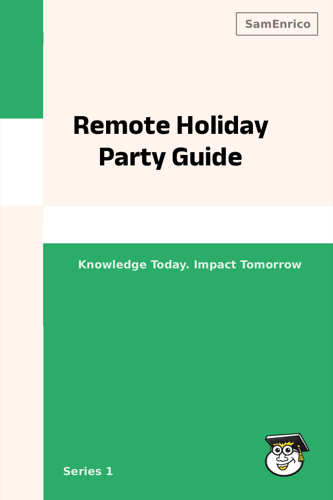 Remote Holiday Party GuideFlynn Georgetta$11.99
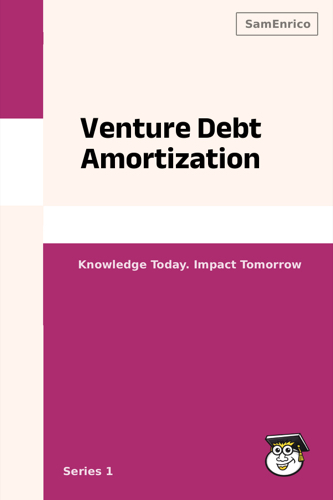 Venture Debt AmortizationFlynn Georgetta$11.99
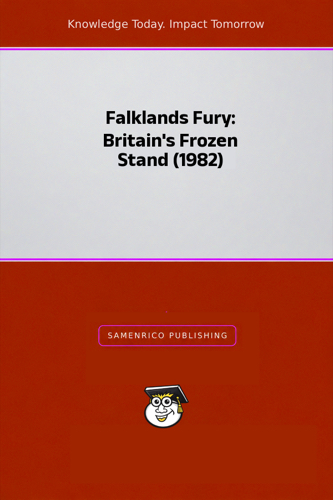 Falklands Fury: Britain's Frozen Stand (1982)Flynn Georgetta$11.99
 How to Produce a Cellulose Insulating Material PlantFlynn Georgetta$11.99
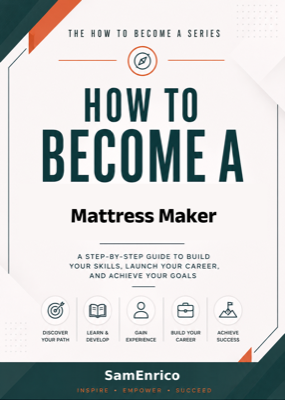 How to Become a Mattress MakerFlynn Georgetta$11.99
 Logging and Forestry Climate InsuranceFlynn Georgetta$12.99
 PC SpecialistFlynn Georgetta$11.99