
Non-FictionHealth & WellnessFloorwork
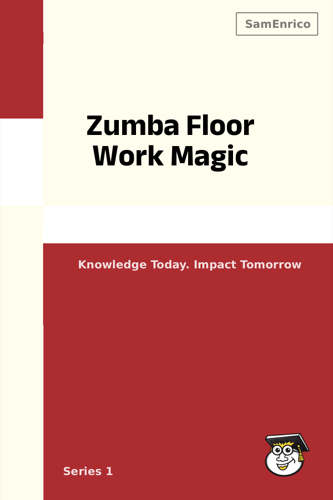
Zumba Floor Work Magic eBook
Add Zumba floorwork segments with squats, lunges,
Add Zumba floorwork segments with squats, lunges, and ground moves for lower body burn.
Formats
Free sample
Chapter 1: The Squat Paradox--–- Every Zumba instructor has felt it. The class is on fire—hips swaying, arms flying, feet stomping in perfect sync to a Merengue beat that rattles the windows. The room is a sweaty, grinning, calorie-torching party. But somewhere around minute twenty-five, a quiet thought creeps into the instructor's mind: My legs could be doing more.You look down at your students. They're moving laterally, stepping side to side, shaking their hips with infectious joy.
Their heart rates are up. Their smiles are wide. But their glutes? Their quads? Their hamstrings?
Those powerful engines are barely awake. They're idling while the rest of the body dances.This is the Squat Paradox: the very moves that make Zumba joyful—the quick steps, the light pivots, the upright posture—are the same moves that leave the lower body under-challenged. You can dance for an hour and feel your lungs burn while your thighs feel nothing more than a gentle warmth. For millions of Zumba lovers, this disconnect is frustrating. They want the party.
They also want the burn.This book exists to solve that paradox. Zumba Floor Work Magic is not about replacing Zumba. It is not about turning your dance class into a grim, grunting weightlifting session. It is about adding a new dimension—floor work, squats, lunges, and ground transitions—that transforms the lower body without killing the vibe. Think of it as the difference between wading in the shallow end and diving into the deep end.
Both are swimming. One works your body vastly harder.By the time you finish this chapter, you will understand exactly why lowering your center of gravity changes everything. You will learn the biomechanical principles that make the Flamenco Squat—our signature move—superior to a standard squat. You will discover how muscle fiber recruitment works, why slow-twitch and fast-twitch fibers matter for Zumba, and how to protect your knees while turning your glutes into furnaces. And you will get the book's roadmap: a 28-day plan that builds from the ground up, literally.Let us start with a simple experiment.
Stand up right now—yes, actually stand. Now perform a basic Zumba side step: step right, tap left, step left, tap right. Notice how your legs feel. Now, without changing the rhythm, lower your hips by six inches—just a shallow squat. Step right, tap left, step left, tap right—but stay low.
Feel the difference? Your thighs are buzzing. Your glutes are engaging. Your core just tightened to stabilize you. That is the Squat Paradox in action.
The same dance, six inches lower, becomes a radically different workout.That six inches is the entire premise of this book.The Hidden Biomechanics of Lowering Your Center of Gravity To understand why floor work and deep squats are so effective, you need a basic grasp of biomechanics. Do not worry—this is not a medical textbook. But a few key concepts will make every exercise in this book feel more intentional and productive.Your center of gravity is the point around which your body balances. When you stand upright, your center of gravity sits roughly at your sacrum—the triangular bone at the base of your spine. In this position, your glutes and quads are under minimal load because your skeleton, not your muscles, is bearing most of your weight.
Your bones stack like building blocks: ankles over knees, knees over hips, hips over shoulders. Gravity runs straight down through your skeletal frame.When you lower into a squat or a lunge, you disrupt that stacked alignment. Your center of gravity drops toward the ground. Suddenly, your muscles have to work—not just to move you, but to keep you from collapsing. This is called eccentric loading: the controlled lengthening of a muscle under tension.
Every time you lower into a squat, your quads and glutes are performing an eccentric contraction. Research published in the Journal of Applied Physiology shows that eccentric training produces more muscle damage (the good kind, the kind that leads to growth) and more caloric expenditure than concentric (shortening) contractions.But here is where Zumba floor work gets clever. Standard squats happen in a single plane: up and down. Zumba moves happen in three planes: sagittal (forward-back), frontal (side-to-side), and transverse (rotational). When you combine a squat with a lateral step or a twist, you force your stabilizer muscles—the glute medius, the adductors, the deep hip rotators—to fire in ways a basic squat never touches.The Flamenco Squat, which you will master in Chapter 4, exemplifies this.
It starts with feet together, then steps out to a wide plie stance, then sinks low while shifting weight laterally. In those four counts, your body moves through all three planes. Your adductors (inner thighs) catch you on the step-out. Your glute medius (side of the hip) fires to keep you from tipping over. Your obliques engage to prevent your torso from collapsing forward.
Meanwhile, your quads and glute max are doing the primary work of holding the squat.Compare that to a standard bodyweight squat: feet hip-width apart, chest up, down and up. The standard squat is excellent, but it is two-dimensional. The Flamenco Squat is three-dimensional. And three-dimensional work burns more calories, builds more functional strength, and translates directly to dance.Slow-Twitch vs. Fast-Twitch Fibers: Why Zumba Floor Work Hits Both Your muscles are not uniform.
They contain different types of fibers, each suited to different tasks. Understanding this distinction will help you make intentional choices about when to hold a squat and when to explode out of it.Slow-twitch fibers (Type I) are endurance specialists. They contract slowly but can keep going for minutes or hours. They are rich in blood vessels and mitochondria, which means they use oxygen efficiently and do not fatigue quickly. These are the fibers that keep you upright during a long Zumba class, that let you hold a deep squat for sixteen seconds, that allow you to perform a hundred leg lifts without stopping.
Slow-twitch fibers respond best to sustained tension—holds, pulses, high-repetition sets with minimal rest.Fast-twitch fibers (Type II) are power specialists. They contract quickly and generate massive force, but they fatigue in seconds. They rely on stored energy (glycogen) rather than oxygen, which means they produce lactate—the stuff that creates that burning sensation. Fast-twitch fibers are responsible for jumps, explosive rises from a squat, rapid direction changes, and the kind of power that shapes and defines muscle. They respond best to short, intense bursts followed by rest.Traditional Zumba, with its continuous movement and upright posture, primarily engages slow-twitch fibers.
That is why you can dance for an hour without your legs feeling destroyed. It is good for cardiovascular endurance, but it is mediocre for muscle building.Floor work changes that. When you add deep squats, static holds, and ground transitions, you recruit slow-twitch fibers for the sustained tension phase. Then, when you add explosive rises, squat jumps, and burpee variations (Chapter 9), you recruit fast-twitch fibers. The result is a complete lower body workout that builds both endurance and power.Here is a practical example from Chapter 4.
The Static Hold Squat requires you to sink into a Flamenco Squat and hold it for two full 8-counts (sixteen…
This is the end of the free sample. Get the eBook to keep going. Buy now
About this book
Details
- Author
- Mull Jaquelyn
- Publisher
- SamEnrico
- Language
- English
- Genre
- Non-Fiction, Health & Wellness, Floorwork
- Released
- 2026-06-11
- Pages (approx.)
- 142
- Available as
- eBook, Audiobook

Read better in the ZLOADR app
Your eBooks on your phone or tablet. Sign in with your SamEnrico account and start reading.
More by Mull Jaquelyn
 Aging With Dignity GuideMull Jaquelyn$11.99
 Stress Migraine Trigger GuideMull Jaquelyn$11.99
 Work Stress Recurring Dream GuideMull Jaquelyn$11.99
 Loneliness Dating Apps GuideMull Jaquelyn$11.99
 Self Hypnosis Anxiety CureMull Jaquelyn$11.99
 Difficult Workplace TalksMull Jaquelyn$11.99
 The Runaway Park TheoryMull Jaquelyn$11.99
 Role Of The Insider HeistMull Jaquelyn$11.99
 The Massacre at Saint Bartholomew: Blood on the Streets of ParisMull Jaquelyn$11.99
 Love in the Time of Fire: The Tragic Romance of the Hindenburg DisasterMull Jaquelyn$11.99
 The Raven’s Oath: A Hero’s Trial in the Land of the ThunderbirdMull Jaquelyn$11.99
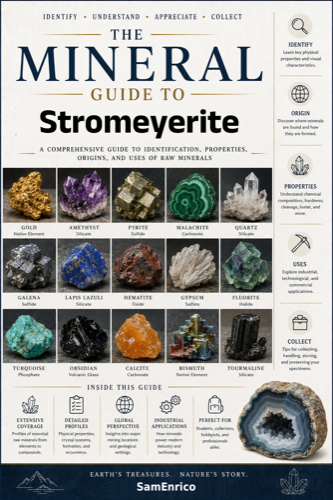 The Mineral Guide to StromeyeriteMull Jaquelyn$11.99
You may also like
 Hong Kong Handover 1997Dunn Johnnie$11.99
 Zumba For Postnatal Recovery CourseNeal Christian$11.99
 Zumba for BeginnersLadner Nikia$11.99
 YouTube Comment Mining GuideHumes Pandora$12.99
 Worry Box MeditationCarlin Rudy$11.99
 Workplace Stress MeditationNguyen Lynn$11.99
 Workplace Stress and Sleep RepairHawley Ivory$11.99
 Workplace Perfectionism CureDelaney Jeffry$11.99
 Workplace Injustice Anger GuideWallen Isabelle$11.99
 Work Addiction and Burnout LinkGreenwood Ester$11.99
 Women in Yoga and WellnessBeattie Galina$11.99
 Women in Stand Up ComedyChun Evangeline$11.99