
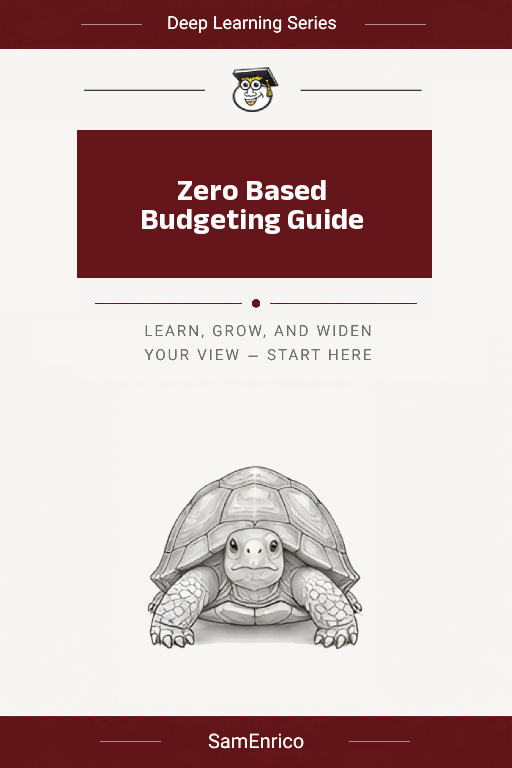
Zero Based Budgeting Guide eBook
Apply zero-based budgeting to department budgets.
Apply zero-based budgeting to department budgets. Justify every expense from scratch each period.
Formats
Free sample
Chapter 1: The $50 Billion Blind Spot--The memo arrived on a Tuesday, as most bad news does.It was a routine budget review for a mid-sized manufacturing company—nothing that should have caused alarm. The finance director had requested a simple breakdown: why had the marketing department overspent by 12 percent in the fourth quarter? The marketing director, a twenty-year veteran named Sarah, submitted her response within hours. "We accelerated planned initiatives," she wrote. "Unused funds would have been cut from next year's baseline."That last sentence—Unused funds would have been cut from next year's baseline—is the most expensive sentence in corporate history.
It is not fraud. It is not embezzlement. It is something far more insidious and far more common. It is the rational response of a competent manager working within a broken system.Sarah was not a villain. She was not incompetent.
She was playing the game exactly as it was designed. And that game costs companies like yours billions of dollars every single year.Let us be precise about the scale of the problem. A 2022 study by the consulting firm BCG analyzed over five hundred companies across North America and Europe. The researchers asked a simple question: if every department had to justify every expense from scratch each year, what percentage of the current budget would disappear?The answer was 20 to 30 percent.Not 2 percent. Not 5 percent.
Twenty to thirty percent of all spending in a typical organization serves no current strategic purpose. It exists only because it existed last year. And the year before that. And the year before that. Somewhere in the past, someone made a decision—a good decision, probably—and no one has questioned it since.This book is about ending that cycle.What This Chapter Will Teach You By the end of this chapter, you will understand:Why incremental budgeting is mathematically guaranteed to produce waste The behavioral economics of the use-it-or-lose-it syndrome How to identify the hidden waste in your own department within one hour The fundamental difference between Zero-Based Budgeting and every other method A diagnostic quiz to determine whether your current budget is hiding money No theory without practice.
Every concept in this chapter comes with an immediate action you can take today.The Anatomy of a Broken System Traditional budgeting, as practiced by approximately 80 percent of organizations worldwide, follows a simple formula: Last Year's Spending plus an Adjustment equals This Year's Budget. The adjustment might be inflation. It might be a percentage increase for growth. It might be a percentage decrease for austerity. But the foundation is always the same: last year's spending is presumed legitimate.This presumption is the base trap.Consider a hypothetical department with a $10 million budget.
Over five years, under traditional budgeting, that department might receive annual increases or decreases of 3 to 5 percent. The managers within that department learn quickly that the only number that matters is the baseline. Protect the baseline, and you protect your resources. Spend the baseline, and you justify its existence.Now ask a series of uncomfortable questions.What if three years ago, that department launched a project that has since become obsolete? The project's budget remains embedded in the baseline.
No one removes it because no one questions it.What if two years ago, that department hired two additional people to handle a temporary surge in workload? The surge ended. The people remained. Their salaries are now part of the baseline.What if last year, that department signed a software contract with an automatic renewal clause? The software is barely used.
But the renewal happens quietly, buried in a line item labeled "Miscellaneous Professional Services."The base trap does not require bad actors. It requires only time and inattention. Every month that passes without questioning every expense is a month in which waste compounds.The Compound Interest of Waste Waste does not sit still. It grows.A single unnecessary software subscription costing 500permonthbecomes500 per month becomes 500permonthbecomes6,000 in year one. In year two, it is 12,000.Inyearfive,itis12,000.
In year five, it is 12,000.Inyearfive,itis30,000. Over a decade, it is $60,000. And that is just one subscription.Now multiply by dozens of subscriptions. Multiply by redundant contractors. Multiply by travel budgets that no longer serve a purpose in a hybrid work environment.
Multiply by office supplies ordered automatically every month regardless of actual usage.A Fortune 500 company that conducted a full Zero-Based Budgeting exercise in 2019 discovered that it was spending $4.2 million annually on software licenses for platforms that no employee had logged into for more than twelve months. Not one employee. Not one login. Four million dollars per year, for nothing.How does this happen? Not through malice.
Through the base trap. Someone signed a contract. The contract auto-renewed. The finance department paid the invoice because it was coded to the correct cost center. No one asked, "Do we still need this?" Why would they?
The budget was approved last year.The Use-It-or-Lose-It Syndrome If the base trap is the structural problem, the use-it-or-lose-it syndrome is the behavioral one.Behavioral economics teaches us that people respond to incentives. Traditional budgeting creates a perverse incentive: managers who underspend their budget are punished with smaller budgets next year. Managers who overspend are punished immediately. The rational response, therefore, is to spend exactly the budget—no more, no less—and to spend any surplus before the fiscal year ends.This is not speculation. This is observed fact.In a study published in the Journal of Management Accounting Research, researchers analyzed spending patterns across forty-seven departments in a large organization.
They found that spending in the fourth quarter was consistently 35 to 45 percent higher than spending in any other quarter. More telling, the categories of spending that spiked in Q4 were not categories tied to revenue generation or customer demand. They were categories like travel, training, office supplies, and professional services—discretionary spending that could be accelerated or delayed without immediate operational impact.The researchers interviewed managers about their Q4 spending decisions. The most common explanation was not "we had urgent business needs." The most common explanation was "we had money left in the budget, and we didn't want to lose it next year."Let that sink in. Managers openly admitted to spending money they did not need to spend, on things they did not urgently need, to protect a number on a spreadsheet.The Q4 Panic Purchase Hall of Fame Over years of consulting and research, practitioners have documented spectacular examples of use-it-or-lose-it spending.
Here are three:The Arizona Umbrella Incident. A marketing director in Phoenix, Arizona, had $80,000 remaining in her budget on November 15. She spent it on branded umbrellas. In a desert city that receives less than eight inches of rain annually. Her rationale: "If I don't spend it, they'll cut my budget next year."The Unread Reports.
A finance department had $120,000 remaining in its consulting budget on December 1. It commissioned a market research report that no one had requested, no one would read, and no one could recall six months later. The consulting firm delivered the report. It was never opened.The Duplicate Software. An IT department with $45,000 remaining in its software budget purchased fifty additional licenses for a project management tool.
The department already had eighty licenses, of which only thirty were actively used. The additional fifty licenses were never deployed.These…
This is the end of the free sample. Get the eBook to keep going. Buy now
About this book
Details
- Author
- Behrens Vonnie
- Publisher
- SamEnrico
- Language
- English
- Genre
- Non-Fiction, Professional's Cheat Sheet, Financial Planning
- Released
- 2026-05-26
- Pages (approx.)
- 151
- Available as
- eBook, Audiobook

Read better in the ZLOADR app
Your eBooks on your phone or tablet. Sign in with your SamEnrico account and start reading.
More by Behrens Vonnie
 Price Elasticity of DemandBehrens Vonnie$11.99
 UTI Menopause GuideBehrens Vonnie$11.99
 Body Scan Stress ReductionBehrens Vonnie$11.99
 Food Addiction for LawyersBehrens Vonnie$11.99
 The Celestial Heist: Galileo’s Starry GambitBehrens Vonnie$11.99
 How to Become a Magazine KeeperBehrens Vonnie$11.99
 Profit Centre ManagerBehrens Vonnie$11.99
 How to Produce Accessibility Furniture and FixturesBehrens Vonnie$11.99
You may also like
 Department Budget TemplateGarvey Dorthy$12.99
 Department Budget Software GuideHong Sebastian$12.99
 Department Budget Forecast GuideAbernathy Jc$12.99
 Department Budget Cost CuttingGrisham Kyle$12.99
 Department Budget Approval GuideGagne Angelique$12.99
 Department Budget Mistakes GuideFlanagan Kellee$12.99
 Department Budgeting GuideBrower Isaias$12.99
 Department Budget Success StoriesCandelaria Ping$12.99
 Department Budget Variance GuideLusk Deirdre$12.99
 Budget Season Blocking GuideVillasenor Porfirio$12.99