
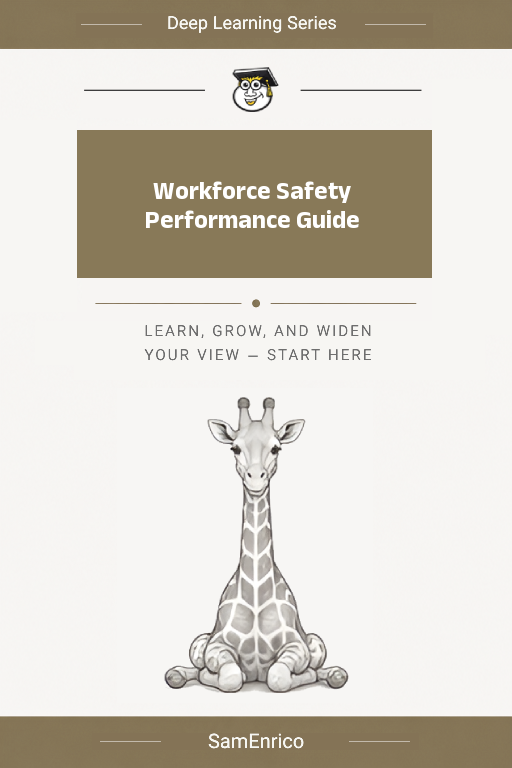
Non-FictionStrategic AtlasWorkplace Safety
Workforce Safety Performance Guide eBook
Compares public firms on total recordable injury r
Compares public firms on total recordable injury rates, fatality counts, leading indicators, and safety culture metrics.
Formats
Free sample
Chapter 1: The Million-Hour Lie--Every year, thousands of safety professionals gather in conference halls to celebrate an achievement that statistically means nothing. They shake hands, hand out plaques, and pose for photographs in front of banners declaring “One Million Hours Without a Lost Time Injury.” The executives return to their corner offices. The workers return to the floor. And somewhere, in a facility just like theirs, a person dies in an accident that the celebrated metric never saw coming.This is not a hypothetical. This is a pattern.On March 14, 2019, a maintenance supervisor named Dave clocked into a chemical plant in the American Southwest.
His employer had just completed 1.2 million hours without a recordable injury. The facility had received a safety award from an industry association. The site manager had been promoted based partly on this performance. Dave’s daughter had a birthday party planned for that weekend. He had bought her a bicycle and hidden it in the garage.
He never got to give it to her.At 2:47 that afternoon, Dave entered a confined space to perform a routine cleaning. The lockout-tagout procedure had been completed—or so his logbook indicated. What the logbook did not show was that the isolation valve had been tagged incorrectly, a condition that had existed for eleven months and been noted in three separate internal audits that were never escalated to leadership. When a contractor reopened a line upstream, Dave was engulfed. He died before emergency responders arrived.The company’s TRIR remained low.
Their million-hour milestone remained intact. And Dave’s family received a phone call that no safety statistic could explain away.This is the million-hour lie. And it is time to expose it.The Metric That Ate Safety Total Recordable Incident Rate, or TRIR, has become the single most influential safety metric in American industry. It determines executive bonuses. It drives investor ESG scores.
It dictates whether a contractor can bid on major projects. It appears on scorecards, in annual reports, and on the dashboards of some of the largest asset managers in the world.But here is the truth that almost no one in those conference halls will tell you: TRIR, as a point measurement for comparing firms, is statistically meaningless.The calculation is simple enough. TRIR equals the number of recordable injuries multiplied by 200,000, divided by total hours worked. The 200,000 represents the hours worked by 100 employees over a year. The result is supposed to represent how many recordable injuries a company would have if it employed 100 full-time workers for a full year.This seems reasonable on its face.
It is not.The problem is not with the arithmetic. The problem is with the assumption that a rate calculated from one year’s data can be meaningfully compared across companies, or even across different facilities within the same company.Why Small Numbers Tell Big Lies Imagine two chemical plants of identical size, hazard profile, and safety management system. Plant A has zero recordable injuries in a given year. Plant B has two recordable injuries. On the surface, Plant A appears to have infinitely better safety performance.But what if both plants are statistically identical in their underlying risk?
What if the difference is simply random variation?Empirical research published in 2020 by Rico Inigo Salas provides a definitive answer to this question. Analyzing data from thousands of facilities across multiple industries, Salas demonstrated that TRIR as a point measurement lacks statistical significance due to high random variation. In practical terms, this means that small differences in TRIR between firms are meaningless noise, not signal.To achieve statistical stability—to be confident that a difference in TRIR reflects a real difference in safety performance rather than random chance—a facility needs to accumulate millions of man-hours of exposure. Most facilities do not. Most public companies do not even approach this threshold when considered at the individual facility level, and even at the corporate level, only the largest firms reach the necessary sample size.Yet investors routinely compare TRIR across small and mid-cap companies as if those numbers were as reliable as quarterly earnings per share.
They are not. They are not even close.The Fatality Blind Spot The second, and far more dangerous, failure of TRIR is its complete dissociation from fatality risk.Salas’s research uncovered a finding that should have caused a fundamental rethinking of safety measurement across all industries: there is no discernable association between TRIR and fatality rates. A firm can report a remarkably low TRIR while still experiencing fatal incidents. A firm can report a high TRIR and have zero fatalities for a decade. The two numbers tell completely different stories about completely different phenomena.Why does this happen?
Because fatal injuries and recordable injuries are different types of events that require different types of prevention.A recordable injury is typically a slip, a strain, a cut, a minor burn. These events are numerous, relatively predictable, and often preventable through standard safety programs, personal protective equipment, and basic hazard controls. A fatality, by contrast, is a rare event involving the uncontrolled release of high energy—gravity, pressure, electricity, chemicals, kinetic force. These events are not extensions of recordable injuries. They are catastrophically different.A company that reduces its TRIR by 80 percent through improved housekeeping and better gloves has done nothing to reduce its risk of a pressure vessel explosion.
A company that celebrates zero recordables while operating with degraded critical safety systems is not safe. It is lucky. And luck runs out.The Zero TRIR Trap The most pernicious consequence of TRIR worship is the “Zero TRIR” campaign. These initiatives, common in industries from manufacturing to construction to healthcare, set an explicit goal of achieving zero recordable injuries for a defined period. They are celebrated with barbecues, bonuses, and banner announcements.They are also dangerous.When an organization commits publicly to achieving zero recordable injuries, it creates a powerful incentive to avoid recording injuries.
This is not a theoretical concern. Chapter 3 will document the systematic underreporting that occurs when bonuses and reputations depend on low numbers. Workers are pressured to not report discomfort. Supervisors reclassify recordable injuries as first aid. Medical treatment is delayed until after the shift change so that it falls into the next reporting period.
In extreme cases, workers are sent to company-owned clinics where clinicians understand what “helps the company” means.The result is not safer workers. The result is safer-looking paperwork.Moreover, Zero TRIR campaigns create complacency about the risks that actually kill people. When a facility achieves a zero recordable milestone, leadership celebrates. Workers relax. Audits become perfunctory.
The near miss reporting system, if one exists, is seen as unnecessary because nothing is happening. And in that complacent environment, a fatality becomes more likely, not less.A Better Statistical Lens: The Generalized Extreme Value Distribution If TRIR is not the answer, what is?This chapter introduces the Generalized Extreme Value distribution, or GEV, as a superior statistical method for identifying safety events that genuinely require immediate attention. The GEV is a family of statistical models designed specifically for rare, extreme events—precisely the type of events that cause fatalities and serious injuries.Where TRIR treats all events as equally informative, the GEV focuses on the…
This is the end of the free sample. Get the eBook to keep going. Buy now
About this book
Details
- Author
- East Harriette
- Publisher
- SamEnrico
- Language
- English
- Genre
- Non-Fiction, Strategic Atlas, Workplace Safety
- Released
- 2026-06-01
- Pages (approx.)
- 147
- Available as
- eBook, Audiobook

Read better in the ZLOADR app
Your eBooks on your phone or tablet. Sign in with your SamEnrico account and start reading.
More by East Harriette
 Remote Review Seasonal WorkersEast Harriette$11.99
 Peg System for Golf SwingEast Harriette$11.99
 Autism Nonverbal Communication GuideEast Harriette$11.99
 Modesto Police Investigation LapsesEast Harriette$11.99
 Lab Grown Meat Investment StrategyEast Harriette$11.99
 The Celestial Cartographers: Ptolemy's Almagest and the Birth of Western AstronomyEast Harriette$11.99
 Hedge Fund ManagementEast Harriette$11.99
 Retired Executive Mentor GuideEast Harriette$12.99
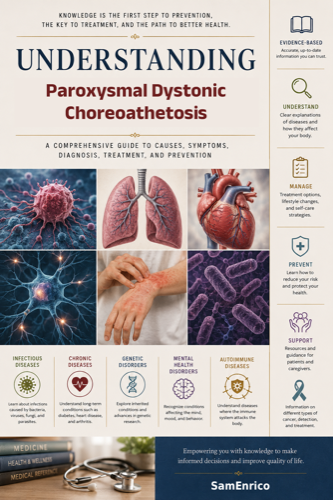 Understanding Paroxysmal Dystonic ChoreoathetosisEast Harriette$17.99
 How to Start a Ice Manufacturing BusinessEast Harriette$11.99
You may also like
 Hong Kong Handover 1997Dunn Johnnie$11.99
 Zumba For Postnatal Recovery CourseNeal Christian$11.99
 Zumba for BeginnersLadner Nikia$11.99
 YouTube Comment Mining GuideHumes Pandora$12.99
 Worry Box MeditationCarlin Rudy$11.99
 Workplace Stress MeditationNguyen Lynn$11.99
 Workplace Stress and Sleep RepairHawley Ivory$11.99
 Workplace Perfectionism CureDelaney Jeffry$11.99
 Workplace Injustice Anger GuideWallen Isabelle$11.99
 Work Addiction and Burnout LinkGreenwood Ester$11.99
 Women in Yoga and WellnessBeattie Galina$11.99
 Women in Stand Up ComedyChun Evangeline$11.99