
Non-FictionHealth & WellnessWineModeration
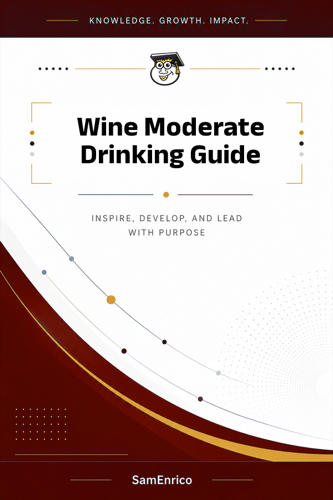
Wine Moderate Drinking Guide eBook
Understand the role of moderate red wine consumpti
Understand the role of moderate red wine consumption in Sardinian longevity.
Formats
Free sample
Chapter 1: The Hundred-Year Men--The first time I met Giovanni Satta, he was splitting firewood. He was ninety-eight.His granddaughter had warned me that he might be slow, that his English was poor, that he tired easily in the afternoon sun. But as I walked up the stone path to his home in the village of Villagrande Strisaili—a speck on the map in Sardinia’s mountainous interior—I found him bare-chested, swinging an axe with the rhythm of a man half his age, cursing cheerfully in Sardinian as a wedge of oak splintered in the wrong direction.“You must be the writer,” he said in accented but perfectly clear English. “You want to know why we don’t die.”It was not the question I had prepared to answer. But it was, I would come to realize, exactly the right one.Giovanni is not an outlier in this part of Sardinia.
He is not a medical miracle or a genetic freak. He is, by local standards, unremarkable. His neighbor, Maria, turned 101 last month and still tends her vegetable garden. The butcher down the road, Antonio, is ninety-four and walks three miles to work every morning, rain or shine. In the province of Nuoro—the rugged heart of Sardinia—men reach age one hundred at rates that confound demographers, epidemiologists, and nearly every assumption we have about aging.In most of the world, women outlive men by five to six years.
In Sardinia’s Blue Zone, the gap nearly vanishes. Men live as long as women. Sometimes longer.This is the exception that proves the rule—or rather, the exception that demands we rewrite the rule entirely.The Day I Stopped Believing the Headlines Before I went to Sardinia, I was a skeptic. Not of everything—I believed in exercise, in vegetables, in the value of not smoking. But I had watched the wellness industry cycle through its fads with the predictable rhythm of a broken clock: acai berries, then goji berries, then collagen peptides, then celery juice.
Each new “longevity breakthrough” was heralded with breathless headlines, each quietly forgotten within eighteen months.Wine had been through this cycle too. In the 1990s, the French Paradox—the observation that the French ate rich food but had low rates of heart disease—sent red wine sales soaring. By the early 2000s, the pendulum had swung back: alcohol was alcohol, the critics said, and any amount was bad. The 2018 Lancet study famously declared that there was “no safe level of alcohol consumption,” a finding that was repeated in thousands of news articles and, I suspected, misunderstood by nearly all of them.I had come to Sardinia expecting to find the truth somewhere in the middle: maybe wine was neutral, maybe it was slightly beneficial for some people, maybe the real story was just olive oil and sunshine and the statistical noise of small populations.Instead, I found a mystery that has occupied the last seven years of my professional life.The Birth of the Blue Zones To understand why Sardinia matters, we have to go back to 1999. Dan Buettner, a National Geographic fellow and serial explorer, teamed up with a team of demographers to identify the world’s longest-lived populations.
They had a simple but rigorous methodology: they looked for regions with verified high rates of centenarians, low rates of age-related disease, and populations that had been consistently long-lived across generations.They found five.Okinawa, Japan. Nicoya, Costa Rica. Ikaria, Greece. Loma Linda, California (home to a community of Seventh-day Adventists). And Sardinia, Italy.Each of these “Blue Zones”—the name came from a blue circle Buettner’s team drew on a map during an early research meeting—had something the rest of the world lacked.
But what? The obvious answers fell apart under scrutiny. These weren’t wealthy regions with access to cutting-edge medicine. They weren’t fitness-obsessed cultures with gyms on every corner. They weren’t uniformly vegetarian or vegan or any other single dietary category.What they shared was more subtle, more interesting, and ultimately more useful than any of the quick fixes the wellness industry was selling.They shared a way of life.The Power of Nine When Buettner’s team analyzed the data from all five Blue Zones, nine common denominators emerged.
They called them the Power of Nine, and they are worth listing in full because this entire book is built on their foundation:Move Naturally. Not exercise—not running on treadmills or lifting weights in mirrored rooms—but natural, low-intensity movement woven into the fabric of daily life. Walking to the market. Gardening. Taking the stairs.
In Blue Zones, people don’t “work out.” They just live in environments that require them to move.Purpose. The Japanese call it ikigai; the Nicoyans call it plan de vida. The name doesn’t matter. What matters is having a reason to wake up in the morning. Research suggests that having a clear sense of purpose adds up to seven years of life expectancy.Downshift.
Chronic stress is a killer. But in Blue Zones, people don’t eliminate stress—they build in routines to shed it. Okinawans take time to remember their ancestors. Ikarians take naps. Sardinians gather in the streets each afternoon to laugh with—and at—each other.The 80% Rule.
“Hara hachi bu” is the Confucian mantra Okinawans recite before meals, reminding them to stop eating when they are 80 percent full. The same principle appears, in different forms, across all Blue Zones. Caloric restriction—without the misery of dieting—is a powerful longevity tool.Plant Slant. None of the Blue Zones are strictly vegetarian, but meat is a side dish, not the main event. Beans, greens, and whole grains form the foundation of every Blue Zone diet.Wine @ 5.
Moderate, regular wine consumption—with food and with friends—is a consistent feature of most Blue Zones. The exception is Loma Linda, where Adventists abstain for religious reasons. But in Sardinia, Ikaria, and parts of Nicoya, a daily glass of wine is woven into the social fabric.Belong. Attending a faith-based service four times per week adds four to fourteen years of life expectancy. The specific faith doesn’t matter; what matters is the sense of belonging, the ritual, the community.Loved Ones First.
Blue Zone centenarians prioritize family. They keep aging parents and grandparents nearby or in the home. They commit to a life partner. They invest in their children. This isn’t sentimentality; it’s epidemiology.Right Tribe.
Health behaviors are socially contagious. If your three closest friends are obese, your risk of obesity increases dramatically. If they smoke, you’re more likely to smoke. And if they live long, healthy lives, that too rubs off. The Blue Zones are not collections of isolated health nuts; they are communities where healthy behaviors are the default, not the exception.Why Sardinia Is Different All five Blue Zones are remarkable.
But Sardinia is the only one where men live as long as women.Think about how strange this is. Across almost every country, every culture, every socioeconomic stratum, women outlive men. The gap is largest in places like Russia (ten years) and smallest in places like Afghanistan (less than one…
This is the end of the free sample. Get the eBook to keep going. Buy now
About this book
Details
- Author
- Cantrell Elene
- Publisher
- SamEnrico
- Language
- English
- Genre
- Non-Fiction, Health & Wellness, Wine, Moderation
- Released
- 2026-06-10
- Pages (approx.)
- 115
- Available as
- eBook, Audiobook

Read better in the ZLOADR app
Your eBooks on your phone or tablet. Sign in with your SamEnrico account and start reading.
More by Cantrell Elene
 Improv for NegotiationCantrell Elene$11.99
 Global Shipping to Amazon USACantrell Elene$11.99
 Garden Sanctuary Visualization GuideCantrell Elene$11.99
 The Government Cloud Adoption ForecastCantrell Elene$11.99
 The Snowtown Murders: Australia's Darkest Serial Killer CaseCantrell Elene$11.99
 Gift Giving PatternsCantrell Elene$12.99
 Non Resident US Phone NumberCantrell Elene$12.99
 Understanding Reactive ArthritisCantrell Elene$17.99
 Hotel Front Desk AgentCantrell Elene$11.99
 How to Start a Dress and Jacket Knitted Ensemble Business (Beginners Guide)Cantrell Elene$11.99
You may also like
 Hong Kong Handover 1997Dunn Johnnie$11.99
 Zumba For Postnatal Recovery CourseNeal Christian$11.99
 Zumba for BeginnersLadner Nikia$11.99
 YouTube Comment Mining GuideHumes Pandora$12.99
 Worry Box MeditationCarlin Rudy$11.99
 Workplace Stress MeditationNguyen Lynn$11.99
 Workplace Stress and Sleep RepairHawley Ivory$11.99
 Workplace Perfectionism CureDelaney Jeffry$11.99
 Workplace Injustice Anger GuideWallen Isabelle$11.99
 Work Addiction and Burnout LinkGreenwood Ester$11.99
 Women in Yoga and WellnessBeattie Galina$11.99
 Women in Stand Up ComedyChun Evangeline$11.99