
Non-FictionSelf-HelpInclusive Language
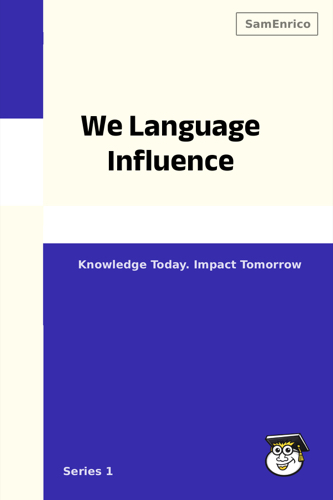
We Language Influence
Use inclusive language to build shared identity an
Use inclusive language to build shared identity and agreement.
Formats
About this book
Free sample
Chapter 1: The Grammar of Belonging...--–- Every argument you have ever lost, every request you have ever made that was ignored, every boundary you have tried to set that was trampled—the root cause is not your lack of confidence, your poor timing, or the other person's stubbornness. The root cause is grammatical. You have been using the wrong pronoun.This is not a metaphor. It is neurology.When you say "I need you to listen," something precise and predictable happens inside the other person's brain. Their amygdala—the ancient threat detection system designed to keep them safe from predators—activates.
Their cortisol levels rise. Their ability to process complex information drops by approximately thirty percent. They are not being difficult. They are being biological. Your "I need you" registered as a demand.
Their brain interpreted demands as potential threats. And no human being has ever collaborated effectively while their brain believed it was under attack.The problem is not your intention. The problem is your pronoun.This book exists because of a single, replicable, scientifically supported insight: replace "I/You" with "We," and you bypass the threat detection system entirely. "We need to solve this" signals shared fate. "We have a problem" signals partnership.
"We want the same thing, don't we?" signals alignment before strategy. The other person's amygdala does not activate. Their oxytocin—the bonding hormone—increases. They lean in instead of backing away.But here is the complication, the tension that will drive every page of this book: "We" is not magic. Used poorly, "We" feels manipulative, fake, or coercive.
Used without the proper foundation, "We" becomes a weapon disguised as inclusion. And used without a strong, honest "I" to back it up, "We" becomes a way to hide—to avoid accountability, to diffuse responsibility, to speak for others who did not consent to being spoken for.This chapter introduces the two conditions that make "We" language work. Without these conditions, nothing else in this book will function. With them, every technique, script, and framework in the following chapters becomes not just useful but inevitable.The first condition is…
This is the end of the free sample. Get the eBook to keep going. Buy now
Contents
- Chapter 1
- Chapter 2
- Chapter 3
- Chapter 4
- Chapter 5
- Chapter 6
- Chapter 7
- Chapter 8
- Chapter 9
- Chapter 10
- Chapter 11
- Chapter 12
Details
- Author
- Canez Joannie
- Publisher
- SamEnrico
- Language
- English
- Genre
- Non-Fiction, Self-Help, Inclusive Language
- Released
- 2026-06-08
- Pages (approx.)
- 157
- Available as
- eBook, Audiobook

Read better in the ZLOADR app
Your eBooks on your phone or tablet. Sign in with your SamEnrico account and start reading.
More by Canez Joannie
 The 'Not Yet' Family GuideCanez Joannie$11.99
 Mirror Affirmations Practice CourseCanez Joannie$11.99
 Opioid Overdose ResponseCanez Joannie$11.99
 The Concord Academy InsiderCanez Joannie$11.99
 The Last Waltz of the Ritz: Secrets of the 1974 New Year's Eve PartyCanez Joannie$11.99
 Understanding TyphusCanez Joannie$17.99
 VAT Dispute ResolutionCanez Joannie$12.99
 Lagos Angel Investor GuideCanez Joannie$12.99
 Dutch Belted Cattle BreedingCanez Joannie$11.99
 Ultimate Handbook Guide to Ankang : (China) Travel GuideCanez Joannie$11.99
You may also like
 Hong Kong Handover 1997Dunn Johnnie$11.99
 Zumba For Postnatal Recovery CourseNeal Christian$11.99
 Zumba for BeginnersLadner Nikia$11.99
 YouTube Comment Mining GuideHumes Pandora$12.99
 Worry Box MeditationCarlin Rudy$11.99
 Workplace Stress MeditationNguyen Lynn$11.99
 Workplace Stress and Sleep RepairHawley Ivory$11.99
 Workplace Perfectionism CureDelaney Jeffry$11.99
 Workplace Injustice Anger GuideWallen Isabelle$11.99
 Work Addiction and Burnout LinkGreenwood Ester$11.99
 Women in Yoga and WellnessBeattie Galina$11.99
 Women in Stand Up ComedyChun Evangeline$11.99