
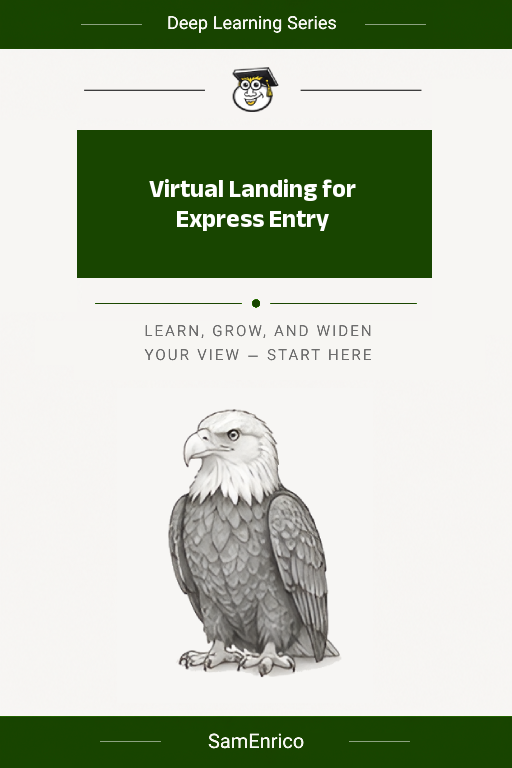
Non-FictionStudent's ShortcutVirtual Landing
Virtual Landing for Express Entry eBook
Completes permanent residence confirmation through
Completes permanent residence confirmation through virtual landing process without leaving Canada, including portal instructions.
Formats
Free sample
Chapter 1: The Portal Revolution--–- The first time Rajiv checked his GCKey account that Tuesday morning, the status still read "Submitted." The second time, thirty-seven minutes later, it read the same. By the eleventh check, just before midnight, his wife gently took his phone and placed it face-down on the kitchen counter. "You cannot refresh your way to permanent residence," she said. Rajiv laughed, but the laugh was hollow. He had been in Canada for 1,427 days—first as an international student, then on a Post-Graduation Work Permit, then through two job changes, one layoff, and a global pandemic that had frozen immigration processing for nearly a year.
His entire adult life in Canada had been temporary. Every lease, every tax return, every flight home to visit family carried an unspoken question: Will this be the last time? On day 1,428, Rajiv opened his laptop at 6:43 AM and saw words that stopped his breath: "Final decision – Your application was approved. You are in queue for virtual landing." He called his wife. Then he called his mother in India.
Then he sat in silence for ten minutes, unsure what to do next. This book is for Rajiv. It is for everyone who has ever refreshed a government website more times than they care to admit. It is for the people who have built lives in Canada—rented apartments, signed employment contracts, joined community sports leagues, fallen in love, had children—all while holding a status that could expire. The wait is over.
You are approved. But now, a new kind of uncertainty begins: What is a "ghost update"? When will the email arrive? Can you leave Canada? What if you make a mistake?
What if the portal rejects your photo? What if you accidentally do something that resets the clock?This chapter introduces the single most important shift in Canadian immigration processing in the last twenty years: the virtual landing process. Before we walk through the step-by-step mechanics of the PR Portal, before we discuss photo specifications or address declarations or the difference between GCKey and e-COPR, you need to understand what has changed, why it changed, and why this transformation is the best thing that could have happened to you—provided you understand the rules. This chapter will not tell you how to click buttons. It will tell you why the buttons exist, who gets to click them, and how to position yourself for a smooth, error-free virtual landing.
By the end of this chapter, you will understand the entire landscape of permanent residence confirmation in Canada. You will know, with absolute clarity, whether you are eligible for virtual landing. And you will be prepared for the emotional and logistical journey that begins the moment IRCC approves your file.The Old Way: In-Person Landing at Ports of Entry and IRCC Offices To understand why virtual landing matters, you must first understand what it replaced. For decades—literally since the creation of Canada's modern points-based immigration system in 1967—the final step of becoming a permanent resident required a physical, in-person appointment. This event was formally called "landing," a term that dates back to the era when the vast majority of immigrants arrived by ship and literally stepped onto Canadian soil at a port.
By the 1990s and 2000s, the term remained even though most immigrants arrived by air or over land borders. But the requirement to appear in person did not change.Under the traditional system, there were two ways to complete your landing. The first, and most common for applicants already inside Canada, was an in-person interview at a local IRCC inland office. You would receive a letter (yes, a physical letter sent by postal mail) appointing a date and time—often weeks or months in the future—to appear at an office in cities like Vancouver, Calgary, Toronto, Montreal, or Halifax. On the appointed day, you would arrive with your passport, your work permit or study permit, two passport-sized photographs, and any family members included in your application.
You would wait in a seating area alongside dozens of other nervous applicants. An officer would call your name, escort you to a small room, and ask a standard set of questions: Have you ever been convicted of a crime in any country? Have you ever been refused admission to Canada? Do you have any dependents not listed on your application? Then the officer would hand you a paper document—the Confirmation of Permanent Residence, or COPR—and ask you to sign it.
The officer would sign it as well. The date of that signature became your official "landing date." You were now a permanent resident.The second method, more common for applicants who were outside Canada, involved landing at a port of entry: a land border crossing (such as Niagara Falls, Windsor, or Douglas) or an international airport (Toronto Pearson, Vancouver International, Montreal-Trudeau). Upon arrival, you would present your passport and your paper COPR to a border services officer, who would ask the same confirmation questions and stamp your documents. This was often a faster process, but it required you to leave Canada and re-enter—a practice known as "flagpoling" that became so common at certain borders that IRCC eventually had to restrict it. Flagpoling created enormous backlogs at border crossings, with applicants lining up as early as 3 AM, sometimes waiting eight to ten hours in their cars, only to be turned away if the officer determined they had incomplete documentation.The traditional system had several inherent problems.
First, it created significant delays. Inland office appointments were often scheduled three to six months after application approval, meaning applicants spent months in limbo—officially approved but not yet permanent residents, unable to access PR-only benefits like provincial health coverage or the Canada Child Benefit. Second, it required physical presence at specific locations, which was particularly burdensome for applicants living in remote or rural communities. A nurse in Fort Mc Murray, for example, might need to take two days off work and spend hundreds of dollars on flights and hotels to attend a landing interview in Edmonton or Calgary. Third, the in-person requirement created unnecessary stress.
Applicants reported panic attacks, sleepless nights, and horror stories of officers who asked unexpected questions or rejected photographs for minor technical violations. Fourth, the paper-based system was slow, error-prone, and environmentally wasteful. COPR documents were printed on special security paper, mailed via Canada Post (which occasionally lost them), and required physical signatures that could become illegible over time.The Pandemic Accelerant: Why Virtual Landing Emerged In March 2020, the COVID-19 pandemic brought Canada's in-person immigration processing to a grinding halt. IRCC offices closed. Border crossings restricted non-essential travel.
Inland landing appointments were cancelled indefinitely. Suddenly, tens of thousands of approved permanent residence applicants were stuck in a holding pattern—approved on paper but unable to complete the final step because they could not attend an in-person interview. The backlog grew. Applicants grew desperate. Some saw their work permits expire while they waited.
Others were unable to start new jobs because employers required proof of permanent residence status. The situation was unsustainable.IRCC moved with unusual speed. In April 2020, the department began piloting a remote landing process for a small…
This is the end of the free sample. Get the eBook to keep going. Buy now
About this book
Details
- Author
- Hartman Emilia
- Publisher
- SamEnrico
- Language
- English
- Genre
- Non-Fiction, Student's Shortcut, Virtual Landing
- Released
- 2026-05-30
- Pages (approx.)
- 152
- Available as
- eBook, Audiobook

Read better in the ZLOADR app
Your eBooks on your phone or tablet. Sign in with your SamEnrico account and start reading.
More by Hartman Emilia
 News Avoidance ConversationHartman Emilia$11.99
 Non Stick Dental Floss GuideHartman Emilia$11.99
 Difficult Coworker Anger ControlHartman Emilia$11.99
 Casino Addiction Survival GuideHartman Emilia$11.99
 AAA Game Buyer ProfileHartman Emilia$11.99
 The Serpent and the Sun: A Mythic ConspiracyHartman Emilia$11.99
 Community Marketing One Page PlanHartman Emilia$12.99
 How to Start a Hobby in Wargame terrain makingHartman Emilia$11.99
 Finance AccountantHartman Emilia$11.99
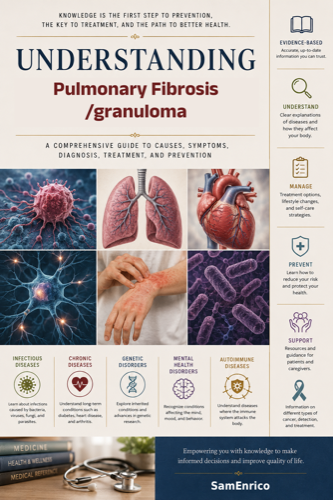 Understanding Pulmonary Fibrosis /granulomaHartman Emilia$17.99
You may also like
 Hong Kong Handover 1997Dunn Johnnie$11.99
 Zumba For Postnatal Recovery CourseNeal Christian$11.99
 Zumba for BeginnersLadner Nikia$11.99
 YouTube Comment Mining GuideHumes Pandora$12.99
 Worry Box MeditationCarlin Rudy$11.99
 Workplace Stress MeditationNguyen Lynn$11.99
 Workplace Stress and Sleep RepairHawley Ivory$11.99
 Workplace Perfectionism CureDelaney Jeffry$11.99
 Workplace Injustice Anger GuideWallen Isabelle$11.99
 Work Addiction and Burnout LinkGreenwood Ester$11.99
 Women in Yoga and WellnessBeattie Galina$11.99
 Women in Stand Up ComedyChun Evangeline$11.99