
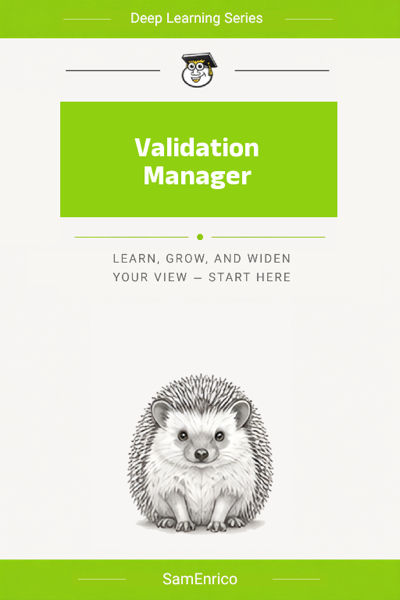
Non-FictionInformativeEducational
Validation Manager eBook
A Coursebook on Validation Manager
by Moyer Ja
A Coursebook on Validation Manager
Formats
Free sample
Chapter 1: The Paperwork Trap--–- The memo landed on my desk at 4:47 PM on a Friday. “Validation complete. All protocols signed. Ready for production.” Attached were 847 pages of IQ, OQ, and PQ reports. Every signature block filled.
Every checkbox marked “pass.” Every deviation investigated and closed. By every measure, the new filling line was validated.Three months later, that same line produced 42,000 vials of injectable drug product. The batch passed all release tests. It was shipped to hospitals. And then the complaints started.
Patients weren’t responding to therapy. The drug looked right. It felt right. It even passed the lab tests. But it wasn’t right.
The concentration was off by nearly 15 percent. Not enough to fail a potency test – the test variability was 10 percent – but enough that patients receiving the maximum dose got a sub-therapeutic treatment.The root cause? The validation team had followed the protocol perfectly. They had tested the filling pump at the specified speeds. They had documented that the pump delivered within tolerance.
What they had not done was ask a simple question: “Is the tolerance we specified actually meaningful for patient outcomes?” The tolerance came from the pump manufacturer’s datasheet, not from a clinical understanding of dose requirements. The paperwork was flawless. The validation was useless.This chapter is about why that happens and how to stop it. It is about the fundamental shift that separates competent validation managers from those who produce beautiful binders that lie.The Validation Manager’s Real Job Let me start with a controversial statement: The purpose of validation is not to pass audits. The purpose of validation is to prove, with evidence, that a process will consistently produce a product that meets patient needs.
Audits are a consequence of that proof, not the goal of it.If you take nothing else from this book, take this: Paperwork serves engineering. Never the reverse. Documentation is evidence, not the achievement itself.The validation manager who forgets this becomes a bureaucrat. They chase signatures. They enforce formatting standards.
They demand that every box be checked. And they produce processes that fail in ways that paperwork cannot predict because the paperwork was never connected to reality in the first place.The validation manager who remembers this becomes something else: an engineer who uses documentation as a tool. They ask hard questions. They push back when specifications are arbitrary. They insist that the team understand why a tolerance matters before they write it into a protocol.
And they sleep at night because they know their process will work.This book is for the second kind of validation manager. The one who wants to build things that work, not just document things that look compliant.Why Most Validation Still Looks Like 1995To understand where validation needs to go, you have to understand where it came from.In the 1970s and 1980s, the pharmaceutical and medical device industries had a problem. Batch after batch failed release testing. Contamination occurred. Dose uniformity varied wildly.
The FDA responded with increased inspections and, eventually, the 1987 Process Validation Guidelines. That guidance introduced the concept of “validating” a process – proving it three times (three consecutive successful batches) and then assuming it would work forever.The industry reacted by creating a validation industrial complex. Consultants wrote massive protocols. Companies hired armies of validation specialists. The mantra became “If it moves, validate it.
If it doesn’t move, calibrate it. If it’s digital, validate it twice.”By the late 1990s, validation had become a paperwork exercise. A typical pharmaceutical company might spend 50,000 person-hours validating a new manufacturing suite. Most of those hours were spent writing, reviewing, and signing documents. Very few were spent understanding the process itself.The 2011 FDA Guidance changed everything, but most companies haven't caught up.
The 2011 guidance introduced the three-stage lifecycle approach:Stage 1: Process Design – defining the process based on knowledge gained through development and scale-up activities Stage 2: Process Qualification – evaluating the process design to confirm it is capable of reproducible commercial manufacturing (this is what most people still think validation is – IQ, OQ, PQ)Stage 3: Continued Process Verification – ongoing assurance that the process remains in a state of control during routine production The revolutionary insight of Stage 1 is that validation cannot start at IQ. It must start during product and process development. You cannot validate a process you do not understand. And you cannot understand a process if you have not systematically studied how its inputs affect its outputs.The revolutionary insight of Stage 3 is that validation never ends. A process that was validated last year may drift out of control this year.
The only way to know is to monitor continuously and respond to signals of drift before they produce non-conforming product.Most companies have renamed their validation departments to include the word “lifecycle” but continue to operate as if validation ends with the third successful PQ batch. They write beautiful Stage 2 protocols and Stage 3 plans that sit on shelves. Chapter 11 of this book will give you the tools to actually implement Stage 3. For now, understand this: If your validation program does not include ongoing monitoring with statistical alert limits, you are not following current regulatory expectations, and eventually an auditor will cite you for it.Quality by Design: Building Quality In, Not Testing It In The most important concept in modern validation is Quality by Design (Qb D). Qb D is a systematic approach to development that begins with predefined objectives and emphasizes product and process understanding based on sound science and quality risk management.Let me translate that from regulatory language into English: Before you build anything, decide what “good” looks like.
Then figure out what makes it good. Then design your process to consistently produce “good.” Then prove it works. Then watch it to make sure it stays good.Traditional validation works backward: Build the process, then test the product, then fix problems by adjusting the test. Qb D works forward: Understand the science, then design the process, then verify it works as predicted.The difference is the difference between catching a disease and preventing it. Testing can only tell you that you already have a problem.
Qb D helps you avoid the problem entirely.The Three Pillars of Qb DEvery Qb D approach rests on three interconnected concepts. You will use these terms every day as a validation manager. Master them now.Target Product Profile (TPP)The TPP is a statement of what the product must do for the patient. It is not a list of specifications. It is a description of clinical performance.For a tablet, the TPP might include: dissolves within 30 minutes in stomach acid, delivers 95-105% of labeled dose, remains stable for 24 months at room temperature, is swallowable by elderly patients.For a medical device, the TPP might include: delivers an electrical pulse of 50-70 joules, charges to full power within 15 seconds, operates for 8 hours on a full battery, provides visual and auditory confirmation of delivery.The TPP comes from clinical knowledge, not engineering convenience.
If the TPP says the tablet must dissolve in 30 minutes, it does not matter that a 45-minute dissolution target would be easier to achieve. The patient need drives the specification, not manufacturing…
This is the end of the free sample. Get the eBook to keep going. Buy now
About this book
Details
- Author
- Moyer Ja
- Publisher
- SamEnrico
- Language
- English
- Genre
- Non-Fiction, Informative, Educational
- Released
- 2026-05-04
- Pages (approx.)
- 145
- Available as
- eBook, Audiobook

Read better in the ZLOADR app
Your eBooks on your phone or tablet. Sign in with your SamEnrico account and start reading.
More by Moyer Ja
 Letting Go of MartyrdomMoyer Ja$11.99
 Walking Meditation For Autism WorkbookMoyer Ja$11.99
 The Caregiver Burnout WorkbookMoyer Ja$11.99
 Cognitive Restructuring for Teen AngerMoyer Ja$11.99
 The Outbreak at Meerut PrimerMoyer Ja$11.99
 The Great Candy Heist: How One Man Broke the Sugar MonopolyMoyer Ja$11.99
 How to Become a Drier Operator ViMoyer Ja$11.99
 Gantt Chart Sequencing GuideMoyer Ja$12.99
 German Student Tax GuideMoyer Ja$12.99
 Understanding Ocular ToxoplasmosisMoyer Ja$17.99
You may also like
 Hong Kong Handover 1997Dunn Johnnie$11.99
 Zumba For Postnatal Recovery CourseNeal Christian$11.99
 Zumba for BeginnersLadner Nikia$11.99
 YouTube Comment Mining GuideHumes Pandora$12.99
 Worry Box MeditationCarlin Rudy$11.99
 Workplace Stress MeditationNguyen Lynn$11.99
 Workplace Stress and Sleep RepairHawley Ivory$11.99
 Workplace Perfectionism CureDelaney Jeffry$11.99
 Workplace Injustice Anger GuideWallen Isabelle$11.99
 Work Addiction and Burnout LinkGreenwood Ester$11.99
 Women in Yoga and WellnessBeattie Galina$11.99
 Women in Stand Up ComedyChun Evangeline$11.99