
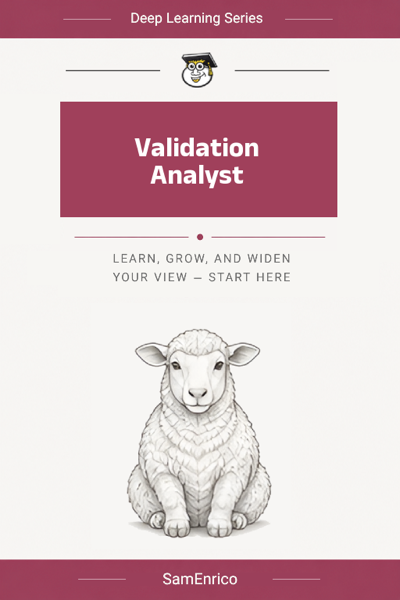
Non-FictionInformativeEducational
Validation Analyst eBook
A Coursebook on Validation Analyst
A Coursebook on Validation Analyst
Formats
Free sample
Chapter 1: The Hidden Cost...--The email arrived at 4:47 PM on a Friday, which should have been the first warning. Sarah Chen, a third-year validation analyst at Bio Cure Pharmaceuticals, had been staring at her screen for eleven minutes, watching the cursor blink. The deviation report she was reviewing showed a temperature excursion in a stability chamber—nothing major, just 1.2 degrees over the limit for forty-five minutes. The product in question was a Phase III oncology drug, eighteen months into a twenty-four-month stability study. If she made the wrong call, either the FDA would flag it during the next inspection, or she would delay the drug’s submission by six months.
Her boss had already left for the weekend. Her QA counterpart was on vacation. Sarah had no one to ask, and the decision sat entirely on her shoulders.This is the reality of being a Validation Analyst. Not the whiteboards full of V-model diagrams, not the perfectly formatted protocols that look so clean in training materials, not the career roadmap that promises a tidy progression from technician to director. The reality is Friday afternoon decisions with incomplete information, where the cost of being wrong is measured in patient harm, regulatory fines, or six-figure batches of product that must be destroyed.
The reality is that no one else in the organization—not engineering, not quality assurance, not regulatory affairs—understands what you do well enough to help you when it matters most. And the reality is that most people who call themselves Validation Analysts never received formal training for the job they actually do.This chapter is not an introduction. It is a rescue mission.If you are reading this book, you have likely already discovered that your graduate program, your on-the-job training, or your company’s internal “validation boot camp” left gaping holes in your knowledge. You know how to write an IQ protocol, but you freeze when an unexpected deviation appears. You understand the V-model in theory, but you cannot explain to a furious project manager why validation must happen before the software go-live.
You have memorized the acronyms—IQ, OQ, PQ, GMP, CSV—but you lack the mental framework to connect them into a coherent process that survives regulatory inspection.The purpose of this book is to fill those gaps. But before we can fix what is broken, we must first understand exactly what a Validation Analyst does, why the role exists, and why it is simultaneously the most misunderstood and most critical job in regulated industry.The $500 Million Mistake: Why Validation Exists In 2008, a major pharmaceutical company released a batch of pediatric ibuprofen that passed all quality checks. The manufacturing process had been validated according to regulatory requirements. The equipment was properly calibrated. The batch records were signed and complete.
Yet within weeks of shipment, pharmacists began reporting that the bottles contained a mixture of regular and extra-strength tablets. The investigation traced the problem to a filling line that had been reprogrammed during a software update—a change that no one had documented, assessed, or validated. The result was a recall of nearly 12 million bottles, a class-action lawsuit, and a plant shutdown that cost the company over $500 million.This is not an outlier. In 2019, a medical device company recalled 45,000 insulin pumps because a software validation failure allowed the pumps to deliver incorrect dosages. In 2021, a food manufacturer recalled 2.5 million pounds of product because a cleaning validation protocol failed to detect allergen residue.
In each case, the root cause was not a malicious actor or an incompetent employee. It was a validation system that broke down at the exact moment it was needed most.Validation exists because humans are fallible, systems are complex, and the products we make—drugs, medical devices, biologics, even software that controls manufacturing equipment—can kill people if they fail. Validation is the systematic, documented evidence that a process, system, or piece of equipment will consistently produce results meeting predetermined specifications. It is not testing, though testing is part of it. It is not documentation, though documentation is how we prove it.
Validation is the discipline of asking “How could this fail?” and then proving that it won’t, before a patient’s life depends on the answer.This is why Validation Analysts exist. We are the people who ask the uncomfortable questions. We are the ones who say “stop” when a project manager wants to skip a test. We are the translators between engineers who think in voltages and regulators who think in paragraphs of code. We are the insurance policy that no one wants to pay for until the claim comes due.Defining the Beast: Validation vs.
Verification (And Why Confusing Them Costs You)One of the first things every Validation Analyst learns—and one of the most frequently forgotten under pressure—is the distinction between validation and verification. The difference sounds academic until an auditor asks you to justify why you did not perform a particular test, and your answer determines whether you receive a 483 observation.Verification asks: “Did we build the product right?” It is the process of checking that outputs meet specifications. When you test that a tablet contains the correct dose of active ingredient, that is verification. When you confirm that a software function returns the expected value for a given input, that is verification. Verification is necessary, but it is not sufficient.Validation asks: “Are we building the right product?” It is the process of ensuring that the product, process, or system will actually do what the patient needs it to do, in the real world, under real conditions.
When you prove that a tablet manufacturing process consistently produces batches that meet specifications across shifts, seasons, and normal equipment variation, that is validation. When you demonstrate that a electronic health record system correctly manages patient data across every possible workflow, that is validation.The classic industry example involves a coffee cup. Verification would test that the cup holds liquid without leaking, that the handle is properly attached, and that the dimensions match the specifications. Validation would ask whether the cup is actually suitable for coffee—whether the material insulates against heat, whether the size fits in a standard car cup holder, whether the lid stays attached when the cup is tipped. The cup can pass every verification test and still fail validation if it burns the user’s hands.In practice, confusing verification and validation leads to predictable failures.
A software team verifies that each function works in isolation, then declares the system validated. But when users attempt real workflows—entering a new patient, modifying an order, canceling a batch—the system crashes because the interaction between functions was never validated. A manufacturing team verifies that each piece of equipment works, then declares the process validated. But when the equipment runs together for eight hours, material builds up in a transfer line and causes contamination because the integrated process was never validated.The Validation Analyst’s job is to draw the line between verification and validation, then ensure both happen appropriately. Chapter 2 of this book will cover the regulatory frameworks that mandate this distinction.
Chapter 5 will show you how to apply risk assessment to decide what needs full validation versus simple verification. For…
This is the end of the free sample. Get the eBook to keep going. Buy now
About this book
Details
- Author
- Burch Valentin
- Publisher
- SamEnrico
- Language
- English
- Genre
- Non-Fiction, Informative, Educational
- Released
- 2026-05-06
- Pages (approx.)
- 160
- Available as
- eBook, Audiobook

Read better in the ZLOADR app
Your eBooks on your phone or tablet. Sign in with your SamEnrico account and start reading.
More by Burch Valentin
 Iranian Revolution CasualtiesBurch Valentin$11.99
 Self Hypnosis For Skin DisordersBurch Valentin$11.99
 GAD Work Performance AnxietyBurch Valentin$11.99
 Corporate Social Responsibility MapBurch Valentin$11.99
 Eisenhower for Small Business OwnersBurch Valentin$11.99
 The River That Roared: John Wesley Powell’s Grand Canyon OdysseyBurch Valentin$11.99
 The Oracle’s Last Prophecy: The Unspoken Curse of the Delphic SibylBurch Valentin$11.99
 Understanding Hairy EarsBurch Valentin$17.99
 Economics Student Excel HandbookBurch Valentin$12.99
 Artificial Intelligence Europe OutlookBurch Valentin$12.99
 How to Start a Buckets Made of Canvas Business (Beginners Guide)Burch Valentin$11.99
You may also like
 Hong Kong Handover 1997Dunn Johnnie$11.99
 Zumba For Postnatal Recovery CourseNeal Christian$11.99
 Zumba for BeginnersLadner Nikia$11.99
 YouTube Comment Mining GuideHumes Pandora$12.99
 Worry Box MeditationCarlin Rudy$11.99
 Workplace Stress MeditationNguyen Lynn$11.99
 Workplace Stress and Sleep RepairHawley Ivory$11.99
 Workplace Perfectionism CureDelaney Jeffry$11.99
 Workplace Injustice Anger GuideWallen Isabelle$11.99
 Work Addiction and Burnout LinkGreenwood Ester$11.99
 Women in Yoga and WellnessBeattie Galina$11.99
 Women in Stand Up ComedyChun Evangeline$11.99