
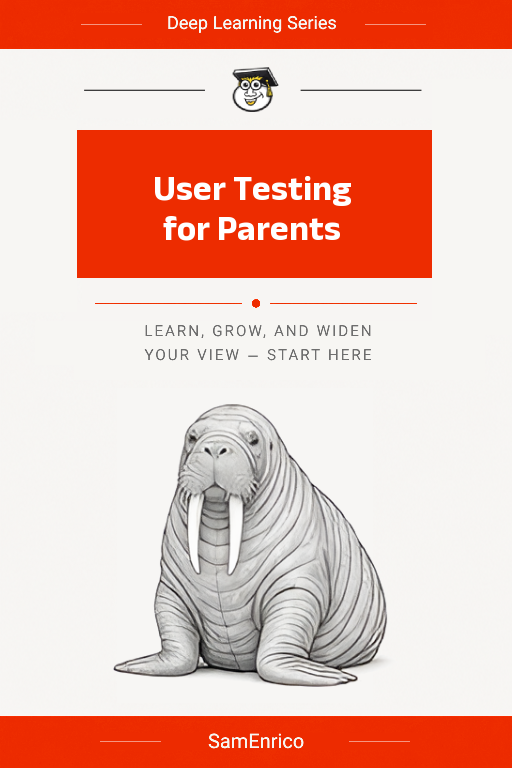
Non-FictionSide Hustle ArchitectParents
User Testing for Parents eBook
Tests websites during naps, after bedtime, or scho
Tests websites during naps, after bedtime, or school hours, earning flexible income around parenting responsibilities.
Formats
Free sample
Chapter 1: The Nap-Time Economy--–- Let me begin with a confession: I wrote the first draft of this chapter while hiding in a bathroom. Not because I have a strange preference for tile flooring, but because it was the only room in my house with a door that locked, and my toddler had decided that Mommy working meant Mommy was available for a forty-five-minute lecture about why grapes are better than broccoli. The laptop was balanced on the edge of the sink. The fan was running to mask my voice. And somewhere in the living room, a children’s show about a animated dog was blasting at maximum volume.
That was my office. That was my nap-time economy in action.If you are reading this book, you already know the shape of that particular struggle. You have tried the traditional side hustles. You signed up for a rideshare app, only to realize that driving requires you to leave the house, which requires childcare, which costs more than you would earn. You tried food delivery, but the dinner rush overlaps exactly with bath time.
You attempted remote tutoring, but the student needed a consistent weekly slot, and your baby’s nap schedule changes every three days like a tiny, adorable tyrant rewriting the laws of time. You looked into freelance writing, but the deadlines came with expectations of uninterrupted focus, and your version of “uninterrupted” means checking email while stirring macaroni and wiping a counter.None of these are your fault. The problem is not your work ethic, your intelligence, or your ability to manage chaos. The problem is that nearly every side hustle in the modern economy was designed by and for people who do not have young children. They assume blocks of time that can be scheduled.
They assume a quiet environment. They assume that when you sit down to work, you will remain seated until you choose to stand up. These are reasonable assumptions for a single person in a studio apartment. They are absurd assumptions for anyone who has ever tried to complete a single thought while a two-year-old attempts to climb your leg like you are a tree made of snacks.This chapter will introduce you to a different model of work, one that does not require you to fight against the reality of parenting but instead uses that reality as an advantage. It is called the nap-time economy, and it is the foundation of everything that follows in this book.The Micro-Task Revolution You Have Never Heard Of Let me define the term clearly.
The nap-time economy is not a fancy phrase for “working when the baby sleeps,” though that is certainly part of it. The nap-time economy refers to a specific category of paid work that shares four essential characteristics. First, the work can be broken into very small chunks, typically between five and twenty minutes. Second, the work does not require live interaction with another human being—no phone calls, no video meetings, no scheduled appointments. Third, there is no penalty for stopping mid-task, because the work is designed to be asynchronous.
Fourth, you are paid not for your time but for your completion of specific, discrete units of work.This is not the gig economy you have heard about on the news. The gig economy—Uber, Door Dash, Task Rabbit—still requires physical presence, still requires leaving the house, still requires a predictable block of time. The micro-task economy is different. It lives entirely on your screen. It pays for your observations, your reactions, your clicks, and your voice.
And it is growing exponentially because companies have realized something important: the best way to test whether a website or app works is not to hire a professional usability expert in a lab, but to pay ordinary people to click through it in their natural environments.Think about the last time you tried to use a website that made you angry. Maybe you were trying to pay a medical bill, and the portal asked for a patient ID that was printed in font size four on a statement you threw away. Maybe you were trying to schedule a pediatrician appointment, and the calendar kept resetting every time you selected a time. Maybe you were trying to order groceries, and the checkout process required you to re-enter your credit card information three times. In each of those moments, you experienced what user researchers call a “point of friction.” And in each of those moments, you were doing exactly what a paid user tester does: you were navigating an interface, encountering a problem, and feeling an emotion about it.The only difference between you and a paid tester is that no one paid you for those frustrations.
This book will fix that.Why Traditional Side Hustles Fail Parents (And Why This One Doesn’t)Let me be specific about the structural failures of conventional side hustles, because understanding the problem will help you appreciate the solution. I have categorized the failures into three buckets: time, attention, and exit cost.Time failure. Most side hustles require a minimum contiguous block of time. For a rideshare driver, that block is at least an hour, because you have to drive to a busy area, wait for a ride, complete the ride, and drive back. For a delivery driver, the block is similar.
For a tutor, the block is thirty minutes of instruction plus preparation and follow-up. For a freelance writer, the block might be two hours to get into a flow state. None of these accommodate a parent whose child naps for thirty minutes but sometimes wakes up after twelve. None of them accommodate a school schedule that ends at 2:45 PM but includes early release Wednesdays and random teacher training days. The nap-time economy solves this by design: the unit of work is fifteen minutes.
If your child naps for fifteen minutes, you complete one test. If they nap for forty-five, you complete three. There is no minimum. There is no penalty for stopping after one.Attention failure. Side hustles that do not require a contiguous block of time often require something worse: interruptible attention.
Consider the example of taking online surveys for pennies. You can do those while watching a toddler, technically. But the surveys demand that you read questions, recall information, and make judgments. If a child interrupts you, you lose your place, you forget what you were asked, and you have to start over or guess. The cognitive cost of task-switching is high.
User testing, by contrast, is designed to be done in a single, short burst. You read the task, you hit record, you narrate for ten minutes, you stop. Interruptions are rare within a ten-minute window, and if they happen, you can simply abandon the test and try again later. The platform does not penalize you for incomplete tests (though you do not get paid for them).Exit cost failure. This is the hidden killer of side hustles for parents.
Exit cost is the penalty you pay for stopping unexpectedly. If you are driving for a rideshare app and your child’s school calls to say they have a fever, you cannot simply stop…
This is the end of the free sample. Get the eBook to keep going. Buy now
About this book
Details
- Author
- Humphries Garth
- Publisher
- SamEnrico
- Language
- English
- Genre
- Non-Fiction, Side Hustle Architect, Parents
- Released
- 2026-06-01
- Pages (approx.)
- 137
- Available as
- eBook, Audiobook

Read better in the ZLOADR app
Your eBooks on your phone or tablet. Sign in with your SamEnrico account and start reading.
More by Humphries Garth
 Email Weekend Sanity GuideHumphries Garth$11.99
 Smokeless Tobacco Quitting GuideHumphries Garth$11.99
 Difficult Conversations For SalesHumphries Garth$11.99
 Recovery From Job Burnout CourseHumphries Garth$11.99
 The PCOS Birth Control GuideHumphries Garth$11.99
 The Archimedes Codex: Greece's Lost Mathematical RevolutionHumphries Garth$11.99
 Restaurant CAC TacticsHumphries Garth$12.99
 Paper GodsHumphries Garth$11.99
 Understanding Xeroderma Talipes Enamel DefectsHumphries Garth$17.99
You may also like
 Hong Kong Handover 1997Dunn Johnnie$11.99
 Zumba For Postnatal Recovery CourseNeal Christian$11.99
 Zumba for BeginnersLadner Nikia$11.99
 YouTube Comment Mining GuideHumes Pandora$12.99
 Worry Box MeditationCarlin Rudy$11.99
 Workplace Stress MeditationNguyen Lynn$11.99
 Workplace Stress and Sleep RepairHawley Ivory$11.99
 Workplace Perfectionism CureDelaney Jeffry$11.99
 Workplace Injustice Anger GuideWallen Isabelle$11.99
 Work Addiction and Burnout LinkGreenwood Ester$11.99
 Women in Yoga and WellnessBeattie Galina$11.99
 Women in Stand Up ComedyChun Evangeline$11.99