
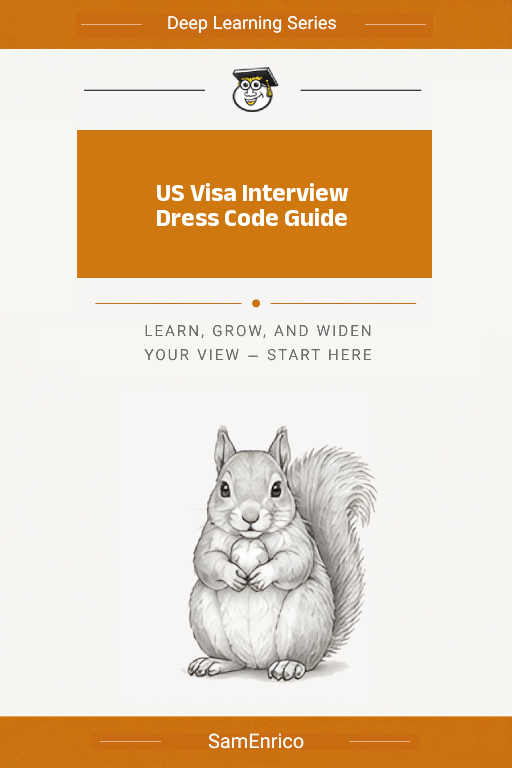
US Visa Interview Dress Code Guide eBook
Choose professional attire that signals seriousnes
by Ashmore Fae
Choose professional attire that signals seriousness and respect for the immigration officer's process.
Formats
Free sample
Chapter 1: The Seven-Second Scan--–- The young man from Mumbai had prepared for three months. He memorized every possible question about his engineering program at Texas A&M. He practiced his answers about family ties and post-graduation plans until they felt like second nature. He carried a thick folder of financial documents, admission letters, and scholarship awards. By every rational measure, he was ready.But he never got the chance to answer a single question.The consular officer took one look at his oversized, shiny, borrowed suit—a last-minute gift from his wealthy uncle who insisted he “look successful”—and wrote a single word in the margin of his file: Inconsistent.The interview lasted forty-five seconds.
Denied under INA §214(b). The officer never asked about his grades, his scholarship, or his plans to return to India. The suit had already spoken for him.This book exists because that young man’s story is not rare. It is repeated thousands of times every year at U.S. embassies, consulates, and USCIS offices around the world.
Applicants who are perfectly qualified, genuinely intending to return home, and fully prepared with their answers—denied because their clothing sent the wrong message before their mouths could open.The truth is brutal but liberating: in a U.S. visa interview, your first seven seconds determine whether the officer will listen to your answers with an open mind or search for reasons to deny you. And in those seven seconds, your outfit is the only thing the officer has to evaluate.This chapter will teach you exactly what happens in those seven seconds, why officers are trained to judge your appearance as evidence, and how to master the art of becoming visually forgettable—so that your answers, not your attire, decide your fate.The 214(b) Problem: Why Your Outfit Is Evidence Before we discuss what to wear, you must understand what the officer is legally required to assume about you the moment you step toward the window.The Immigration and Nationality Act, Section 214(b), contains a presumption that has shaped millions of visa decisions: every applicant for a non-immigrant visa is presumed to be an intending immigrant. In plain English, the officer must start with the belief that you plan to stay in the United States permanently unless you prove otherwise.This is the opposite of the legal principle in criminal court, where you are presumed innocent until proven guilty. In visa law, you are presumed guilty of immigrant intent until you prove your innocence through evidence, answers, and demeanor.Here is what most guidebooks never tell you: your demeanor includes your appearance.
Your clothing, grooming, and accessories are admissible circumstantial evidence. When an officer writes their notes after your interview, they are permitted to include observations about how you dressed. And those observations can tip the scale from approval to denial.Consider what a consular officer wrote in a declassified training memorandum from 2019, obtained through a Freedom of Information Act request: “An applicant who arrives in shorts and flip-flops has already demonstrated that they do not take the process seriously. This lack of seriousness supports a finding that they also do not take their obligation to return home seriously.”The officer is not being petty. They are following a legal logic that connects respect for process to respect for immigration law.
If you cannot follow a simple, publicly available dress code, why would the officer believe you will follow the complex rules of your visa status?This is the first and most important concept of this book: your outfit is not decoration. It is testimony.The Seven-Second Scan: What Officers See Before You Speak Every consular officer, USCIS adjudicator, and immigration judge is trained in what the State Department internally calls the “Initial Visual Assessment.” This is not a formal written policy—you will not find it in the Foreign Affairs Manual—but it is taught at the Foreign Service Institute in Arlington, Virginia, where all new consular officers are trained.According to former consular officers who have spoken publicly about their training, the Initial Visual Assessment takes between five and ten seconds, with seven seconds being the average. In that time, the officer consciously or subconsciously evaluates three categories: cleanliness, formality level, and congruence.Each of these categories is scored instantly. And once that score is set, it is very difficult to change.Category One: Cleanliness The officer looks for visible stains, wrinkles, loose threads, unkempt hair, visible dirt on shoes, and any sign that you did not take the time to prepare your appearance. This category is not about wealth.
A 10shirtfromastreetmarketthathasbeencarefullyironedandinspectedwillscorehigherthana10 shirt from a street market that has been carefully ironed and inspected will score higher than a 10shirtfromastreetmarketthathasbeencarefullyironedandinspectedwillscorehigherthana500 designer shirt that is wrinkled or stained.Cleanliness signals self-respect and respect for the officer’s time. An applicant who cannot be bothered to wear a clean, pressed shirt is communicating, without words, that this interview is an inconvenience or an afterthought. That communication is fatal to overcoming the presumption of immigrant intent.One former consular officer, writing anonymously on the blog Visajourney, put it bluntly: “I approved a man who wore a cheap, faded polo shirt because it was clearly the best he owned—it was clean, ironed, and he wore it with dignity. I denied a woman in an expensive suit because the jacket had a coffee stain on the lapel and she seemed not to notice or care. The stain told me she didn’t care about details.
And visa compliance is all about details.”Category Two: Formality Level The officer assesses whether your attire matches the expected formality of the venue and your visa category. This is where most applicants make catastrophic errors.If you are applying for a tourist visa at an embassy and you wear a full business suit, you have chosen a formality level that is too high. The officer will wonder why you are trying so hard. Are you hiding a weak application behind a costume? Are you trying to impersonate a business traveler when you are actually a tourist?
Are you simply unaware of American professional norms—which itself raises questions about your preparation?If you are applying for a Green Card at a USCIS field office and you wear a polo shirt and khakis, you have chosen a formality level that is too low. The officer will wonder whether you understand the gravity of becoming a permanent resident. They will ask themselves: if this person dresses this casually for a life-changing interview, how seriously will they take the responsibilities of permanent residence?If you are appearing before an immigration judge and you wear anything less than a full suit, you have made a catastrophic error. The judge has the power to detain you, deport you, or separate you from your family. Dressing casually in front of a judge is not just a mistake—it is an insult that will be remembered and recorded.The correct formality level varies by venue, and Chapter 2 of this book provides the complete framework.
But the essential point for this chapter is that the officer evaluates your formality choice in the first seven seconds, before you have explained…
This is the end of the free sample. Get the eBook to keep going. Buy now
About this book
Details
- Author
- Ashmore Fae
- Publisher
- SamEnrico
- Language
- English
- Genre
- Non-Fiction, Student's Shortcut
- Released
- 2026-05-30
- Pages (approx.)
- 149
- Available as
- eBook, Audiobook

Read better in the ZLOADR app
Your eBooks on your phone or tablet. Sign in with your SamEnrico account and start reading.
More by Ashmore Fae
 Aggressive to Assertive TransformationAshmore Fae$11.99
 Teacher Guide to Teen ConfidenceAshmore Fae$11.99
 Scheduling for Shift WorkersAshmore Fae$11.99
 IBS Herbal Medicine GuideAshmore Fae$11.99
 Focus Windows Strategy GuideAshmore Fae$11.99
 Geo Arbitrage for ProgrammersAshmore Fae$11.99
 The Low Profile FreelancerAshmore Fae$11.99
 Driving Music for CalmnessAshmore Fae$11.99
 The Fire Below: Katia and Maurice Krafft’s Dance with VolcanoesAshmore Fae$11.99
 Echoes of the Lost Colony: The Roanoke EnigmaAshmore Fae$11.99
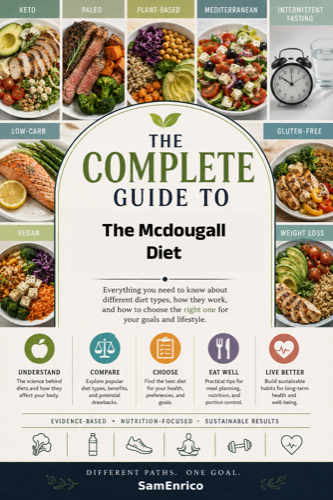 The Complete Guide to the Mcdougall DietAshmore Fae$11.99
 Automation SpecialistAshmore Fae$11.99
You may also like
 LSE Online Program LengthAgee Letisha$11.99
 Harvard Extension School for Working AdultsRoush Yer$11.99
 LSE Online Reading ListAshford Ludivina$11.99
 LSE Online Language RequirementsWhitten Daphine$11.99
 LSE Online Class SizeHughey Garret$11.99
 LSE Online Alumni MentorshipWild Lyla$11.99
 London School of Economics Alumni NetworkDutton Chantal$11.99
 Harvard Extension School Student SupportCantrell Christene$11.99
 Harvard Extension School Library AccessSantana Adah$11.99
 Harvard Extension School Degree CompletionBray Wyatt$11.99
 Harvard Extension School Course AuditingAbbott Craig$11.99
 Harvard Extension School Extension DiplomaNew Joane$11.99