
Non-FictionInformativeEducational
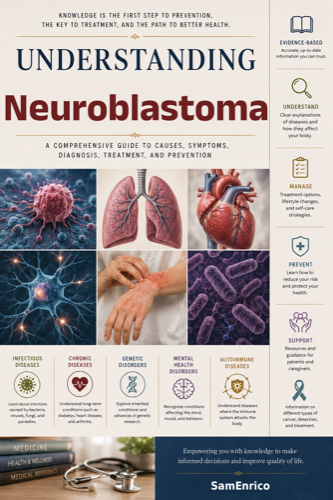
Understanding Neuroblastoma
This disease publication, published by SamEnrico,
by Kane Trisha
This disease publication, published by SamEnrico, covers Understanding Neuroblastoma
Formats
About this book
Free sample
Chapter 1: The Great Mimicker...--Every parent knows the feeling—a child who is “just off.” Not sick enough to rush to the emergency room, but not well enough to be their usual bouncing, laughing, mischief-making self. Maybe it’s a fever that comes and goes. Maybe they’ve stopped eating their favorite foods. Maybe they’ve developed a limp that the pediatrician calls “growing pains.” Maybe they’re just fussy—more than usual—and no amount of rocking or singing or midnight pacing seems to help.For most families, these symptoms resolve. The fever breaks.
The limp disappears. The fussy phase passes. But for a small number of families—approximately one in every seven to eight thousand live births—these vague, shifting, easily dismissed symptoms are the first whispers of something much more serious. They are the early signals of neuroblastoma, the most common extracranial solid tumor of childhood.Neuroblastoma has earned a grim nickname in pediatric oncology: the great mimicker. It is called this because its early symptoms resemble almost every common childhood illness.
Constipation. Irritability. A limp that looks like a toddler’s minor injury. A fever that seems viral. A swollen belly that parents might attribute to gas or overfeeding.
A blueish lump under the skin that could be mistaken for a bruise. Because neuroblastoma can arise anywhere along the sympathetic nervous system—from the neck to the pelvis to the adrenal glands—its presenting symptoms vary wildly depending on where the tumor grows and whether it has already spread.This chapter is not meant to frighten. It is meant to inform. Knowledge is the antidote to the delays that have plagued this disease for decades. By the end of this chapter, you will understand who gets neuroblastoma, why it is so often diagnosed late, what signs should raise suspicion, and—most importantly—that a diagnosis of neuroblastoma, even high-risk neuroblastoma, is no longer the death sentence it once was.The Epidemiology: Who Gets Neuroblastoma?Neuroblastoma is a disease of the very young.
The median age at diagnosis is just seventeen months. Ninety percent of cases are diagnosed by age five. It is…
This is the end of the free sample. Get the eBook to keep going. Buy now
Contents
- Chapter 1
- Chapter 2
- Chapter 3
- Chapter 4
- Chapter 5
- Chapter 6
- Chapter 7
- Chapter 8
- Chapter 9
- Chapter 10
- Chapter 11
- Chapter 12
Details
- Author
- Kane Trisha
- Publisher
- SamEnrico
- Language
- English
- Genre
- Non-Fiction, Informative, Educational
- Released
- 2026-05-11
- Pages (approx.)
- 148
- Available as
- eBook, Audiobook

Read better in the ZLOADR app
Your eBooks on your phone or tablet. Sign in with your SamEnrico account and start reading.
More by Kane Trisha
 Attempt Survivor Prison StoryKane Trisha$11.99
 Omega 3 Vegan Sources GuideKane Trisha$11.99
 Audiobook ConfessionsKane Trisha$11.99
 401k Employer Stock RulesKane Trisha$11.99
 Road Rage and Sleep DeprivationKane Trisha$11.99
 Blood Moon Murders: The Copycat Killings of 1921Kane Trisha$11.99
 Learning to Pilot a PlaneKane Trisha$11.99
 IKEA SWOT GuideKane Trisha$12.99
 Canadian Scholarships for AfricansKane Trisha$12.99
 How to Become a Drill-punch OperatorKane Trisha$11.99
You may also like
 Hong Kong Handover 1997Dunn Johnnie$11.99
 Zumba For Postnatal Recovery CourseNeal Christian$11.99
 Zumba for BeginnersLadner Nikia$11.99
 YouTube Comment Mining GuideHumes Pandora$12.99
 Worry Box MeditationCarlin Rudy$11.99
 Workplace Stress MeditationNguyen Lynn$11.99
 Workplace Stress and Sleep RepairHawley Ivory$11.99
 Workplace Perfectionism CureDelaney Jeffry$11.99
 Workplace Injustice Anger GuideWallen Isabelle$11.99
 Work Addiction and Burnout LinkGreenwood Ester$11.99
 Women in Yoga and WellnessBeattie Galina$11.99
 Women in Stand Up ComedyChun Evangeline$11.99