
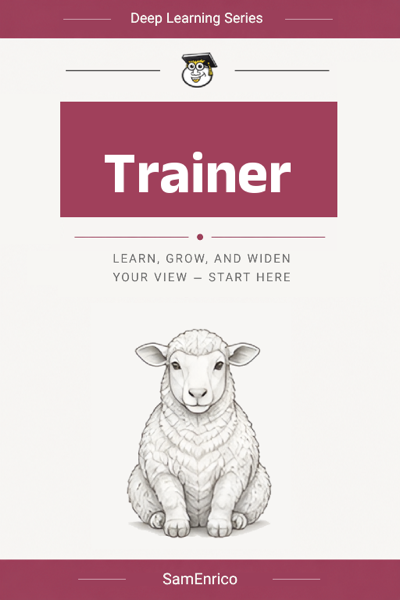
Non-FictionInformativeEducational
Trainer Audiobook
A Coursebook on Trainer
A Coursebook on Trainer
Formats
Free sample
Chapter 1: The Hidden Identity--–- Every trainer remembers the moment they realized they weren't actually training. For Sarah, a senior instructional designer at a global bank, that moment came during hour three of a compliance workshop she had spent six weeks building. The slides were beautiful—custom graphics, animated transitions, a color scheme approved by marketing. The handouts were meticulous. The learning objectives were textboook perfect, each one starting with an action verb plucked from Bloom's Taxonomy.
She had followed every rule in every training book she had ever read.And her participants were silently scrolling through email on their phones.She tried a cold call. Silence. She tried a small-group discussion. Polite murmurs that faded into nothing. She tried a provocative question.
One person answered, then retreated back into their laptop. By the end of the day, Sarah collected the smile sheets—all fours and fives, because the food had been good and the chairs were comfortable—and walked back to her desk with a hollow feeling she couldn't name. She had done everything right. So why did it feel like nothing had happened?The answer, when she finally found it months later at a conference, was not what she expected. Sarah had not failed because her content was weak or her delivery was poor.
She had failed because she was operating under a mistaken identity. She thought she was a presenter. She thought her job was to transfer information from her brain into the brains of her learners. She thought a good trainer was a clear explainer, a confident speaker, a master of the slide deck.But those are the skills of a presenter, not a trainer. And the difference between presenting and training is the difference between telling someone how to ride a bicycle and actually teaching them to stay upright when the wind is blowing and the pavement is hard.This book is about that difference.
It is about the hidden identity that every effective trainer must embrace: the learning architect. Not the sage on the stage. Not the guide on the side. The architect—someone who designs environments, experiences, and accountability systems that force learning to happen, whether the learner feels ready or not. Someone who measures success not by how much they said, but by how much the audience retained, applied, and changed.If you opened this book hoping for a few new icebreakers or a…
This is the end of the free sample. Get the Audiobook to keep going. Buy now
About this book
Details
- Author
- Stephenson Janene
- Publisher
- SamEnrico
- Language
- English
- Genre
- Non-Fiction, Informative, Educational
- Released
- 2026-05-04
- Pages (approx.)
- 150
- Available as
- eBook, Audiobook

Listen in the VoxFlicks app
Audiobooks and audio dramas wherever you go. Sign in with your SamEnrico account and press play.
More by Stephenson Janene
 Behind the Microphone LifeStephenson Janene$11.99
 The Stress Eating Behavior GuideStephenson Janene$11.99
 Blue Zone Meat Moderation PlanStephenson Janene$11.99
 Consistent Bedtime Routine GuideStephenson Janene$11.99
 Dinner Party Conversation StartersStephenson Janene$11.99
 The Butcher of Brooklyn: The Gruesome Double Life of Richard LoebStephenson Janene$11.99
 Understanding White Matter Hypoplasia Corpus Callosum Agenesia Mental RetardationStephenson Janene$17.99
 Antidepressant FounderStephenson Janene$12.99
 Ghana Fintech GuideStephenson Janene$12.99
 How to Start a Photo Lithography Business (Beginners Guide)Stephenson Janene$11.99
You may also like
 Hong Kong Handover 1997Dunn Johnnie$11.99
 Zumba For Postnatal Recovery CourseNeal Christian$11.99
 Zumba for BeginnersLadner Nikia$11.99
 YouTube Comment Mining GuideHumes Pandora$12.99
 Worry Box MeditationCarlin Rudy$11.99
 Workplace Stress MeditationNguyen Lynn$11.99
 Workplace Stress and Sleep RepairHawley Ivory$11.99
 Workplace Perfectionism CureDelaney Jeffry$11.99
 Workplace Injustice Anger GuideWallen Isabelle$11.99
 Work Addiction and Burnout LinkGreenwood Ester$11.99
 Women in Yoga and WellnessBeattie Galina$11.99
 Women in Stand Up ComedyChun Evangeline$11.99