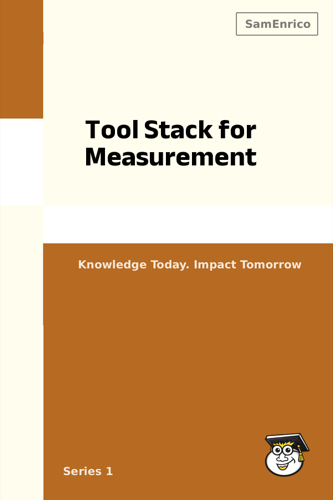
Tool Stack for Measurement Audiobook
Software recommendations for remote productivity t
Software recommendations for remote productivity tracking.
Formats
Free sample
Chapter 1: The Mouse Jiggler Economy--The first time I saw a USB mouse jiggler, I thought it was a joke. A small plastic dongle that simulates random cursor movement, plugged into a laptop so the screen never sleeps and Slack never shows that yellow "away" dot. I laughed. Then I checked Amazon. Forty-seven thousand reviews.
Four and a half stars. Best seller in "Computer Accessories." The top review read: "My boss stopped asking why I was idle for 12 minutes. Best $14.99 I ever spent."That is not a joke. That is the Mouse Jiggler Economy.Welcome to the strange, exhausting, and profoundly wasteful world of performative productivity—where millions of knowledge workers spend countless hours each week pretending to work instead of actually working. They jiggle mice.
They run auto-typing scripts. They open and close tabs in rhythmic patterns to simulate activity. They keep Slack active by tapping the space bar while watching television. They have transformed the modern workplace into a theater of compliance, and the audience—managers who installed tracking software—has no idea the show is entirely staged.This chapter dismantles the foundational error of most remote measurement: confusing activity with productivity. We will trace the historical roots of this mistake back to the factory floor, reveal the staggering costs of "productivity theater," and introduce the single most important document you will write before installing a single tool—the Productivity Bill of Rights.
By the end of this chapter, you will understand why measuring mouse movements or login times actually reduces output, and you will have a concrete framework for defining what success really looks like for every role on your team.The Factory Floor Never Left In 1911, Frederick Winslow Taylor published The Principles of Scientific Management. His idea was simple: break every job into tiny, measurable motions, time each motion with a stopwatch, and optimize until workers moved like machines. Taylor once timed a laborer named Schmidt moving pig iron. He calculated that Schmidt could move forty-seven tons per day instead of twelve. Schmidt did it.
He was paid more. Everyone declared victory.Taylorism worked—for factories. When the work is physical, when output is countable, when the relationship between effort and result is linear, measuring activity makes sense. More shovels per hour means more coal moved. More assembly line steps per minute means more cars built.But here is the problem: most of us do not work in factories.…
This is the end of the free sample. Get the Audiobook to keep going. Buy now
About this book
Details
- Author
- Triplett Hermelinda
- Publisher
- SamEnrico
- Language
- English
- Genre
- Non-Fiction, Business Brief, Tools
- Released
- 2026-06-11
- Pages (approx.)
- 145
- Available as
- eBook, Audiobook

Listen in the VoxFlicks app
Audiobooks and audio dramas wherever you go. Sign in with your SamEnrico account and press play.
More by Triplett Hermelinda
 The Elevator Rising PracticeTriplett Hermelinda$11.99
 Conversation Starters for Doctors VisitsTriplett Hermelinda$11.99
 Napping for Creativity BoostTriplett Hermelinda$11.99
 Loving Kindness PainTriplett Hermelinda$11.99
 Bipolar Sleep Hygiene PlanTriplett Hermelinda$11.99
 Crisis Legacy BuildingTriplett Hermelinda$11.99
 Amazon Subscription Box ModelTriplett Hermelinda$11.99
 Financial Boundary GuideTriplett Hermelinda$11.99
 The Great Pacific Garbage Patch: A Plastic OdysseyTriplett Hermelinda$11.99
 Masters of the Marble: Florence's Renaissance RevivalTriplett Hermelinda$11.99
 Harald Hardrada's Last Stand: The Blood Eagle of Stamford BridgeTriplett Hermelinda$11.99
 The Mineral Guide to HessoniteTriplett Hermelinda$11.99