
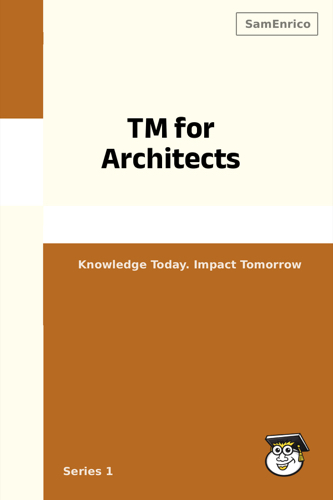
TM for Architects
Accesses creative design solutions.
by Banks Latoya
Accesses creative design solutions.
Formats
About this book
Free sample
Chapter 1: The Empty Tracing Paper--–- In the winter of 1972, the architectural theorist John Hejduk stood before a class of graduate students at the Cooper Union and performed an act of quiet rebellion. He walked to the board, picked up a piece of chalk, and drew a single line. Then he stood in silence for a full minute. Finally, he turned to the room and said: "That line took me thirty years to draw. The next one will take thirty more.
If you are in a hurry, you are in the wrong profession."The students laughed nervously. They were young, ambitious, and certain that Hejduk was being dramatic. They had deadlines. They had portfolios to build. They had competitions to win.
They did not have thirty years for a single line.Fifty years later, those students are now the partners, principals, and emeritus professors of architecture. And most of them would tell you that Hejduk was not being dramatic. He was being precise. The line he drew was not a geometric mark on a chalkboard. It was a lifetime of seeing, forgetting, remembering, failing, and finally arriving at a gesture so essential that it could not be reduced by a single millimeter.
That line was not drawn. It was earned.The architects I meet today cannot earn their lines. They do not have the time, the space, or the cognitive conditions required to wait for a gesture to become essential. They are generating instead of earning. They are iterating instead of discovering.
They are producing volume instead of significance. And they are exhausted not because architecture is hard—it has always been hard—but because they have been asked to produce creativity on demand, under conditions that make creativity impossible.This chapter is about that exhaustion. But more importantly, it is about the gap between what architects are capable of and what their daily lives allow them to access. That gap has a name, a mechanism, and a solution. Naming it is the first step toward closing it.The Confession I Hear in Every Studio Over the past five years, I have interviewed more…
This is the end of the free sample. Get the eBook to keep going. Buy now
Contents
- Chapter 1
- Chapter 2
- Chapter 3
- Chapter 4
- Chapter 5
- Chapter 6
- Chapter 7
- Chapter 8
- Chapter 9
- Chapter 10
- Chapter 11
- Chapter 12
Details
- Author
- Banks Latoya
- Publisher
- SamEnrico
- Language
- English
- Genre
- Non-Fiction, Self-Help
- Released
- 2026-06-08
- Pages (approx.)
- 149
- Available as
- eBook, Audiobook

Read better in the ZLOADR app
Your eBooks on your phone or tablet. Sign in with your SamEnrico account and start reading.
More by Banks Latoya
 Dream Journaling for MeditationBanks Latoya$11.99
 Growth Hormone Infancy GuideBanks Latoya$11.99
 Cubicle Farm Stress ReductionBanks Latoya$11.99
 The Teen Self Worth JournalBanks Latoya$11.99
 Talking to Dentist About FearBanks Latoya$11.99
 Nicotine Metabolism Genetic TestBanks Latoya$11.99
 Croatian Green Tax CreditsBanks Latoya$11.99
 HGH And MelatoninBanks Latoya$11.99
 The Golden Hands of the Sahel: The Merchant Princes of TimbuktuBanks Latoya$11.99
 The Last Whisper of the Bison: The Great American Hunt’s Unseen LegacyBanks Latoya$11.99
 The Seer of the Shaking Earth: How an Ancient Indian Ocean Oracle Predicted the Great QuakeBanks Latoya$11.99
 Automated Video Editing Workflow GuideBanks Latoya$12.99
You may also like
 Hong Kong Handover 1997Dunn Johnnie$11.99
 Zumba For Postnatal Recovery CourseNeal Christian$11.99
 Zumba for BeginnersLadner Nikia$11.99
 YouTube Comment Mining GuideHumes Pandora$12.99
 Worry Box MeditationCarlin Rudy$11.99
 Workplace Stress MeditationNguyen Lynn$11.99
 Workplace Stress and Sleep RepairHawley Ivory$11.99
 Workplace Perfectionism CureDelaney Jeffry$11.99
 Workplace Injustice Anger GuideWallen Isabelle$11.99
 Work Addiction and Burnout LinkGreenwood Ester$11.99
 Women in Yoga and WellnessBeattie Galina$11.99
 Women in Stand Up ComedyChun Evangeline$11.99