
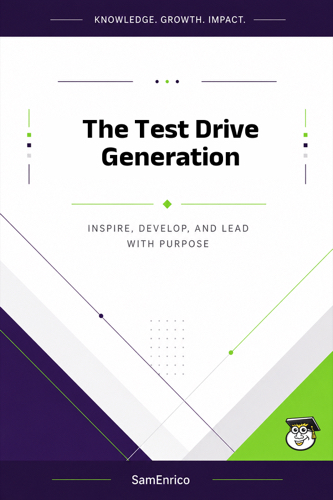
The Test Drive Generation eBook
Understand how age affects the perceived importanc
Understand how age affects the perceived importance of physical test drives.
Formats
Free sample
Chapter 1: Digital Skepticism...--The assumption was seductive in its simplicity. Give a generation i Pads before they can walk, surround them with smartphones by middle school, and deliver everything from groceries to romance through screens by young adulthood, and they will naturally prefer to conduct all transactions digitally. The car industry bet billions on this logic. Between 2015 and 2020, automakers and venture capitalists poured money into online-only car retailers, virtual showrooms, augmented reality test drives, and AI-powered sales chatbots. The premise was that Gen Z would never develop the habit of walking onto a dealership lot, shaking a stranger’s hand, and driving a car they had no intention of buying that day.
Why would they? They had never needed to step inside a bank to transfer money, never called a travel agent to book a flight, never visited a Blockbuster to rent a movie. The car, industry prophets declared, would be next.They were wrong. Not slightly wrong, not partially miscalibrated, but spectacularly, data-defyingly wrong.The first cracks in the prophecy appeared quietly, buried in industry surveys that most executives dismissed as outliers. In 2019, a Cox Automotive study found that 81 percent of Gen Z consumers insisted on a physical test drive before purchasing a vehicle.
Not preferred. Not open to. Insisted on. The number was higher than for Millennials, higher than for Gen X, and statistically indistinguishable from Baby Boomers—the generation that learned to drive when cars had carburetors and dealerships had ashtrays. The people who had never known a world without the internet wanted to touch, smell, and drive a car before buying it more than the people who had built the internet.Something strange was happening.
And to understand it, we have to abandon the lazy generational stereotypes that reduce Gen Z to Tik Tok-obsessed screen zombies and instead examine the psychological architecture of a generation that came of age inside the very matrix that previous generations only glimpsed.The Saturation Point Consider the digital environment that Gen Z inherited. Millennials, born between 1981 and 1996, were the architects of the e-commerce revolution. They built Amazon into a retail behemoth, turned Uber into a verb, normalized online dating with Tinder, and convinced the world that convenience was the highest consumer virtue. When Millennials wanted something, the question was: How quickly can I get it with minimal human interaction? The answer drove the creation of one-click purchasing, same-day delivery, and algorithms that predicted desires before they were consciously formed.Gen Z, born between 1997 and 2012, inherited this fully constructed machine.
They never experienced the thrill of ordering a book online for the first time because books had always been orderable online. They never marveled at the convenience of summoning a car with a thumb tap because ride-sharing apps existed before they could drive. They grew up inside a friction-reduction engine so seamless that efficiency ceased to be a feature and became simply the background hum of existence.And here is where the conventional wisdom breaks down. The assumption was that more convenience would lead to greater preference for convenience. But psychological adaptation works differently.
When something is always present, it becomes invisible. When convenience is universal, it stops being a differentiator and starts being the baseline. What Gen Z experienced was not the liberation of efficiency but its saturation. They did not marvel at one-click purchasing because they had never known two-click purchasing. They did not appreciate the elimination of friction because they had never experienced meaningful friction in digital commerce.What they experienced instead was the slow, creeping realization that the same algorithms that made life convenient also made it manipulable.The Education of Screen Skepticism Every generation develops its characteristic cognitive blind spots based on the media environment of its formative years.
The Greatest Generation trusted radio voices because radio was live and seemed uneditable. The Silent Generation trusted newspapers because print felt permanent and authoritative. Baby Boomers trusted network television because three channels offered a shared reality. Gen X trusted nothing, which was its own form of sophistication. Millennials trusted early internet democracy—user reviews, crowdsourced ratings, the wisdom of the crowd—because they arrived just before the manipulators figured out how to game the system.Gen Z arrived after the manipulators had already won.By the time the oldest members of Gen Z were ten years old, the digital landscape was already poisoned.
Amazon reviews were being bought and sold in bulk. Yelp ratings were being extorted from small businesses. Facebook had become a disinformation delivery system. Instagram influencers were photoshopping their bodies and their lives. You Tube comment sections were overrun with bots.
The "democratization of information" that Millennials had celebrated had curdled into a firehose of curated falsehoods, each piece of content optimized not for accuracy but for engagement.Gen Z learned to swim in this polluted water from birth. They did not go through a naive phase of trusting online information and then become disillusioned. They were never not disillusioned. A 2022 study by the digital literacy organization Media Smarts found that Gen Z consumers were significantly more likely than Millennials to doubt the authenticity of user-generated content, more likely to assume that reviews had been incentivized, and more likely to seek out negative information specifically to test their positive impressions. This is not cynicism in the classic sense—a defensive posture adopted after disappointment.
It is a default setting.The term for this is screen skepticism, and it operates differently from the distrust that characterized previous generations. Gen X distrust was ideological—a suspicion of institutions and authority figures. Millennial distrust was data-driven—a belief that the crowd, properly aggregated, would produce truth. Gen Z screen skepticism is architectural. It is not a suspicion that individual pieces of content might be false.
It is an understanding that the entire system is optimized to deceive, that every digital representation has been curated, filtered, cropped, color-corrected, and engagement-optimized before it reaches your eyes.For low-stakes purchases, this doesn't matter. If a discounted T-shirt from an Instagram ad turns out to be poor quality, the loss is twenty dollars and a lesson learned. But for high-stakes purchases—a car, a house, a college education, a medical procedure—the stakes are too high to trust the screen. The cost of being wrong is measured in thousands of dollars and, in the case of a car, potentially in physical safety. The screen can show you a vehicle that looks flawless.
But the screen cannot tell you that the driver's seat feels like it was designed for a person three inches shorter than you. The screen cannot reveal that the infotainment system takes three full seconds to respond to a touch. The screen cannot communicate the particular smell of a car that has been smoked in and then aggressively ozoned.These are tactile truths. And tactile truths require tactile verification.The Efficiency Paradox At this point, a careful reader might notice an apparent contradiction. If Gen Z is so financially pragmatic—so concerned with extracting maximum value from every dollar—why would they reject the efficiency of online shopping?
Wouldn't a fully digital purchase, delivered to their driveway, be the ultimate expression of value optimization? It saves time. It saves…
This is the end of the free sample. Get the eBook to keep going. Buy now
About this book
Details
- Author
- Sherrill Marci
- Publisher
- SamEnrico
- Language
- English
- Genre
- Non-Fiction, Consumer Mind Report, Test Drive
- Released
- 2026-06-07
- Pages (approx.)
- 127
- Available as
- eBook, Audiobook

Read better in the ZLOADR app
Your eBooks on your phone or tablet. Sign in with your SamEnrico account and start reading.
More by Sherrill Marci
 Plant Based Transition GuideSherrill Marci$11.99
 SAD Relapse PreventionSherrill Marci$11.99
 4 7 8 Breath PracticeSherrill Marci$11.99
 Anger De escalation with ADHDSherrill Marci$11.99
 Workplace Energy ManagementSherrill Marci$11.99
 Networking for ConstructionSherrill Marci$11.99
 Grounding Chair TechniqueSherrill Marci$12.99
 Collaborative PrioritizationSherrill Marci$11.99
 The Conquerors of the Clouds: The Golden Age of Alpinism (1950-1980)Sherrill Marci$11.99
 The Alpine Culinary Crown: How Swiss Innovation Transformed Global DiningSherrill Marci$11.99
 Service Providers Guide to GardenersSherrill Marci$11.99
 How to Produce Waffle Iron AccessoriesSherrill Marci$11.99