
Non-FictionHealth & WellnessCaffeine
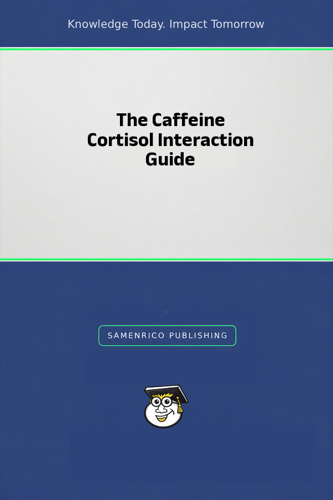
The Caffeine Cortisol Interaction Guide eBook
Timing coffee to avoid overstimulating adrenals.
by Cathey Aura
Timing coffee to avoid overstimulating adrenals.
Formats
Free sample
Chapter 1: The Borrowed Energy Lie--–- The steam rises from your mug, curling into the morning light. You wrap your hands around the ceramic, inhale deeply, and take that first sip. For a moment, everything feels right. The fog lifts. The world comes into focus.
You are awake. You are functional. You are, by all modern definitions, ready to face the day.This is the ritual that nearly two-thirds of American adults perform within fifteen minutes of waking. It is so universal, so unquestioned, that we have built entire cultures around it. The coffee shop on every corner.
The office Keurig. The travel mug that never leaves your side. We have convinced ourselves that this is simply what adults do. We need coffee to wake up. Everyone knows that.Except it is not true.What if I told you that your first cup of coffee is not helping you wake up?
What if I told you that by drinking it when you do, you are actually training your body to be less awake on its own? What if the very habit you believe is essential has been systematically disabling your natural alarm clock, leaving you dependent on an external substance to achieve what your body used to do for free?This is not anti-caffeine rhetoric. This is not a call to join some puritanical movement of abstinence and cold showers. I drink coffee. I enjoy coffee.
And I believe you can, too—perhaps even more than you do now, with better effects, fewer crashes, and zero anxiety. But to get there, you have to understand something that the $200 billion global coffee industry has no incentive to tell you.Your first cup is not innocent. And the price you are paying for that morning comfort is far steeper than the five dollars at the counter.The Moment You Disabled Your Natural Alarm Clock Let us rewind to the moment before you took that first sip. You were groggy. Your eyes felt heavy.
Your thoughts were slow, syrupy, resistant to coherence. You interpreted this as a problem that needed solving. You reached for coffee.But here is what you did not know: in that moment of grogginess, your body was precisely where it was supposed to be. That foggy, heavy, slow-to-start feeling is not a defect in your design. It is the process of waking up.Deep inside your brain, nestled above the roof of your mouth and behind your eyes, sits a cluster of cells called the suprachiasmatic nucleus.
This is your master clock. It does not care about your schedule, your deadlines, or your morning meeting. It cares about light. Specifically, it cares about the wavelength of early morning sunlight—the blue-enriched spectrum that signals "day has begun."When your eyes detect that light, they send a signal to your master clock. The master clock then initiates a cascade of hormonal events that take approximately thirty to forty-five minutes to fully unfold.
The centerpiece of this cascade is a hormone you have heard of but probably misunderstand: cortisol.The Cortisol Awakening Response (CAR)Cortisol has a bad reputation. We associate it with stress, with belly fat, with the vague sense of being "wired but tired." But cortisol is not the villain. It is a messenger. And in the morning, it is the messenger of life.Thirty to forty-five minutes after you wake—not immediately, not in the first ten minutes, but nearly an hour later—your body releases a pulse of cortisol that is 50 to 75 percent higher than your baseline daytime levels. This is called the Cortisol Awakening Response, or CAR.
It is not a mistake. It is not a bug. It is one of the most precisely calibrated biological events in your entire daily cycle.What does the CAR do? Everything that coffee claims to do, but better.It mobilizes glucose from your liver, delivering fuel to your brain and muscles. It sharpens your memory, particularly your ability to encode new information during the first hours of the day.
It regulates your immune system, reducing inflammation that accumulated overnight. It raises your blood pressure slightly—not to dangerous levels, but enough to perfuse your tissues with oxygenated blood. It increases your alertness, your reaction time, and your executive function.In other words, your body is designed to wake itself up. Fully. Completely.
Without any external help.So why do you feel like you need coffee? Because you have been disabling this system, day after day, and it has learned to stop trying.The Suppression Mechanism: How Coffee Steals What It Promises Here is where the betrayal happens.Caffeine is not just a stimulant. It is a molecular mimic. Its structure is almost identical to a molecule your body produces naturally called adenosine. Adenosine is your sleep pressure signal—it builds in your brain from the moment you wake, binding to receptors that make you feel drowsy.
By evening, adenosine levels are high enough to drive sleep. By morning, after a full night's rest, they have been cleared away.But here is the critical detail: the CAR and the adenosine clearance process are not separate. They are coordinated. Your body expects to use that morning cortisol surge to finish the job of waking you up. It expects to do this work before you introduce any external stimulants.When you drink coffee within the first sixty minutes of waking, you flood your system with a molecule that blocks adenosine receptors.
But at this hour, there is barely any adenosine to block—it is still being cleared from last night. So caffeine ping-pongs around your brain, hitting every receptor except its intended target. It triggers epinephrine (adrenaline), raising your heart rate and blood pressure. It triggers dopamine, giving you a mild reward sensation. It triggers a cascade of stress hormones because your body interprets the sudden stimulation as a threat.But it does not meaningfully increase alertness.
Not real alertness. Not the kind that comes from a rested brain and a functioning HPA axis.Worse, your brain is not stupid. It notices that a foreign molecule is occupying its adenosine receptors. It adapts. Over time, it grows more adenosine receptors—a process called upregulation—to compensate for the constant blockade.
This means you now need more caffeine to feel the same effect. And when the caffeine wears off, all those extra receptors scream for sleep at once.That is your afternoon crash. That is your 3 PM wall. That is the reason you feel like a zombie until your next cup.But the most insidious effect is on the CAR itself. Your brain learns that caffeine arrives every morning without fail.
It begins to reduce its own cortisol production during the CAR window because why waste the energy? The stimulant is coming. The result is a blunted, weakened, or delayed natural wake-up response. You wake up groggier than you used to. You need coffee just to feel normal.
You have become dependent not because coffee is addictive—though it is—but because you have systematically disabled the system that used to do the job for free.This is the borrowed energy lie. You think you are adding energy. You are actually stealing it from tomorrow morning…
This is the end of the free sample. Get the eBook to keep going. Buy now
About this book
Details
- Author
- Cathey Aura
- Publisher
- SamEnrico
- Language
- English
- Genre
- Non-Fiction, Health & Wellness, Caffeine
- Released
- 2026-06-06
- Pages (approx.)
- 152
- Available as
- eBook, Audiobook

Read better in the ZLOADR app
Your eBooks on your phone or tablet. Sign in with your SamEnrico account and start reading.
More by Cathey Aura
 Scandinavian Arctic TraverseCathey Aura$11.99
 Remote Airport LayoverCathey Aura$11.99
 The Omega 3 Brain ProtectionCathey Aura$11.99
 Lonely After RetirementCathey Aura$11.99
 The Venetiian Plague Heist: The Secret of Girolamo FracastoroCathey Aura$11.99
 Learn to Play the Piccolo ClarinetCathey Aura$11.99
 Middle East Startup CompetitionsCathey Aura$12.99
 EE for French Speaking GradsCathey Aura$12.99
 Big Data Solution ArchitectCathey Aura$11.99Big Data Solution ArchitectCathey Aura$11.99Big Data Solution ArchitectCathey Aura$11.99
 How to Start a Carbonising Base Paper Business (Beginners Guide)Cathey Aura$11.99
You may also like
 Hong Kong Handover 1997Dunn Johnnie$11.99
 Zumba For Postnatal Recovery CourseNeal Christian$11.99
 Zumba for BeginnersLadner Nikia$11.99
 YouTube Comment Mining GuideHumes Pandora$12.99
 Worry Box MeditationCarlin Rudy$11.99
 Workplace Stress MeditationNguyen Lynn$11.99
 Workplace Stress and Sleep RepairHawley Ivory$11.99
 Workplace Perfectionism CureDelaney Jeffry$11.99
 Workplace Injustice Anger GuideWallen Isabelle$11.99
 Work Addiction and Burnout LinkGreenwood Ester$11.99
 Women in Yoga and WellnessBeattie Galina$11.99
 Women in Stand Up ComedyChun Evangeline$11.99