
Non-FictionStrategic AtlasCorporate ESG
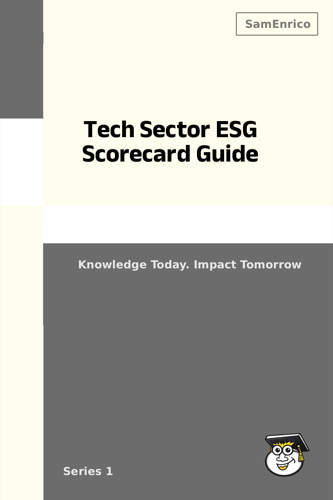
Tech Sector ESG Scorecard Guide
Compare environmental and social governance metric
Compare environmental and social governance metrics across leading tech firms using this strategic intelligence report.
Formats
About this book
Free sample
Chapter 1: The Carbon Mirage--–- The quarterly earnings call was going smoothly until the analyst from a Copenhagen pension fund asked the question no one had prepared for: “Your sustainability report claims 100% renewable energy across all global operations. Can you explain why your real-time grid data shows only 34% carbon-free energy during peak hours last July?”The silence lasted eleven seconds. The CFO fumbled through a prepared statement about renewable energy credits and “market-based accounting.” But the damage was done. Two weeks later, the company’s ESG rating was downgraded. Six weeks after that, a shareholder derivative suit was filed.
And three months later, the head of sustainability quietly updated her Linked In profile to “seeking new opportunities.”This scene is fictional. But it represents a future that is already arriving for tech firms that confuse marketing claims with operational reality. The era of easy environmental storytelling is ending. In its place comes a brutal new discipline: the ability to prove, with auditable data, what you actually achieved versus what you merely purchased.Welcome to the first chapter of your education in separating real environmental performance from the carbon mirage.The Great Disconnect: What “100% Renewable” Actually Means For the past decade, tech firms have competed on a simple environmental claim: “We power our operations with 100% renewable energy.” Google said it in 2017. Microsoft in 2018.
Amazon in 2019. Apple in 2020. The claim became table stakes—so common that failing to make it was tantamount to admitting negligence.But here is the dirty secret that the industry’s sustainability officers whisper to each other at conferences: “100% renewable” can mean two completely different things. One is a genuine operational achievement. The other is a financial accounting trick that changes nothing about the actual electrons flowing into your data centers.Scenario A: Annual Matching (The Common, Weak Standard)The vast majority of tech firms that claim 100% renewable energy use a method called annual matching.
Here is how it works. The company calculates its total annual electricity consumption—say, 1,000,000 megawatt-hours across all global data centers and offices. It then purchases Renewable Energy Certificates (RECs) or enters into Power…
This is the end of the free sample. Get the eBook to keep going. Buy now
Contents
- Chapter 1
- Chapter 2
- Chapter 3
- Chapter 4
- Chapter 5
- Chapter 6
- Chapter 7
- Chapter 8
- Chapter 9
- Chapter 10
- Chapter 11
- Chapter 12
Details
- Author
- Mccurdy Serita
- Publisher
- SamEnrico
- Language
- English
- Genre
- Non-Fiction, Strategic Atlas, Corporate ESG
- Released
- 2026-06-07
- Pages (approx.)
- 158
- Available as
- eBook, Audiobook

Read better in the ZLOADR app
Your eBooks on your phone or tablet. Sign in with your SamEnrico account and start reading.
More by Mccurdy Serita
 Stillbirth Support HandbookMccurdy Serita$11.99
 Epigenetics of StressMccurdy Serita$11.99
 Dual Diagnosis Cardiovascular DiseaseMccurdy Serita$11.99
 The Six Word Story GuideMccurdy Serita$11.99
 Plastic Pandemonium: The Rise and Fall of the Furby FrenzyMccurdy Serita$11.99
 SA Trade Credit Building GuideMccurdy Serita$12.99
 Business Expense Tracking GuideMccurdy Serita$12.99
 Understanding Sammartino–decreccio SyndromeMccurdy Serita$17.99
 Patient Care ManagerMccurdy Serita$11.99
 How to Start a Citizens Advice Bureau Business (Beginners Guide)Mccurdy Serita$11.99
You may also like
 Hong Kong Handover 1997Dunn Johnnie$11.99
 Zumba For Postnatal Recovery CourseNeal Christian$11.99
 Zumba for BeginnersLadner Nikia$11.99
 YouTube Comment Mining GuideHumes Pandora$12.99
 Worry Box MeditationCarlin Rudy$11.99
 Workplace Stress MeditationNguyen Lynn$11.99
 Workplace Stress and Sleep RepairHawley Ivory$11.99
 Workplace Perfectionism CureDelaney Jeffry$11.99
 Workplace Injustice Anger GuideWallen Isabelle$11.99
 Work Addiction and Burnout LinkGreenwood Ester$11.99
 Women in Yoga and WellnessBeattie Galina$11.99
 Women in Stand Up ComedyChun Evangeline$11.99