
Non-FictionBusiness Brief / Trade Programs
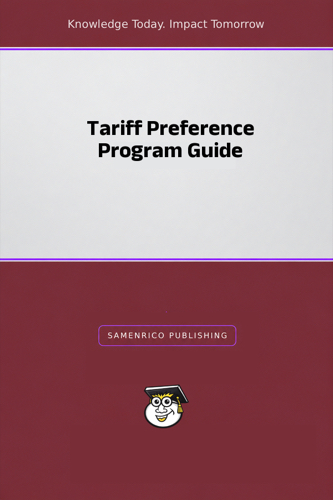
Tariff Preference Program Guide
Covers GSP, AGOA, and other preference programs of
by Babb Jude
Covers GSP, AGOA, and other preference programs offering duty-free access.
Formats
About this book
Free sample
Chapter 1: The Hidden $90,000--–- In 2021, a family-owned distributor of industrial rubber gaskets in Ohio received an unexpected letter from U.S. Customs and Border Protection. The letter was not a penalty notice. It was not an audit notification. It was a refund check for $91,247.
The distributor had no idea they were owed a single dollar. Their customs broker had filed a routine post-entry review and discovered that for the previous fourteen months, the company had been paying full Most Favored Nation (MFN) tariffs on shipments of rubber gaskets from Thailand. Under the Generalized System of Preferences (GSP), those gaskets should have entered the United States entirely duty-free. The broker corrected the filings, and the government returned every overpaid dollar. The distributor’s president later admitted, “I didn’t even know what GSP stood for before the check arrived.
Now I ask every supplier the same question: does this qualify for duty-free?”That story has a happy ending. Most do not.In the same year, a California-based importer of leather handbags from Vietnam paid $473,000 in duties that they absolutely did not owe. Their broker, a well-meaning but overworked professional at a respected firm, had simply checked the wrong box on CBP Form 7501 for thirty-seven consecutive shipments. The handbags qualified for duty-free entry under GSP. Vietnam was a beneficiary country.
The products were covered. The paperwork was otherwise flawless. But because the broker selected “General” tariff treatment instead of the “Special” program indicator code `A`, the U.S. government happily collected 8.5% to 12% duties on every single container. The importer discovered the error eighteen months later during a routine internal audit.
By then, the statute of limitations for filing retroactive claims had expired for the earliest shipments. They recovered only $124,000 of the $473,000. The rest was gone.Here is the most frustrating part: these two stories are not unusual. They are not even remarkable.According to data from U.S. Customs and Border Protection (CBP), independent trade audits, and academic studies of preference program utilization, roughly forty to sixty percent of imports that are eligible for duty-free preference programs never claim those benefits.
Some importers do not know the programs exist. Others assume the paperwork is too complex. Many rely on customs brokers…
This is the end of the free sample. Get the eBook to keep going. Buy now
Contents
- Chapter 1
- Chapter 2
- Chapter 3
- Chapter 4
- Chapter 5
- Chapter 6
- Chapter 7
- Chapter 8
- Chapter 9
- Chapter 10
- Chapter 11
- Chapter 12
Details
- Author
- Babb Jude
- Publisher
- SamEnrico
- Language
- English
- Genre
- Non-Fiction, Business Brief / Trade Programs
- Released
- 2026-06-06
- Pages (approx.)
- 153
- Available as
- eBook, Audiobook

Read better in the ZLOADR app
Your eBooks on your phone or tablet. Sign in with your SamEnrico account and start reading.
More by Babb Jude
 Sugar Withdrawal Comfort ManualBabb Jude$11.99
 IBS Exercise for MotilityBabb Jude$11.99
 Shopping Addiction and Body ImageBabb Jude$11.99
 The Kray Twins' Kidnapping Plot: London's Underworld and the Threat to a RoyalBabb Jude$11.99
 How to Start a Discs Made of Aluminium Business (Beginners Guide)Babb Jude$11.99
 EOI Submission Strategy WorkbookBabb Jude$12.99
 TR ConsultantBabb Jude$11.99
 How to Produce AntiperspirantBabb Jude$11.99
You may also like
 Hong Kong Handover 1997Dunn Johnnie$11.99
 Zumba For Postnatal Recovery CourseNeal Christian$11.99
 Zumba for BeginnersLadner Nikia$11.99
 YouTube Comment Mining GuideHumes Pandora$12.99
 Worry Box MeditationCarlin Rudy$11.99
 Workplace Stress MeditationNguyen Lynn$11.99
 Workplace Stress and Sleep RepairHawley Ivory$11.99
 Workplace Perfectionism CureDelaney Jeffry$11.99
 Workplace Injustice Anger GuideWallen Isabelle$11.99
 Work Addiction and Burnout LinkGreenwood Ester$11.99
 Women in Yoga and WellnessBeattie Galina$11.99
 Women in Stand Up ComedyChun Evangeline$11.99