
Non-FictionBusiness BriefRetirement Investing
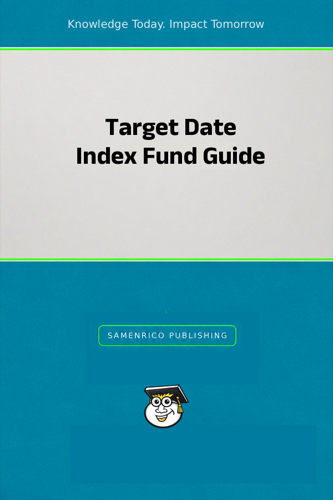
Target Date Index Fund Guide
Explains target date index funds as a single fund
Explains target date index funds as a single fund solution for retirement savers.
Formats
About this book
Free sample
Chapter 1: The Index Fund Revolution--–- In 1975, a quiet, stubborn man named John C. Bogle walked into the headquarters of Wellington Management Company with an idea so radical that his own board of directors called it “un-American.” His proposal was simple: create a mutual fund that did not try to beat the market but instead aimed to match it. No stock pickers. No market timing. No glamorous forecasts.
Just a mechanical, low-cost vehicle that would buy every stock in the S&P 500 and hold them. The board was horrified. They argued that investors would never settle for “average.” They warned that abandoning active management was professional suicide. Bogle ignored them. On December 31, 1975, the First Index Investment Trust opened with just over $11 million in assets—barely enough to be noticed.
Today, that fund is called the Vanguard 500 Index Fund, and it holds over $1 trillion. The quiet revolution had begun.This chapter establishes the intellectual and historical case for passive investing—the bedrock upon which target date index funds are built. Without the index fund revolution, there would be no low-cost target date funds. Without the proof that active management fails over time, there would be no reason to trust a single, automatic portfolio. Understanding why indexing wins is not a prerequisite for using a target date fund, but it is the difference between blind faith and informed confidence.
This chapter gives you the evidence, the history, and the math so that when you put your retirement savings into a target date index fund, you know exactly why it works.The Birth of an Unwanted Idea To appreciate the index fund revolution, you must first understand what investing looked like before 1975. The mutual fund industry of the 1960s and early 1970s was a world of high fees, high ego, and high drama. Fund managers were treated like rock stars. They appeared on magazine covers. They were paid lavish salaries to pick stocks based on “research,” “insight,” and often just gut feeling.
The prevailing belief was that skilled managers could identify undervalued companies, time the market, and deliver superior returns. And for a…
This is the end of the free sample. Get the eBook to keep going. Buy now
Contents
- Chapter 1
- Chapter 2
- Chapter 3
- Chapter 4
- Chapter 5
- Chapter 6
- Chapter 7
- Chapter 8
- Chapter 9
- Chapter 10
- Chapter 11
- Chapter 12
Details
- Author
- Stubbs Merilyn
- Publisher
- SamEnrico
- Language
- English
- Genre
- Non-Fiction, Business Brief, Retirement Investing
- Released
- 2026-06-09
- Pages (approx.)
- 133
- Available as
- eBook, Audiobook

Read better in the ZLOADR app
Your eBooks on your phone or tablet. Sign in with your SamEnrico account and start reading.
More by Stubbs Merilyn
 VE Day Celebration MemoriesStubbs Merilyn$11.99
 The Distributed Leadership GuideStubbs Merilyn$11.99
 Agonal Breathing RecognitionStubbs Merilyn$11.99
 The Shanghai Sniffer: A Dog's Tale of Corruption and Justice in the Opium WarsStubbs Merilyn$11.99
 How to Start a Beret (knitted) Business (Beginners Guide)Stubbs Merilyn$11.99
 Personal Guarantee Escape GuideStubbs Merilyn$12.99
 How to Produce a Blasting MatStubbs Merilyn$11.99
 Associate Category ManagerStubbs Merilyn$11.99
You may also like
 Hong Kong Handover 1997Dunn Johnnie$11.99
 Zumba For Postnatal Recovery CourseNeal Christian$11.99
 Zumba for BeginnersLadner Nikia$11.99
 YouTube Comment Mining GuideHumes Pandora$12.99
 Worry Box MeditationCarlin Rudy$11.99
 Workplace Stress MeditationNguyen Lynn$11.99
 Workplace Stress and Sleep RepairHawley Ivory$11.99
 Workplace Perfectionism CureDelaney Jeffry$11.99
 Workplace Injustice Anger GuideWallen Isabelle$11.99
 Work Addiction and Burnout LinkGreenwood Ester$11.99
 Women in Yoga and WellnessBeattie Galina$11.99
 Women in Stand Up ComedyChun Evangeline$11.99