
Non-FictionForecast & OutlookLabor EconomicsDemographics
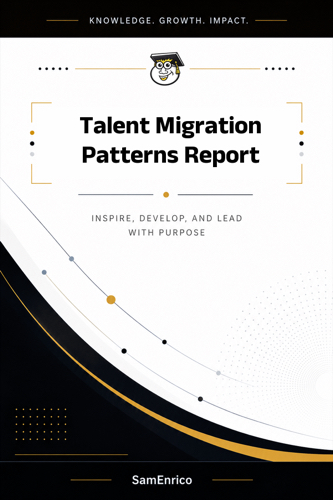
Talent Migration Patterns Report Audiobook
Uncover where skilled workers are relocating post
by Grey Tereasa
Uncover where skilled workers are relocating post pandemic and which countries are losing their brightest.
Formats
Free sample
Chapter 1: The Five Magnets--–- In 2019, a software engineer in Bangalore could triple her salary by moving to Silicon Valley, but she faced a ten-year wait for a green card and a thirty percent chance of winning the H-1B lottery. A nurse in Manila could earn five times her local wage by relocating to London, but the credential recognition process took two years and required surrendering her license in the Philippines. A financial analyst in Warsaw could move to Frankfurt without a visa under European Union free movement, but she would earn only twenty percent more while paying sixty percent more for rent. These were the arithmetic of global talent migration before the pandemic—a system of predictable flows, rigid constraints, and calculable trade-offs.This chapter establishes the pre-pandemic baseline against which all subsequent analysis must be measured. Understanding where skilled workers went between 2010 and 2019, why they chose those destinations, and what frustrated them about the existing system is essential for grasping why the pandemic broke talent maps so completely.
The old order was not broken in the sense of failing to function—it processed millions of visas annually, moved talent from poorer countries to richer ones, and generated enormous economic value for both sending and receiving nations. But it was riddled with frictions that created pent‑up demand for alternatives, demand that would explode when the pandemic unlocked remote work and borderless employment.The Geography of Pre-Pandemic Talent Flow From 2010 to 2019, skilled migration followed five well‑established corridors, each anchored by a dominant destination country. These were not the only destinations—Switzerland, Sweden, Singapore, and New Zealand also attracted significant talent—but the five magnets accounted for approximately seventy‑five percent of all college‑educated cross‑border moves, according to Organisation for Economic Co‑operation and Development data. The concentration was remarkable: four English‑speaking countries and one European industrial powerhouse captured the vast majority of the world's mobile talent.What made these five countries magnetic was not simply wealth. Germany's per capita income was lower than Switzerland's, yet Germany attracted three times as many skilled immigrants.
Canada's tech sector was smaller than Israel's, yet Canada drew ten times as many software engineers. The magnets succeeded because they combined high wages with accessible visa pathways, existing diaspora communities, and the English language—or, in Germany's case, a deliberate strategy of English‑friendly work environments.The United States: The Unrivaled King The…
This is the end of the free sample. Get the Audiobook to keep going. Buy now
About this book
Details
- Author
- Grey Tereasa
- Publisher
- SamEnrico
- Language
- English
- Genre
- Non-Fiction, Forecast & Outlook, Labor Economics, Demographics
- Released
- 2026-06-12
- Pages (approx.)
- 128
- Available as
- eBook, Audiobook

Listen in the VoxFlicks app
Audiobooks and audio dramas wherever you go. Sign in with your SamEnrico account and press play.
More by Grey Tereasa
 Work Addiction and Missing MilestonesGrey Tereasa$11.99
 Blue Zones Movement IntegrationGrey Tereasa$11.99
 Social Anxiety ChallengeGrey Tereasa$11.99
 Physical Punishment Self EsteemGrey Tereasa$11.99
 Whispers of the Silent City: The Lost Civilization of Nan MadolGrey Tereasa$11.99
 Understanding Leigh Syndrome, French Canadian TypeGrey Tereasa$17.99
 Office Real Estate Recovery GuideGrey Tereasa$12.99
 CMM OperatorGrey Tereasa$11.99
 How to Start a Hobby in SongwritingGrey Tereasa$11.99
You may also like
 Hong Kong Handover 1997Dunn Johnnie$11.99
 Zumba For Postnatal Recovery CourseNeal Christian$11.99
 Zumba for BeginnersLadner Nikia$11.99
 YouTube Comment Mining GuideHumes Pandora$12.99
 Worry Box MeditationCarlin Rudy$11.99
 Workplace Stress MeditationNguyen Lynn$11.99
 Workplace Stress and Sleep RepairHawley Ivory$11.99
 Workplace Perfectionism CureDelaney Jeffry$11.99
 Workplace Injustice Anger GuideWallen Isabelle$11.99
 Work Addiction and Burnout LinkGreenwood Ester$11.99
 Women in Yoga and WellnessBeattie Galina$11.99
 Women in Stand Up ComedyChun Evangeline$11.99