
Non-FictionBusiness BriefCost Benefit
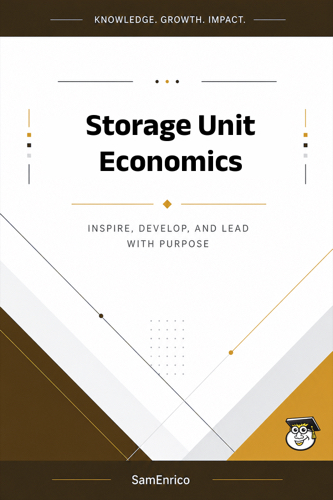
Storage Unit Economics
Calculate true cost of keeping excess belongings v
Calculate true cost of keeping excess belongings versus selling them.
Formats
About this book
Free sample
Chapter 1: The Receipt You Never See--–- The first time Elena Martinez wrote a check for $187.50, she told herself it was temporary. Her two-bedroom apartment had sold, her new studio lease started in three weeks, and she needed “just a little breathing room” for her mother’s oak dining table, the four boxes of wedding gifts she had never opened, and the treadmill her husband swore he would use again. That was thirty-seven months ago. Thirty-seven checks. Total paid: $6,937.50.
The oak table now has a water stain on its surface from a roof leak the storage facility never fixed. The wedding gifts remain sealed in their original Amazon boxes, now covered in a fine layer of dust and mouse droppings. The treadmill has become an expensive shelf for broken lamps and a bag of winter coats that no longer fit. Elena does not know any of this because she has not visited the unit in fourteen months. She pays automatically, every month, from a credit card she barely monitors.
The storage facility loves customers like Elena. They call her a “monthly annuity.”This chapter is about becoming the opposite of Elena. It is about learning to see the receipt that never arrives in your mailbox but that drains your bank account just the same: the invisible, cumulative cost of keeping things you do not use. Most people who rent storage units make a single, catastrophic mental error. They compare the original purchase price of an item—what they paid for it five or ten years ago—to the monthly storage fee.
“I can’t sell this couch,” they tell themselves. “I paid two thousand dollars for it.” Then they happily pay fifty dollars a month to keep it in a metal box, never calculating that after forty months (three years and four months), they will have paid the same two thousand dollars again. They have bought the couch twice. And they still cannot sit on it.This error has a name in behavioral economics. It is called the sunk cost fallacy, and it is the single greatest obstacle between you and financial…
This is the end of the free sample. Get the eBook to keep going. Buy now
Contents
- Chapter 1
- Chapter 2
- Chapter 3
- Chapter 4
- Chapter 5
- Chapter 6
- Chapter 7
- Chapter 8
- Chapter 9
- Chapter 10
- Chapter 11
- Chapter 12
Details
- Author
- Conyers Leana
- Publisher
- SamEnrico
- Language
- English
- Genre
- Non-Fiction, Business Brief, Cost Benefit
- Released
- 2026-06-08
- Pages (approx.)
- 141
- Available as
- eBook, Audiobook

Read better in the ZLOADR app
Your eBooks on your phone or tablet. Sign in with your SamEnrico account and start reading.
More by Conyers Leana
 Shift Work Vacation RecoveryConyers Leana$11.99
 Body Image for Vitiligo CourseConyers Leana$11.99
 Social Media Professional BalanceConyers Leana$11.99
 Peg System for Memorizing PricesConyers Leana$11.99
 The Codebreaker's Gambit: Alan Turing's Forgotten LegacyConyers Leana$11.99
 The Great Escape: The Untold Story of the 1977 NYC BlackoutConyers Leana$11.99
 No-Code App Business LaunchConyers Leana$11.99
 How to Become a Molder OperatorConyers Leana$11.99
 Executive Summary Best Practices for ConsultantsConyers Leana$12.99
 Source to Pay Cycle GuideConyers Leana$12.99
 Understanding Exner SyndromeConyers Leana$17.99
You may also like
 Hong Kong Handover 1997Dunn Johnnie$11.99
 Zumba For Postnatal Recovery CourseNeal Christian$11.99
 Zumba for BeginnersLadner Nikia$11.99
 YouTube Comment Mining GuideHumes Pandora$12.99
 Worry Box MeditationCarlin Rudy$11.99
 Workplace Stress MeditationNguyen Lynn$11.99
 Workplace Stress and Sleep RepairHawley Ivory$11.99
 Workplace Perfectionism CureDelaney Jeffry$11.99
 Workplace Injustice Anger GuideWallen Isabelle$11.99
 Work Addiction and Burnout LinkGreenwood Ester$11.99
 Women in Yoga and WellnessBeattie Galina$11.99
 Women in Stand Up ComedyChun Evangeline$11.99