
Step One Powerlessness Guide eBook
Deep dive into admitting powerlessness over addict
Deep dive into admitting powerlessness over addiction.
Formats
Free sample
Chapter 1: The Surrender Paradox--The first time someone told Sarah she needed to admit she was powerless, she laughed in their face. Not because she was in denial—she knew she had a drinking problem—but because the word "powerless" felt like an insult. She was a vice president at a marketing firm, a marathon runner, a mother of two who had never missed a school play. Powerless? She had built her entire identity on being the opposite of powerless.
And yet, there she sat at 10:17 on a Tuesday morning, having just poured the last of a hidden vodka bottle into her coffee mug, promising herself—for the three hundredth time—that this would be the last day. The last time. The final surrender to a better version of herself. By 2:00 that afternoon, she was drunk. By 6:00, she was crying in her car in the parking lot of her daughter's gymnastics studio, too afraid to go inside because she could not walk in a straight line.
By 10:00, she was googling "how to control your drinking" for the four hundredth time, scrolling past the same articles, the same worksheets, the same advice that had never once worked. Sarah was not powerless, she told herself. She was just not trying hard enough. That belief—that single, seductive, devastating belief—was the anchor that had been drowning her for seven years.This book exists because people like Sarah keep dying from the belief that they just need to try harder. Not dying in the literal sense only, though literal death is common enough.
Dying slowly, incrementally, in the thousand small annihilations of self-respect. Dying in the bathroom mirror at 3:00 a.m. Dying in the text messages you send that you would never send sober. Dying in the bank account you cannot explain. Dying in the eyes of a child who has learned not to trust your promises.
The medical establishment calls addiction a chronic brain disease. The 12-step movement calls it a spiritual malady. The self-help industry calls it a mindset problem. But every single one of these frameworks, if you follow them to their logical conclusion, eventually arrives at the same terrifying intersection: the person in the grip of addiction is not fully in control. Something else is driving the car.
And until you admit that, you will keep trying to drive using a steering wheel that is not connected to the wheels.This opening chapter confronts you with the central paradox of recovery: how can admitting defeat be the first step toward winning your life back? It is a paradox because our culture worships control. We are taught from kindergarten that we are the masters of our fate, the captains of our souls, the authors of our own stories. We are told that anything is possible if we want it badly enough, work hard enough, believe fiercely enough. These are beautiful lies, most of the time.
They fuel ambition, resilience, and the American Dream. But when applied to addiction, these lies become executioners. Because addiction is the one arena where wanting something badly enough does not make it happen. In fact, wanting it badly enough often makes it worse. The more you fight, the more you lose.
The more you promise, the more you break promises. The more you grip the steering wheel, the more the car swerves.What you will learn in this chapter—and what the rest of this book will relentlessly reinforce—is a single, unifying definition that resolves the paradox. It is a definition that respects the neuroscience of addiction, the lived experience of people like Sarah, and the legitimate concerns of those who fear that "powerlessness" is just another word for helplessness. Here it is, stated clearly, to be memorized, repeated, and internalized:You are powerless over the arrival of a craving. You are not powerless over your response to it.That is the entire book in one sentence.
Everything else is explanation, application, troubleshooting, and support. Read that sentence again. Let it sit. It does not say you are powerless over everything. It does not say you are a victim.
It does not say you have no agency. It says that cravings—those sudden, intrusive, obsessive thoughts about using a substance—arrive without your permission. They pop into your head like an uninvited guest. You did not choose to have them. You cannot think them away.
You cannot argue with them successfully. You cannot out-will them. Their arrival is not a moral failure. It is a neurological event, as impersonal as a sneeze or a hiccup. But what you do next—whether you feed the craving or starve it, whether you act on it or observe it—that is where your power lives.
That is where this book will teach you to build a life.The Story of the Unwinnable Battle Before we go any further, let me tell you about a man named David. David was a trauma surgeon. He had spent twenty years saving lives in the emergency room, making split-second decisions under extreme pressure, holding dying people together with his bare hands. He was calm, competent, and utterly unflappable. He was also an alcoholic.
Not the stereotype—he did not drink in the morning, did not miss shifts, did not show up drunk to work. He drank at night, alone, after his wife and children went to sleep. He drank precisely enough to fall asleep without dreaming, because the dreams were the real problem. The dreams of the patients he could not save. The dreams of the child who died on his table because the ambulance was delayed.
David had tried everything to stop drinking. He had tried meditation, exercise, therapy, medications, support groups, and a one-month inpatient program that cost forty thousand dollars. Nothing worked for more than a few weeks. Every time he stopped drinking, the cravings would come back, and he would eventually decide that one drink would not hurt. One drink always became ten.
Ten always became a month of nightly blackouts. And then he would start the cycle again, each time with a new strategy, a new promise, a new way to prove he was in control.The turning point came during a conversation with an addiction counselor who asked him a simple question: "What would you say to a patient who came into your ER with a severed femoral artery and told you they were going to stop the bleeding through positive thinking?"David laughed. "I would say they're going to die.""Exactly," the counselor said. "And that's what you're doing to yourself. You're trying to stop a biological hemorrhage with a belief system."That conversation changed everything for David, not because it told him something he did not know, but because it gave him permission to stop fighting.
He had been treating his cravings as if they were moral debates—as if the craving was an argument he could win if he just found the right counter-argument. But cravings are not arguments. They are neurological events. You cannot win a debate with a sneeze. You can only let it happen, or suppress it temporarily and pay the price later.
David stopped trying to defeat his cravings. He started noticing them, naming them, and waiting for them to pass. He…
This is the end of the free sample. Get the eBook to keep going. Buy now
About this book
Details
- Author
- Matthew Angle
- Publisher
- SamEnrico
- Language
- English
- Genre
- Non-Fiction, Self-Help, Step One
- Released
- 2026-06-09
- Pages (approx.)
- 146
- Available as
- eBook, Audiobook

Read better in the ZLOADR app
Your eBooks on your phone or tablet. Sign in with your SamEnrico account and start reading.
More by Matthew Angle
 Repossession LessonsMatthew Angle$11.99
 Long Distance Relationship Self WorthMatthew Angle$11.99
 Child Microbiome HealthMatthew Angle$11.99
 Reformation Sola Scriptura Battle GuideMatthew Angle$11.99
 The TM Sensory DeprivationMatthew Angle$11.99
 Metta Breathing IntegrationMatthew Angle$11.99
 Celebratory Spending SubstitutesMatthew Angle$11.99
 Family Business BurnoutMatthew Angle$11.99
 Tunguska: The Sky That Fell SilentMatthew Angle$11.99
 The Great Swap: How a Single Trade Reshaped Baseball ForeverMatthew Angle$11.99
 Stuart's Iron Dream: The Mechanical Marvels of the Overland TelegraphMatthew Angle$11.99
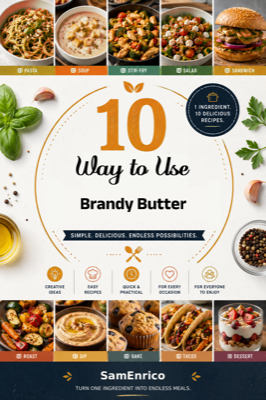 10 Ways to Use Brandy Butter (Recipe Book)Matthew Angle$11.99
You may also like
 Hong Kong Handover 1997Dunn Johnnie$11.99
 Zumba For Postnatal Recovery CourseNeal Christian$11.99
 Zumba for BeginnersLadner Nikia$11.99
 YouTube Comment Mining GuideHumes Pandora$12.99
 Worry Box MeditationCarlin Rudy$11.99
 Workplace Stress MeditationNguyen Lynn$11.99
 Workplace Stress and Sleep RepairHawley Ivory$11.99
 Workplace Perfectionism CureDelaney Jeffry$11.99
 Workplace Injustice Anger GuideWallen Isabelle$11.99
 Work Addiction and Burnout LinkGreenwood Ester$11.99
 Women in Yoga and WellnessBeattie Galina$11.99
 Women in Stand Up ComedyChun Evangeline$11.99