
Spotify Wrapped Comparison Guide eBook
Examines annual music statistics comparison among
by Bunn Randell
Examines annual music statistics comparison among friends.
Formats
Free sample
Chapter 1: The 30-Second Lie--–- December 4th. Your phone buzzes. Instagram stories explode. Group chats dissolve into chaos. Someone named Sarah—whom you haven't spoken to since college—is suddenly your mortal enemy because she listened to 87,432 minutes of music while you only managed 42,101.
How dare she. More importantly, how did she cheat?This is the moment the author first realized Spotify Wrapped had stopped being a harmless annual recap and had transformed into something far more sinister: a competition. The author remembers staring at his own Wrapped in 2019, genuinely confused. His top artist was someone he vaguely recalled liking in February but couldn't name a single song by in December. His total minutes seemed impossibly low compared to friends who worked desk jobs and could stream all day.
His "top genre" was something called "permanent wave"—which sounded less like music and more like a bad haircut from the 1980s.Something wasn't adding up. And that something was the algorithm.Every year, millions of users share their Wrapped screenshots with pride, shame, or competitive glee. But almost none of them understand how Spotify actually counts their listening. They assume that playing a song for one second counts the same as playing it for three minutes. They assume their "Top Artist" reflects their true favorites, not a weighted formula that favors recent obsessions over long-term loyalties.
They assume their friends with astronomical minute totals are simply more dedicated music fans—when in reality, many of them are accidentally (or intentionally) gaming the system.This chapter dismantles those assumptions. By the time you finish reading, you will understand exactly how Spotify's counting methodology works, why your February obsession can beat your year-long favorite, and how to spot a friend whose stats are statistically impossible. More importantly, you will learn that the first step to winning any competition—including the annual Wrapped showdown—is understanding the rules that everyone else ignores.Welcome to the algorithm behind the aesthetic.The Most Important Number You've Never Heard Of Let's start with the single most consequential detail in all of Spotify Wrapped. It is never explained in the app. It is not mentioned on the Wrapped splash screen.
Spotify's support pages bury it in dense legal language. Yet without understanding this number, your entire interpretation of Wrapped is fundamentally flawed.That number is thirty.As in thirty seconds.Spotify counts a "stream" only after a user has listened to a track for at least thirty continuous seconds. Hit the skip button at twenty-nine seconds? It never happened. Accidentally tap a song and immediately swipe away?
Didn't count. Fall asleep two seconds into a lullaby and let your phone play for eight hours? Those eight hours count—but only if each individual track survives the thirty-second threshold.This thirty-second rule is the foundation upon which all Wrapped statistics are built. It separates casual skimmers from genuine listeners. It explains why your friend who "listens to everything" has suspiciously low minutes.
It reveals why the person who leaves lo-fi hip hop on mute for sixteen hours a day (a strategy we will dismantle thoroughly in Chapter 4) can rack up impossible totals.But the thirty-second rule has a darker implication, one that most users never consider: it is trivially easy to game. Playing a song on mute for thirty seconds counts exactly the same as passionately singing along for four minutes. A bot that streams the same obscure track on repeat for thirty-second increments will generate identical data to a devoted fan. Spotify's algorithm cannot distinguish between intention and automation, between love and manipulation.This is not a design flaw. It is a deliberate choice.
Spotify wants to count engaged listening while filtering out accidental playback. The thirty-second rule accomplishes that reasonably well for the average user. But for the competitive Wrapped participant—the person reading this book—the thirty-second rule is both a weapon and a vulnerability. You can use it to understand why your numbers look the way they do. And your friends can use it to inflate their own.Remember this number.
Thirty seconds. It will reappear throughout this book, most notably when we discuss ambient listening in Chapter 4, ghost listeners in Chapter 9, and the platform wars in Chapter 12. For now, simply internalize this: every single statistic in your Wrapped begins with a thirty-second audition. If a song doesn't survive that audition, it never existed.Top Songs vs. Top Artists: The Hidden War Now that you understand the atomic unit of Spotify counting—the thirty-second stream—we can examine how those streams aggregate into the two most visible numbers in your Wrapped: your Top Songs list and your Top Artists ranking.At first glance, these seem like sibling statistics.
Your top song is simply the track you streamed most often, right? Your top artist is simply the musician who appears most frequently across your top songs, correct?Wrong on both counts. And the difference explains why your Wrapped often feels slightly "off" compared to your actual memory of the year.Let's start with Top Songs. This is the simpler of the two metrics. Your top five or top ten songs (Wrapped varies the exact number year to year) are ranked by raw stream count.
Every thirty-second stream of a track adds one to its total. The song with the highest number of streams becomes your number one. Simple, transparent, and exactly what you would expect.But simplicity hides a crucial nuance: all streams are weighted equally. A song you binged obsessively for two weeks in February—say, forty streams in fourteen days—will outrank a song you played steadily once per week for the entire year—fifty-two streams total—if the February binge generated more than fifty-two streams. This is where the February Fluke, a concept we will explore psychologically in Chapter 10, is born.
Your Wrapped top song often reflects your most concentrated obsession, not your most enduring favorite.Now consider Top Artists. This metric operates under completely different rules. Spotify does not simply count which artist appears most frequently across your stream history. Instead, the company uses a weighted system that prioritizes recent listening. An artist you discovered in October and streamed heavily through November can dethrone an artist you loved consistently from January to September.Why?
Spotify's internal documentation (and extensive testing by data scientists on platforms like Reddit's r/truespotify) suggests the company believes recent listening is more indicative of current taste than historical data. Your Wrapped is meant to represent "your year in review," but Spotify subtly biases the results toward the last few months. This creates a strange incentive structure: an artist you abandoned in March is less likely to appear as your top artist than a November fling, even if the March artist received more total streams.The practical implication for comparison is enormous. When you look at a friend's Top Artists list, you are not seeing their most-streamed artists of the year. You are seeing their most-streamed artists of the year, with a thumb on the scale for recent activity.
That friend who suddenly has a obscure indie band as their number one artist? They probably discovered that band in October. The friend whose top artist is a…
This is the end of the free sample. Get the eBook to keep going. Buy now
About this book
Details
- Author
- Bunn Randell
- Publisher
- SamEnrico
- Language
- English
- Genre
- Non-Fiction, Self-Help, Music
- Released
- 2026-06-10
- Pages (approx.)
- 117
- Available as
- eBook, Audiobook

Read better in the ZLOADR app
Your eBooks on your phone or tablet. Sign in with your SamEnrico account and start reading.
More by Bunn Randell
 Congressional Primary ChallengesBunn Randell$11.99
 Beyonce Lemonade FormationBunn Randell$11.99
 No Meeting Day StrategyBunn Randell$11.99No Meeting Day StrategyBunn Randell$11.99
 Social Media Blocking AppsBunn Randell$11.99
 Weekly Review SchedulingBunn Randell$11.99
 Email Can It Be An FAQBunn Randell$11.99
 Scripting for OCD ManagementBunn Randell$11.99
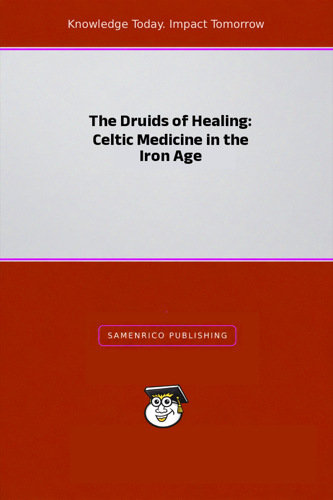 The Druids of Healing: Celtic Medicine in the Iron AgeBunn Randell$11.99
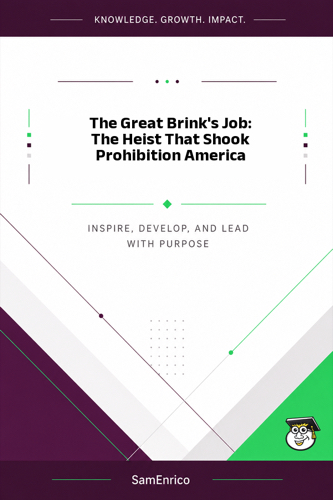 The Great Brink's Job: The Heist That Shook Prohibition AmericaBunn Randell$11.99
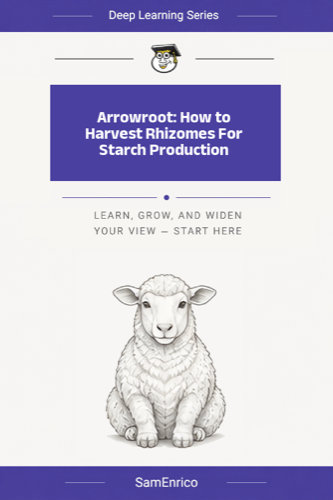 Arrowroot: How to Harvest Rhizomes For Starch ProductionBunn Randell$11.99
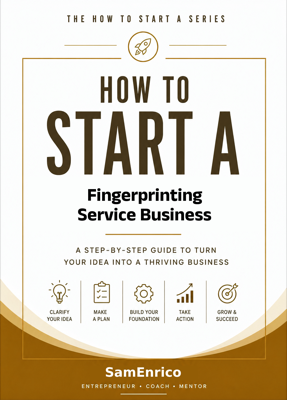 How to Start a Fingerprinting Service Business (Beginners Guide)Bunn Randell$11.99
You may also like
 The Body Scan for MusiciansDodson Carina$11.99
 Apple Music Stream ComparisonCreel Kathie$11.99
 Habit Formation for MusiciansBull Deja$11.99
 NVC for MusiciansWilke Celestine$11.99
 Musician Dream Journal MethodSosa Tisha$11.99
 Improvised Musical TrainingLombardo Jarod$11.99
 Growth Mindset In MusicPak Belia$11.99
 DBT For MusiciansRowe Willie$11.99
 The Musical Memory Sleep GuideLand Lavina$11.99
 Weekly Review for Musicians GuidePace Jeni$11.99
 Student Music Breaks GuideMccall Shira$11.99
 SoundCloud Play ComparisonConnelly Alethia$11.99