
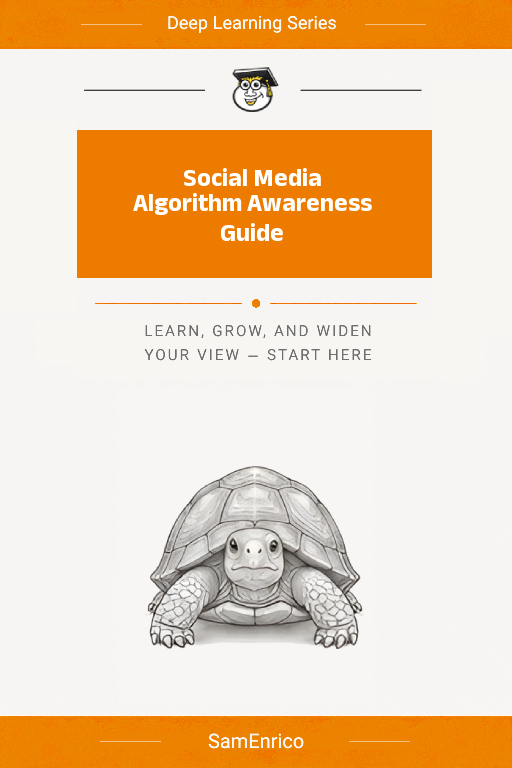
Non-FictionMental WealthAlgorithm Literacy
Social Media Algorithm Awareness Guide eBook
Understand how algorithms amplify comparison and c
Understand how algorithms amplify comparison and curate envy inducing content.
Formats
Free sample
Chapter 1: The Envy Loop--–- You open your phone. You tap the icon with the colorful square. Three minutes later, your jaw is clenched, your chest feels tight, and you are quietly wondering why your life looks so different from the lives on the screen. You close the app. You feel worse than when you opened it.
Then you open it again.This is not a character flaw. It is not a lack of willpower. It is not because you are weak, or jealous, or broken. It is because you have walked into a machine that was built to make you feel this way—and you did not know the machine existed until now.Welcome to the first chapter of your education. By the time you finish reading these pages, you will never scroll the same way again.
Not because you will quit social media forever (though you might, and that is fine), but because you will finally see the strings. And once you see them, they lose most of their power.Let us begin with a simple question that has a complicated answer: Why does a neutral scroll so often end in a spiral of envy?The short answer is the Attention Economy. The longer answer requires us to understand what an algorithm actually is, how it learned to exploit your insecurities, and why feeling worse is not an accident—it is a predictable outcome of a system optimized for one thing only: your time.What Is an Algorithm, Really?Before we can fight the machine, we need to understand what it is and what it is not.An algorithm is simply a set of mathematical rules that processes data to make a decision or a prediction. In the context of social media, the algorithm takes your past behavior (what you have paused on, liked, shared, scrolled past, or rewatched) and predicts what you are most likely to engage with next. That is it.
There is no consciousness. There is no malice. There is no little gremlin inside the server rubbing its hands together and cackling at your pain.But here is the crucial twist: the algorithm is given a goal by the people who built it. That goal is almost always the same across every major platform—maximize the amount of time you spend inside the app. Maximize what engineers call dwell time.
Because the longer you stay, the more ads you see. The more ads you see, the more money the platform makes.This is the Attention Economy. Your attention is the product being bought and sold. Advertisers pay platforms for access to your eyeballs, and platforms pay engineers to build algorithms that keep your eyeballs glued to the screen.Now here is the uncomfortable discovery that every major platform made between 2012 and 2016, through thousands of A/B tests: negative emotions keep people scrolling longer than positive or neutral emotions.Fear, outrage, anxiety, and envy are stickier than joy. They activate the brain's threat-detection system, which evolved to keep you alert to danger.
When you feel threatened, your brain releases cortisol and norepinephrine, which sharpen your focus and make you want to stay vigilant. That sharpened focus translates directly into longer sessions. A user who feels mildly envious will scroll for an average of 40% longer than a user who feels calm or happy.The platforms did not create this biological fact. They simply discovered it, measured it, and optimized for it.This is not a conspiracy. It is capitalism.
And the first step to protecting yourself is to stop blaming yourself for feeling bad and start recognizing that you are playing a game where the rules are hidden and the house always wins.The Envy Loop: A Four-Step Cycle You Did Not Know You Were In Now let us name the mechanism that does the most damage. Let us call it the Envy Loop.The Envy Loop has four steps, and it can complete a full cycle in less than ten seconds. You have been through this loop hundreds or thousands of times. You just never had a name for it before.Step One: Exposure You see a post that contains what psychologists call aspirational content. This could be a vacation photo from a friend who seems to be traveling constantly.
A fitness influencer with a body that looks airbrushed (and probably is). A former classmate announcing a promotion. An acquaintance getting engaged. A stranger showing off a new car. Any content that creates a gap between where you are and where you think you should be.The key here is that the post does not have to be real.
It does not have to be accurate. It does not even have to be true. It only has to create the perception of a gap. Filters, stolen photos, undisclosed sponsorships, staged images—none of that matters to the algorithm. All that matters is whether you stop.Step Two: The Pang Within milliseconds of seeing that aspirational content, your brain performs an automatic social comparison.
This is not a choice. It is a reflex, rooted in the oldest parts of your cognitive architecture. The human brain evolved in small tribes where comparing yourself to others was essential for survival. If everyone else had found a water source and you had not, that comparison motivated you to keep looking. If others were building better shelters, that comparison motivated you to improve.On social media, that ancient reflex is hijacked.
Instead of comparing yourself to the fifteen people in your immediate tribe, you are comparing yourself to a curated, filtered, algorithmically amplified version of millions of people. The gap you feel is not real—but the pang feels real because your nervous system cannot tell the difference between a genuine threat and a well-lit photograph.Step Three: The Pause This is the most important step in the loop, and it is the step that feeds the algorithm.When you feel that pang of inadequacy, your body responds. Your thumb stops scrolling. Your eyes linger on the image. You might lean in slightly.
You might re-watch a video for the second or third time. You might zoom in on a detail—a handbag, a background, a facial expression.That pause, measured in milliseconds, is the strongest signal you can send to the algorithm. It is stronger than a like. It is stronger than a comment. It is stronger than a share.
Why? Because a like takes almost no effort. A like can be reflexive, performative, or even accidental. But a pause is different. A pause requires sustained attention.
It requires your brain to allocate resources to that specific piece of content. And in the world of machine learning, sustained attention is the most predictive signal of future engagement.If you pause on a post for three seconds, the algorithm notes that. If you pause for five seconds, it notes that too. If you re-watch a video, the algorithm flags that content for immediate promotion. You are not just feeling envy—you are voting for more of it with your thumb.Step Four: Reinforcement The algorithm takes your pause, your re-watch, or your zoom and adds it to your user profile.
The next time you open the app, you will see more content that resembles the post you paused on. Not…
This is the end of the free sample. Get the eBook to keep going. Buy now
About this book
Details
- Author
- Reddick Emmitt
- Publisher
- SamEnrico
- Language
- English
- Genre
- Non-Fiction, Mental Wealth, Algorithm Literacy
- Released
- 2026-06-01
- Pages (approx.)
- 124
- Available as
- eBook, Audiobook

Read better in the ZLOADR app
Your eBooks on your phone or tablet. Sign in with your SamEnrico account and start reading.
More by Reddick Emmitt
 Upwork JSS Recovery PlanReddick Emmitt$11.99
 Credit Card Dependency CureReddick Emmitt$11.99
 Heart Rate Circadian GuideReddick Emmitt$11.99
 The Sobriety Letter to SelfReddick Emmitt$11.99
 Prostatitis Pain MeditationReddick Emmitt$11.99
 Burnout Warning Signs GuideReddick Emmitt$11.99
 Adrenaline Rush ProtocolReddick Emmitt$11.99
 Antitrust Compliance Audit PrepReddick Emmitt$11.99
 The Pink Panther Heist: A Billion-Dollar Jewel CaperReddick Emmitt$11.99
 Whispers of the Forgotten: The Last Lament of the Lost ColonyReddick Emmitt$11.99
 Blades on Ice: The Birth of British Hockey's Golden AgeReddick Emmitt$11.99
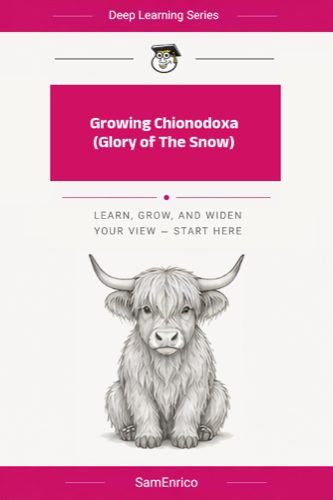 Growing Chionodoxa (Glory of The Snow)Reddick Emmitt$11.99
You may also like
 Hong Kong Handover 1997Dunn Johnnie$11.99
 Zumba For Postnatal Recovery CourseNeal Christian$11.99
 Zumba for BeginnersLadner Nikia$11.99
 YouTube Comment Mining GuideHumes Pandora$12.99
 Worry Box MeditationCarlin Rudy$11.99
 Workplace Stress MeditationNguyen Lynn$11.99
 Workplace Stress and Sleep RepairHawley Ivory$11.99
 Workplace Perfectionism CureDelaney Jeffry$11.99
 Workplace Injustice Anger GuideWallen Isabelle$11.99
 Work Addiction and Burnout LinkGreenwood Ester$11.99
 Women in Yoga and WellnessBeattie Galina$11.99
 Women in Stand Up ComedyChun Evangeline$11.99