
Non-FictionBusiness BriefSMS Marketing
SMS Based Freemium Upsell eBook
Use SMS notifications to convert freemium users in
by Bolt Loan
Use SMS notifications to convert freemium users in low broadband areas. Send upgrade offers, feature alerts, and payment links via text message.
Formats
Free sample
Chapter 1: The Connectivity Lie--–- On a humid evening in Lagos, a young entrepreneur named Amara watched her analytics dashboard in disbelief. Her new freemium productivity app had been downloaded 50,000 times in just three weeks. The retention curve looked beautiful for the first three days. Then it fell off a cliff. By day seven, 92 percent of her users had vanished.
Her investors asked the usual questions: Was the product broken? Were the onboarding screens confusing? Was the freemium limit too stingy? Amara ran every diagnostic she knew. The product worked flawlessly.
The onboarding was simpler than any competitor. The freemium tier offered generous value. Nothing explained the exodus.Then she did something most founders never think to do. She called twenty of her lost users. Not emailed.
Not surveyed. Called. And what she learned transformed everything she understood about mobile marketing.The first user, a taxi driver in Accra, told her: "I love your app when I am at home on Wi-Fi. But when I am on the road, I cannot use it. Data is too expensive.
I turn off my mobile data after 10 AM every day because I have used my daily budget. Your app tries to send me notifications, but they never arrive. I forget about it by evening."The second user, a university student in rural Maharashtra, said: "I only have signal between 6 AM and 8 AM and again between 9 PM and 11 PM. The rest of the day, the tower near my village is overloaded. Your app thinks I have abandoned it.
I haven't. I just cannot connect."The third user, a mother of two in Manila, explained: "My phone plan gives me one gigabyte per month. I use it all in the first week watching videos for my children. For the remaining three weeks, I have no data at all. Your app still works if I have already downloaded something, but it never tells me anything.
I forget I have it."Amara realized something painful. Her beautiful analytics dashboard was not measuring user behavior. It was measuring connectivity. And she had built her entire freemium conversion strategy on a lie—the lie that her users were always online.This book exists because Amara's story is not an exception. It is the rule for more than three billion smartphone users around the world.The 80/20 Rule You Have Never Heard Of Most marketing books will tell you that mobile devices now account for 65 percent of all digital media time.
They will cite studies about how users check their phones 96 times per day. They will show you beautiful charts about the rise of mobile commerce. All of this data comes from the same source: users in high-bandwidth, always-connected environments. Usually in North America, Western Europe, or urban East Asia. Usually with unlimited or generous data plans.
Usually with reliable 4G or 5G coverage.This data is not wrong. It is incomplete.The reality for the majority of the world's smartphone users is fundamentally different. They have smartphones—often surprisingly good ones, purchased secondhand or on installment plans. They have apps—downloaded during rare moments of Wi-Fi access at work, school, or internet cafes. But they do not have always-on broadband.
They have intermittent, expensive, rationed connectivity.Let me give you a number that will change how you think about your freemium business: the average smartphone user in emerging markets turns off their mobile data for 12 to 16 hours per day. Not because they do not want to be connected. Because data costs money, and they have carefully budgeted how much they can spend.In Nigeria, one gigabyte of mobile data costs approximately 2.5 percent of the average monthly income. In India, it is lower but still significant for daily wage workers. In Brazil, users regularly exceed their data caps by the third week of the month and spend the remaining days in what I call "data darkness." In Indonesia, users frequently toggle between multiple SIM cards from different carriers, chasing the best signal or the cheapest rate for a specific hour of the day.Your freemium app does not exist in a laboratory.
It exists in this chaotic, beautiful, frustrating reality of intermittent connectivity.Introducing the Offline Hour Let me give you a framework that will anchor everything in this book. I call it the Offline Hour.The Offline Hour is a predictable daily window—usually 60 to 120 minutes—when a specific user segment has either no cellular data connection or a connection so expensive that they have deliberately disabled it. During these windows, in-app prompts do not load. Push notifications queue silently and may never be delivered. Email sits on servers.
But SMS messages arrive instantly and reliably because SMS uses the cellular voice channel, not the data channel.Here is what makes the Offline Hour so powerful. It is not random. It follows patterns that you can identify, measure, and predict.Take commuters in Mexico City. They spend 90 minutes each way on the metro, where data signals are weak to nonexistent. During those 90 minutes, they have SMS connectivity but no reliable data.
Take farmers in Kenya. They wake at 5 AM to check market prices before the 6 AM data slowdown when the local tower becomes congested. They have a reliable Offline Hour from 6 AM to 8 AM when they are working in fields with no signal. Take students in Vietnam. They use campus Wi-Fi during the day but have no data at night when they return to boarding houses outside the city.
Their Offline Hour runs from 9 PM to 6 AM.Your freemium users are not abandoning your app during these hours. They are simply offline. And when they come back online, they are overwhelmed with notifications from every app that queued messages during their offline period. Most of those notifications get swiped away without a glance.SMS is different. SMS arrives during the Offline Hour.
It is not competing with thirty other queued notifications. It is often the only message they receive during that window. And because it arrives at a moment when they have nothing else to do—waiting for a bus, sitting on a train, lying in bed before sleep—it gets read.I have seen companies double their freemium conversion rates simply by moving their upgrade prompts from in-app to SMS and timing those SMS messages to arrive during the user's predicted Offline Hour. No change to the offer. No change to the pricing.
Just better timing and a more reliable channel.The Connectivity Audit Before you can convert freemium users via SMS, you need to understand your specific users' connectivity patterns. Most companies skip this step entirely. They assume that because they have always-on connectivity, their users do too. This assumption is expensive.I recommend running a Connectivity Audit before implementing any of the strategies in this book. Here is how it works.First, export your freemium user data for the last thirty days.
Look for usage gaps that correlate with time of day. Do your users in Brazil consistently drop off between 2 PM and 5 PM? That might be when they exceed their monthly data cap. Do your users in India have lower activity on Sundays? That might be when they are traveling to villages with poor coverage.
Do your users in Indonesia have two daily peaks—morning and evening—with a long gap in between? That is the classic…
This is the end of the free sample. Get the eBook to keep going. Buy now
About this book
Details
- Author
- Bolt Loan
- Publisher
- SamEnrico
- Language
- English
- Genre
- Non-Fiction, Business Brief, SMS Marketing
- Released
- 2026-06-01
- Pages (approx.)
- 150
- Available as
- eBook, Audiobook

Read better in the ZLOADR app
Your eBooks on your phone or tablet. Sign in with your SamEnrico account and start reading.
More by Bolt Loan
 The Prison Phone CallBolt Loan$11.99
 Investment Banker Stress ReliefBolt Loan$11.99
 Self Hypnosis for JealousyBolt Loan$11.99
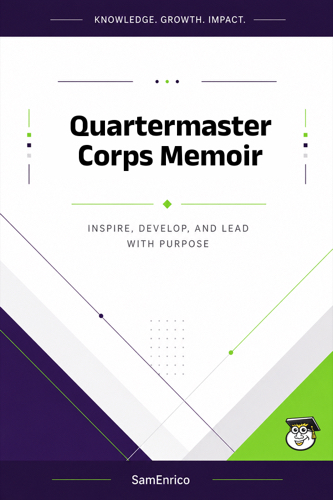 Quartermaster Corps MemoirBolt Loan$11.99
 The Botanical Visionary: Thomas Andrew Dorsey and the Science of African FloraBolt Loan$11.99
 How to Produce Billiard Table ClothBolt Loan$11.99
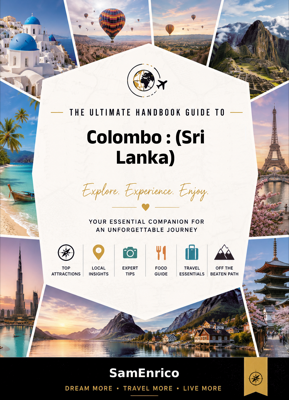 Ultimate Handbook Guide to Colombo : (Sri Lanka) Travel GuideBolt Loan$11.99
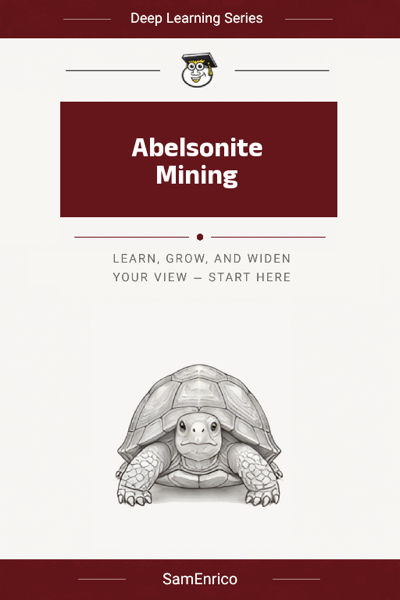 Abelsonite MiningBolt Loan$11.99
You may also like
 Hong Kong Handover 1997Dunn Johnnie$11.99
 Zumba For Postnatal Recovery CourseNeal Christian$11.99
 Zumba for BeginnersLadner Nikia$11.99
 YouTube Comment Mining GuideHumes Pandora$12.99
 Worry Box MeditationCarlin Rudy$11.99
 Workplace Stress MeditationNguyen Lynn$11.99
 Workplace Stress and Sleep RepairHawley Ivory$11.99
 Workplace Perfectionism CureDelaney Jeffry$11.99
 Workplace Injustice Anger GuideWallen Isabelle$11.99
 Work Addiction and Burnout LinkGreenwood Ester$11.99
 Women in Yoga and WellnessBeattie Galina$11.99
 Women in Stand Up ComedyChun Evangeline$11.99