
Non-FictionHealth & WellnessQuick Energy
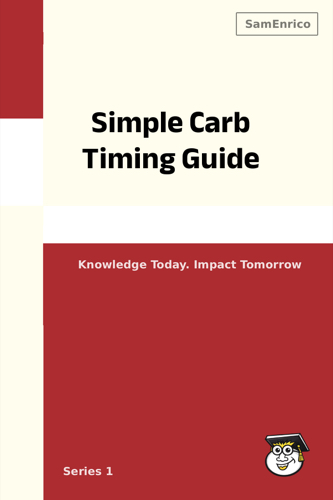
Simple Carb Timing Guide eBook
Explains when to use simple sugars around exercise
by Wester Vonda
Explains when to use simple sugars around exercise for energy.
Formats
Free sample
Chapter 1: The Sugar Paradox...–- Every four years, the world watches as Olympic runners collapse in the final meters of a 10,000-meter race. They don't fall because their legs give out. They don't stumble because their lungs burn. They crumble because their brains suddenly stop receiving fuel. Their livers have run dry.
And in that moment, all the months of disciplined low-carb eating, all the keto adaptation, all the fear of sugar—it all becomes meaningless. The gold medal goes to someone who understood something most athletes get dangerously wrong: that simple sugar, strategically timed, is not the enemy. It is the difference between a podium and a stretcher.This is not another book about why sugar is killing you. You have read those books. You have been told to avoid white foods, to fear insulin spikes, to treat fruit juice like poison.
And for the sedentary office worker with metabolic syndrome, that advice saves lives. But you are not sedentary. You are not typing emails while your pancreas struggles to process a soda. You are running, cycling, lifting, swimming, climbing, or competing. And when you exercise at high intensity, your body undergoes a fundamental metabolic shift that changes every rule about carbohydrates.The lie that "carbs are bad" has been repeated so often that it has become dogma, seeping into locker rooms, nutrition blogs, and coaching certifications.
Athletes show up to races having followed strict low-carb protocols for months, only to bonk spectacularly at mile eighteen. They blame their fitness. They blame the weather. They blame everything except the obvious: they ran out of the one fuel their brain desperately needs during sustained high-output effort.This chapter will dismantle that lie. It will explain why the rules for the couch are not the rules for the track.
It will introduce the concept of metabolic flexibility—the ability to switch between fat and sugar based on demand—and show why elite athletes are not "fat-adapted" or "sugar-dependent" but both, fluidly, depending on the moment. Most importantly, it will set the foundation for everything that follows: that simple sugars, timed precisely around exercise, are not a guilty pleasure. They are a performance tool, as strategic as your warm-up or your cool-down.The Great Misunderstanding: How Diet Culture Hijacked Sports Nutrition To understand why athletes fear sugar, you must first understand how diet culture confused the public. In the 1990s, the low-fat craze dominated. By the 2000s, research began to show that sugar and refined carbohydrates were driving the obesity epidemic, not dietary fat.
Books like Good Calories, Bad Calories and The Obesity Code made compelling arguments that chronic sugar consumption leads to insulin resistance, fatty liver disease, and metabolic dysfunction. This was correct science—for the general population.But somewhere along the way, the message mutated. It became "sugar is poison" rather than "excess sugar in a sedentary context is problematic." Social media influencers declared that sugar caused inflammation, brain fog, and premature aging. Keto and paleo diets exploded, promising that fat adaptation would unlock limitless energy. Athletes, desperate for any competitive edge, adopted these protocols with religious fervor.The results have been disastrous.
Study after study shows that low-carb diets impair high-intensity exercise performance. A 2017 review in the Journal of Sports Medicine found that while fat adaptation can improve fat oxidation during low-intensity work, it consistently reduces the body's ability to use glycogen for sprinting, climbing, and race-pace efforts. In plain English: you can walk forever on fat. But you cannot sprint, climb hills, or set personal records without sugar.Consider the experience of professional triathlete Tim O'Donnell, who attempted a low-carb, high-fat diet before the 2019 Ironman World Championships. He reported feeling "flat" and unable to hit his usual power numbers on the bike.
He abandoned the protocol after his performance suffered. Or consider the countless recreational marathoners who show up to starting lines having spent months avoiding pasta, rice, and gels, only to walk the last six miles wondering why their bodies betrayed them.The betrayal was not their bodies. It was the lie.What Happens to Your Body During High-Intensity Exercise To understand why simple sugars become essential during exercise, you must understand what happens inside your muscle cells when you push hard. This is not complicated physiology, but it is misunderstood even by otherwise knowledgeable athletes.Your body has three energy systems. The phosphocreatine system powers the first 5–10 seconds of all-out effort—a heavy deadlift, a 40-yard dash.
It requires no oxygen and no carbohydrate directly. The glycolytic system kicks in for efforts lasting from 10 seconds to about 3 minutes—a 400-meter run, a set of 12 repetitions on squats. This system breaks down glucose (from muscle glycogen or blood sugar) to produce ATP quickly, but it produces lactate as a byproduct. The oxidative system powers everything beyond 3 minutes—a 5K run, a marathon, a long bike ride. This system can use both fat and carbohydrate, but it requires oxygen.Here is the critical point: the oxidative system can burn fat, but only at lower intensities.
Once you exceed approximately 65% of your VO₂ max—roughly a conversational pace where speaking becomes difficult—your body cannot oxidize fat fast enough to meet energy demands. At 75% of VO₂ max, fat provides maybe 30% of your fuel. At 85%, it drops to 10% or less. The rest must come from carbohydrate.This is not a design flaw. It is a feature.
Carbohydrate, specifically glucose, produces more ATP per unit of oxygen than fat does. When oxygen becomes the limiting factor—which it always does during high-intensity exercise—your body preferentially burns glucose because it is more oxygen-efficient. Fat is abundant, but it is slow. Sugar is limited, but it is fast.Your body stores about 400–500 grams of glycogen in your muscles and another 80–100 grams in your liver. That is roughly 2,000 calories of carbohydrate energy—enough for about 90 minutes of hard running or 2–3 hours of moderate cycling.
After that, you are running on empty. And because your brain alone consumes about 120 grams of glucose per day, when liver glycogen runs out, your central nervous system begins to fail alongside your muscles.This is the metabolic reality that low-carb dogma ignores. You can adapt to burn more fat. You can become more efficient. But you cannot change the fundamental biochemistry: high power output requires carbohydrate, and simple carbohydrate at that.The Problem with Complex Carbs Around Exercise Many athletes understand that they need carbohydrates.
They eat oatmeal before long runs. They pack whole grain sandwiches for bike rides. They believe that "slow carbs" are superior because they provide steady energy without spikes.This belief is wrong for exercise contexts.When you eat complex carbohydrates—starches from oats, rice, bread, potatoes—your body must break them down into simple sugars before they can be absorbed. This process takes time. Gastric emptying for complex carbs typically requires 60–90 minutes, compared to 20–30 minutes for simple sugars.
During exercise, blood flow is shunted away from your digestive system to your working muscles. This further slows digestion. The result: complex carbs sit in your stomach like a brick, causing sloshing, nausea, and delayed energy delivery.Worse, complex carbs do not raise blood glucose quickly enough to rescue a bonk. If you feel the telltale…
This is the end of the free sample. Get the eBook to keep going. Buy now
About this book
Details
- Author
- Wester Vonda
- Publisher
- SamEnrico
- Language
- English
- Genre
- Non-Fiction, Health & Wellness, Quick Energy
- Released
- 2026-06-09
- Pages (approx.)
- 118
- Available as
- eBook, Audiobook

Read better in the ZLOADR app
Your eBooks on your phone or tablet. Sign in with your SamEnrico account and start reading.
More by Wester Vonda
 Crisis Communication Outbreak HandbookWester Vonda$11.99
 Emotion Exposure DBT GuideWester Vonda$11.99
 Evening Procrastination ResetWester Vonda$11.99
 Lifting Toddler from FloorWester Vonda$11.99
 My Suitcase Life StoryWester Vonda$11.99
 Widow Brain Fog WorkbookWester Vonda$11.99
 Nobel Prize for the Structure of DNAWester Vonda$11.99
 The Ransom of Marathon: Athens' Desperate Gambit Against Persia (490 BC)Wester Vonda$11.99
 Oriana Fallaci: The Journalist Who Shook the WorldWester Vonda$11.99
 How to Start a Metal Window Fixing Business (Beginners Guide)Wester Vonda$11.99
 How to Produce WheelbarrowsWester Vonda$11.99
 How to Produce Marine SpeakersWester Vonda$11.99
You may also like
 Hong Kong Handover 1997Dunn Johnnie$11.99
 Zumba For Postnatal Recovery CourseNeal Christian$11.99
 Zumba for BeginnersLadner Nikia$11.99
 YouTube Comment Mining GuideHumes Pandora$12.99
 Worry Box MeditationCarlin Rudy$11.99
 Workplace Stress MeditationNguyen Lynn$11.99
 Workplace Stress and Sleep RepairHawley Ivory$11.99
 Workplace Perfectionism CureDelaney Jeffry$11.99
 Workplace Injustice Anger GuideWallen Isabelle$11.99
 Work Addiction and Burnout LinkGreenwood Ester$11.99
 Women in Yoga and WellnessBeattie Galina$11.99
 Women in Stand Up ComedyChun Evangeline$11.99