
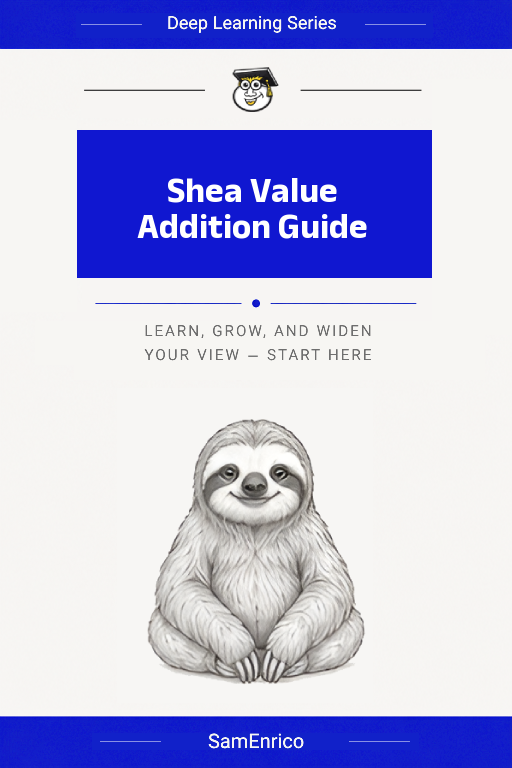
Non-FictionBusiness BriefAgricultural Trade
Shea Value Addition Guide eBook
Add value to shea butter before export to Europe.
by Condon Pia
Add value to shea butter before export to Europe. Refining, fractionation, and cosmetic grade.
Formats
Free sample
Chapter 1: Beyond the Kernel--The first time a container of crude shea butter gets rejected at the port of Rotterdam, the exporter usually blames bad luck. The second time, they blame the inspector. By the third rejection, they are out of business. This is not a hypothetical scenario. In 2022 alone, the European Union’s Rapid Alert System for Food and Feed recorded over forty separate notifications for shea butter shipments—rejected for reasons ranging from excessive polycyclic aromatic hydrocarbons to undeclared pesticide residues to simply “off odor” that failed sensory evaluation.
Each rejection represents not just a lost shipment but a burned commercial relationship, often permanently. The crude butter era is ending, and most African shea exporters do not yet realize it.To understand why, we must first understand the scale of what is at stake. The global shea industry today generates approximately €2.76 billion in annual trade value, measured from kernel harvest to final consumer product. Of this immense sum, less than twenty percent—barely €500 million—is captured by the African producers and exporters who supply the raw material. The remaining eighty percent flows to refiners, fractionators, formulators, and brand owners in Europe, North America, and increasingly Asia.
This is not exploitation in the traditional sense. It is the natural economics of commodity markets, where value is added not by the farmer but by the industrial processor who transforms a variable natural product into a predictable industrial ingredient. The farmer harvests the kernel. The refiner harvests the margin.But the ground beneath this industry is shifting faster than at any point in the past three decades. European multinationals—Ferrero, L’Oréal, Unilever, Nestlé—are no longer simply purchasing shea butter.
They are specifying it with the precision of a pharmaceutical buyer. They demand consistent fatty acid profiles, verified by gas chromatography. They require certificates of analysis that document peroxide values below 1.0 meq O2/kg. They test for contaminants at parts-per-billion levels. And increasingly, they are demanding traceability not just to the country of origin but to the specific women’s collecting group that harvested the kernels.
The age of the anonymous container of crude shea is ending.This chapter establishes the strategic foundation for everything that follows in this book. It answers three fundamental questions that every shea processor—whether a village cooperative or a multinational refinery—must answer before investing a single euro in value addition equipment. First, what does the European market actually want, and how has that demand changed in the past five years? Second, who are the dominant players already capturing value, and can a new entrant compete with them? And third, which specific market segments offer the highest returns for African processors willing to move beyond crude exports?
By the end of this chapter, you will understand not just the opportunity but the urgency. The window for crude butter exports is closing. The window for refined, fractionated, certified shea is wide open—but it will not remain so forever.The €2.76 Billion Landscape: Where the Money Actually Goes Let us begin with the numbers that matter, not the headlines. The shea value chain can be divided into four distinct tiers, each with its own economics, buyers, and margin structure.At the base lies the harvest and primary processing tier. Women in rural communities across West Africa—principally Burkina Faso, Mali, Ghana, Côte d’Ivoire, Benin, Togo, Nigeria, and Senegal—collect shea kernels from wild parklands.
The trees are not planted or cultivated in any conventional sense. They are preserved, protected, and harvested from the savannah. After collection, the kernels are dried, sometimes roasted, and mechanically pressed or water-boiled to extract crude shea butter. This crude butter, typically with free fatty acid levels between five and fifteen percent, dark color, and a strong characteristic odor, sells for approximately €1.20 to €1.80 per kilogram. The women who produce it, after accounting for their time, transport, and processing costs, typically earn less than €0.50 per kilogram of finished butter.The second tier is the export and aggregation tier.
Local traders and mid-sized exporters purchase crude butter from multiple collecting groups, blend it to achieve some consistency, and ship it in flexitanks or drums to European and Asian buyers. At this stage, the price rises to approximately €1.80 to €2.20 per kilogram, reflecting transport costs, export duties, and the exporter’s margin. The key limitation at this tier is quality variability. No two batches of crude shea are identical. A buyer receiving a container from one village might find FFA of six percent; the next container, sourced fifty kilometers away, might test at twelve percent.
This unpredictability is the single greatest barrier to capturing higher prices.The third tier is refining and fractionation. This is where the real value is created. A European refiner purchases crude shea at €2.00 per kilogram, runs it through a physical refining line (degumming, neutralization, bleaching, deodorization), and sells the resulting refined, bleached, deodorized shea butter at €2.50 to €3.50 per kilogram. The cost of refining is approximately €0.30 to €0.50 per kilogram, leaving a healthy margin. But the real profit lies in fractionation.
By separating the refined butter into stearin and olein, the refiner can sell shea stearin to chocolate manufacturers at €4.00 to €5.00 per kilogram for use as cocoa butter equivalent, and shea olein to cosmetic companies at €5.00 to €7.00 per kilogram. The same ton of crude shea that generated €2,000 at the export tier can generate €5,000 to €7,000 after fractionation.The fourth and highest tier is certification and specialization. Organic-certified shea, COSMOS-certified shea olein, Fair Trade shea stearin—these products command prices of €5.50 to €9.00 per kilogram, depending on the specific certification and buyer relationship. The additional margin comes not from superior processing technology but from proof. Proof that the kernels were harvested without synthetic pesticides.
Proof that the extraction used no hexane. Proof that the women collectors received a fair wage. Proof that the supply chain is carbon-tracked from tree to tank.This four-tier structure explains the eighty-twenty split mentioned earlier. African producers and exporters dominate the first two tiers but barely touch the third and fourth. The value is not in the kernel.
The value is in what you do to the kernel after it leaves the ground.The Shifting Demands of European Buyers: Why Crude Is No Longer Enough The conventional wisdom among shea exporters has long been that European buyers will always need crude shea butter because the refiners are already there, already equipped, already integrated into the chocolate and cosmetics supply chains. Why would a company like Ferrero buy refined shea from an African processor when they already have a long-term contract with AAK of Denmark?The answer lies in three simultaneous and irreversible shifts in European food and cosmetic regulation, consumer preference, and corporate strategy.First, the regulatory environment has tightened dramatically. The European Union’s contaminant limits under EC No 1881/2006 have become progressively stricter, particularly for polycyclic aromatic hydrocarbons. PAHs are formed when shea kernels are roasted over open fires or dried using smoke from biomass burning—methods that remain common in rural shea processing. A crude shea butter with PAH levels of 30 micrograms per kilogram might have passed inspection five years ago.
Today, the limit for many food applications is 10 micrograms per kilogram, with cosmetic buyers increasingly demanding non-detectable levels. The…
This is the end of the free sample. Get the eBook to keep going. Buy now
About this book
Details
- Author
- Condon Pia
- Publisher
- SamEnrico
- Language
- English
- Genre
- Non-Fiction, Business Brief, Agricultural Trade
- Released
- 2026-05-30
- Pages (approx.)
- 144
- Available as
- eBook, Audiobook

Read better in the ZLOADR app
Your eBooks on your phone or tablet. Sign in with your SamEnrico account and start reading.
More by Condon Pia
 Burnout Prevention Work PacingCondon Pia$11.99
 The Arthritis Pregnancy GuideCondon Pia$11.99
 Remote Company Retreats Conflict ResolutionCondon Pia$11.99
 Chunking Philosophical ArgumentsCondon Pia$11.99
 The Memory Nutrition HandbookCondon Pia$11.99
 The Rio Grande Gold Heist: The Untold Story of Latin America's Greatest Casino RobberyCondon Pia$11.99
 Understanding Sheehan SyndromeCondon Pia$17.99
 How to Become a Polysomnographic TechnicianCondon Pia$11.99
 Korean Scholarship Eligibility GuideCondon Pia$12.99
 ScreenwritingCondon Pia$11.99
You may also like
 Hong Kong Handover 1997Dunn Johnnie$11.99
 Zumba For Postnatal Recovery CourseNeal Christian$11.99
 Zumba for BeginnersLadner Nikia$11.99
 YouTube Comment Mining GuideHumes Pandora$12.99
 Worry Box MeditationCarlin Rudy$11.99
 Workplace Stress MeditationNguyen Lynn$11.99
 Workplace Stress and Sleep RepairHawley Ivory$11.99
 Workplace Perfectionism CureDelaney Jeffry$11.99
 Workplace Injustice Anger GuideWallen Isabelle$11.99
 Work Addiction and Burnout LinkGreenwood Ester$11.99
 Women in Yoga and WellnessBeattie Galina$11.99
 Women in Stand Up ComedyChun Evangeline$11.99