
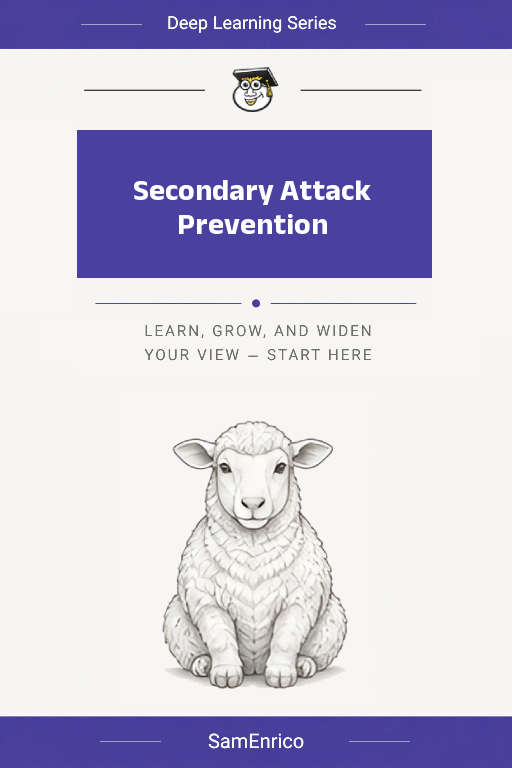
Secondary Attack Prevention eBook
Avoid secondary devices targeting first responders
by Green Noah
Avoid secondary devices targeting first responders after initial attack. Train employees to stay clear of immediate blast area and report suspicious items.
Formats
Free sample
Chapter 1: The Invitation...--The first explosion is not the end of the attack. It is the beginning. And if you are a first responder, it is an invitation—a carefully calculated, deliberately placed lure designed to draw you into a kill zone where a second, larger device waits to destroy you.Firefighter James Plourde never knew how close he came to death on April 15, 2013. At 2:49 PM, he was stationed at the finish line of the Boston Marathon, part of the medical response team waiting for exhausted runners to cross. When the first pressure cooker bomb detonated, his training took over.
He ran toward the smoke. He ran toward the screams. He ran toward the chaos, exactly as he had been taught, exactly as generations of firefighters had done before him.What he did not know—what no one on Boylston Street knew—was that the terrorists had placed a second pressure cooker bomb in a trash can directly along his path. It was packed with the same lethal combination of nails, ball bearings, and explosive powder. It was designed to detonate seconds or minutes after the first, timed specifically to catch the police, fire, and EMS personnel who would inevitably rush in.The second bomb did not detonate.
The trigger failed. James Plourde lived.Four blocks away, another pressure cooker sat in a duffel bag. It also failed to detonate. The terrorists had planned to kill the responders. They had placed bombs specifically to catch the helpers.
If the triggers had worked, the death toll would have more than doubled. Every responder on Boylston Street would have been in the kill zone.This is the story of those second bombs. The ones you never hear about. The ones meant for the heroes. The ones that change everything about how we must respond to terrorist attacks.The Two-Fer: Why Terrorists Target Responders The concept is brutally simple and devastatingly effective.
Military and counter-terrorism analysts call it the "two-fer"—two catastrophic outcomes from a single operation. The first explosion kills or injures civilians, draws media attention, and triggers the predictable rush of emergency personnel. The second explosion, often larger, better concealed, and specifically positioned to target choke points where responders congregate, kills the very people trained to save lives.The tactic is not new, but it has become dramatically more common in the twenty-first century. During the Iraq and Afghanistan conflicts, insurgents recognized a critical vulnerability in Western military and emergency response doctrine: the predictable, almost automatic rush toward the sound of danger. In conventional warfare and traditional emergency response, speed saves lives.
The "golden hour" for trauma patients creates a sense of urgency that is entirely appropriate for medical emergencies. But when the emergency is a terrorist attack, the rules change. The danger does not end with the first explosion. It continues, adapts, and waits.The data is sobering. According to analysis of global terrorist incidents from 2000 to 2020, secondary device attacks have increased by over 400 percent.
In complex, coordinated attacks, responder casualties from secondary devices now often exceed civilian casualties from the primary blast. The 2005 London bombings demonstrated this with horrifying clarity: while the three underground bombs killed 52 civilians, the fourth bomb on a double-decker bus detonated nearly an hour later, killing 13 people—including responders and civilians who had been evacuated from the Tube and were thought to be safe.The 2016 New York Chelsea bombing offered a different outcome, one that illustrates both the danger and the solution. After a primary device detonated on West 23rd Street, responders established a unified command at a safe distance, conducted systematic sweeps for secondary devices, and discovered a second pressure cooker bomb four blocks away. They disabled it before it could detonate. The difference between Boston and New York was not luck.
It was training, discipline, and the willingness to wait.The Historical Evolution: From Single Device to Coordinated Ambush To understand where we are, we must understand where we came from. Single-device attacks dominated the twentieth century. The 1920 Wall Street bombing killed 38 people with a horse-drawn wagon filled with explosives. The 1995 Oklahoma City bombing killed 168 people with a single rental truck. In these incidents, the explosion marked both the beginning and the end of the threat.
First responders who rushed in were hailed as heroes, and their rapid action saved lives.The shift began in the 1980s, with terrorist groups in Lebanon and Northern Ireland experimenting with multi-device tactics. The 1983 Beirut barracks bombing, which killed 241 American service members, was intended to be a two-stage attack. A second truck bomb was spotted by sentries and waved off before it could detonate. The terrorists had planned to kill the responders—the Marines who would rush to save their comrades. That second bomb is a warning from history, one that went largely unheeded for decades.The wars in Iraq and Afghanistan served as a brutal proving ground for secondary device tactics.
Insurgents recognized that Western forces followed predictable patterns: an initial explosion would draw quick reaction forces, medical evacuations, and investigative teams. By placing a second, larger device to detonate five, ten, or twenty minutes after the first, they could catch responders in the open, often killing more personnel than the initial attack. The tactic became so common that "secondary device" entered the operational vocabulary of every military and civilian response organization.The 2007 Baghdad ambulance bombing illustrates the tactic's devastating effectiveness. A first explosion killed civilians in a crowded market. Ambulances arrived within minutes, their crews rushing to treat the wounded.
A vehicle-borne IED, parked specifically to target the ambulance staging area, detonated among them. Fourteen medics were killed. Four ambulances were destroyed. The primary blast had killed eight civilians. The secondary blast killed more responders than the first blast had killed victims.The 2011 Kabul hospital bombing followed a similar pattern.
A first explosion occurred outside a medical facility. Responders entered the building to evacuate patients and treat the wounded. A secondary device hidden in a storage closet detonated, killing six responders who had moved into the building. The terrorists had anticipated the response, chosen their positions accordingly, and waited for the optimal moment to strike.The Psychology of the Ambush: Why Smart People Make Deadly Mistakes If the tactic is so well documented, why do responders continue to fall victim to it? The answer lies not in a lack of training or intelligence, but in the fundamental wiring of the human brain under stress.
Understanding this psychology is essential to overcoming it.Normalcy bias is the tendency to assume that because things have been normal in the past, they will remain normal. After an explosion, normalcy bias manifests as the assumption that "the danger has passed" because "the bomb already went off." This assumption is reinforced by the absence of any visible ongoing threat. There is no fire to fight, no shooter to engage, no visible continuing danger. The brain concludes, often incorrectly, that the scene is safe.Research on normalcy bias in emergency situations shows that even when people intellectually understand a risk, they consistently underestimate the probability that the risk will affect them personally. This is not a failure of character or intelligence.
It is a feature of how the human brain processes threat. The brain is wired to assume safety unless danger…
This is the end of the free sample. Get the eBook to keep going. Buy now
About this book
Details
- Author
- Green Noah
- Publisher
- SamEnrico
- Language
- English
- Genre
- Non-Fiction, Crisis Management, Secondary Devices
- Released
- 2026-05-30
- Pages (approx.)
- 158
- Available as
- eBook, Audiobook

Read better in the ZLOADR app
Your eBooks on your phone or tablet. Sign in with your SamEnrico account and start reading.
More by Green Noah
 Harvard Extension School Software ToolsGreen Noah$11.99
 Eye Fixation Trance GuideGreen Noah$11.99
 NVC For Sales ConversationsGreen Noah$11.99
 LGBTQ Diplomat ClosetedGreen Noah$11.99
 The Dragon’s Cage: Hong Kong’s Triad Zoo HeistGreen Noah$11.99
 How to Produce Bicycle Tire ValvesGreen Noah$11.99
 Staff Firmware EngineerGreen Noah$11.99
 How to Start a Hobby in Cigar SmokingGreen Noah$11.99