
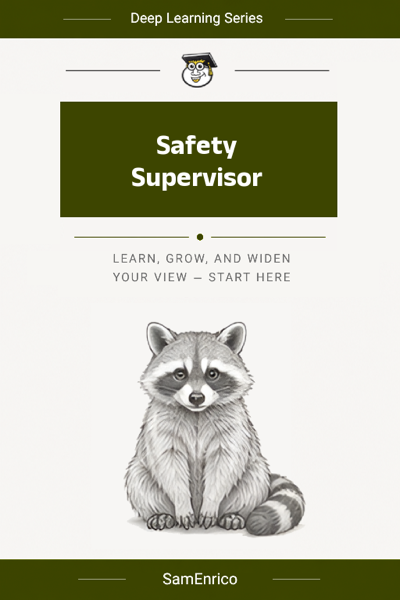
Non-FictionInformativeEducational
Safety Supervisor eBook
A Coursebook on Safety Supervisor
A Coursebook on Safety Supervisor
Formats
Free sample
Chapter 1: The Invisible Burden--–- The phone rang at 2:17 AM. On the other end, a night shift supervisor named Marcus spoke in a flat, exhausted voice that I will never forget. “We had a fall. Three stories. He’s alive, but they’re airlifting him out.
I did everything by the book. The guardrail was there this morning. I checked it myself.” Then came the pause that lasted forever. “What did I miss?”That question—“What did I miss?”—has haunted every safety supervisor who has ever lived. It haunted Marcus, and if you stay in this profession long enough, it will haunt you too.
The conventional answer, the one taught in most safety courses and certification programs, is a checklist. Inspect the guardrails. Verify the training. Document the toolbox talk. Update the JSA.
File the permit. Marcus did all of that. His guardrail inspection log was current and immaculate. His workers had signed the fall protection training roster just six weeks earlier. He had even led a five-minute toolbox talk on ladder safety that very morning.
And yet, a man was falling through the cold night air, and Marcus was standing in a pool of fluorescent light, watching a helicopter rise into the darkness.This chapter is about why Marcus failed despite doing everything right according to the textbooks. It is about the invisible burden of safety supervision—the unspoken, unwritten, and often unrecognized weight that sits beneath the surface of every job description, every compliance checklist, and every training certificate. That burden is not found in OSHA regulations. It is not taught in NEBOSH or CSP exam preparation courses. It is rarely discussed in safety conferences or academic journals.
Yet it determines everything. If you read only one chapter in this book, read this one. Because Marcus’s story is not an anomaly. It is the rule. And the difference between being a supervisor who sleeps through the night and one who watches helicopters take off is not luck, not training, not experience.
It is understanding and embracing the invisible burden.The Weight That No Job Description Mentions Every safety supervisor carries three distinct weights. Most supervisors only recognize two of them.The First Weight: Compliance. This is the visible weight. It includes OSHA regulations, company policies, permit systems, training records, inspection schedules, written procedures, and the endless paperwork that seems to multiply overnight. Compliance is what Marcus did well.
His paperwork was immaculate. He had the sign-off sheets, the signatures, the dates, the checkmarks in every box. Compliance is necessary. Without it, chaos reigns, regulators fine you, lawyers sue you, and workers die from predictable causes. But compliance is not sufficient.
You can comply with every regulation ever written and still send a worker to the hospital. Regulations are minimum standards, not maximum protections. They are the floor, not the ceiling. The floor keeps you from falling into the basement, but it does nothing to help you reach the penthouse.The Second Weight: Technical Knowledge. This weight includes understanding hazard identification, risk assessment, the hierarchy of controls, machine guarding principles, electrical safety, chemical exposure limits, ergonomics, fire dynamics, permit systems, incident investigation methods, and emergency response protocols.
Technical knowledge is what most safety courses teach. It is what earns you certifications like CSP, CRSP, NEBOSH, and the alphabet soup of credentials that hang on office walls. Technical knowledge is valuable, even essential. Without it, you are guessing. But technical knowledge alone cannot stop a worker from bypassing a machine guard because they are behind on production.
It cannot prevent a supervisor from normalizing deviance because “that’s how we’ve always done it and nothing bad has happened yet.” It cannot make a worker speak up when they see a hazard. Technical knowledge tells you what safe looks like. It does not tell you how to make people choose safe when every incentive pushes them toward fast.The Third Weight: The Invisible Burden. This weight is invisible to most supervisors. It includes moral responsibility, psychological safety, cultural architecture, systems thinking, emotional labor, and the courage to stop production when something feels wrong even when every gauge and every meter and every expert says it is right.
The invisible burden is the weight of knowing that your decisions—and your failures to decide—will shape whether people go home to their families or to hospital rooms. It is the weight of being the person who says “stop” when everyone else is saying “go.” It is the weight of investigating an incident and realizing that you could have prevented it if only you had noticed something sooner, asked something harder, cared something more.Marcus understood compliance and technical knowledge. He did not understand the invisible burden. His guardrail was intact at 7:00 AM. By 2:17 AM, it had been removed by a worker named Javier who needed to move materials faster to meet a production deadline that his day shift supervisor had called “non-negotiable.” No one told Marcus the guardrail was missing.
No one stopped the work. No one felt safe enough to say, “Hey, we took down the guardrail and we haven’t put it back yet.” Javier did not report it because he had learned—through years of subtle cues, offhand comments, and the way previous supervisors had reacted to bad news—that reporting problems was more dangerous than solving them yourself.The invisible burden is this: Your job is not to enforce rules. Your job is not to fill out forms. Your job is not to conduct inspections. Those are tasks.
The invisible burden is the responsibility to create a system where rules enforce themselves because people believe in them, where forms are accurate because people value accuracy, where inspections uncover hazards because people trust the process. That is the burden that no job description will ever capture. That is what this chapter—and this entire book—will teach you to carry.The Anatomy of the Invisible Burden The invisible burden breaks down into four core responsibilities. These are not found in OSHA’s 29 CFR. They are not on any CSP certification exam.
They are rarely discussed in safety courses or academic programs. Yet they determine whether you will be a Marcus (watching helicopters and reliving nightmares) or a supervisor who builds a legacy of safety that outlasts your tenure.Responsibility One: Moral Ownership, Not Delegated Duty Most supervisors treat safety as a delegated responsibility. They think, “I do this because the company requires it. I fill out this form because OSHA demands it. I conduct this inspection because my boss told me to.
I enforce this rule because the policy manual says so.” This is what lawyers call fiduciary responsibility—the duty to protect company assets, including human resources, because it is financially prudent and legally required. Fiduciary responsibility is real. It matters. Courts enforce it. But it is not enough.Moral ownership is different.
Moral ownership means you internalize the outcome of every workday not as a metric for your performance review but as a human result that you are personally accountable for. You do not inspect the ladder because the checklist says so. You inspect the ladder because you have imagined the sound of a…
This is the end of the free sample. Get the eBook to keep going. Buy now
About this book
Details
- Author
- Andrade Claudie
- Publisher
- SamEnrico
- Language
- English
- Genre
- Non-Fiction, Informative, Educational
- Released
- 2026-05-25
- Pages (approx.)
- 155
- Available as
- eBook, Audiobook

Read better in the ZLOADR app
Your eBooks on your phone or tablet. Sign in with your SamEnrico account and start reading.
More by Andrade Claudie
 The Global Talent Competition ReportAndrade Claudie$11.99
 Personal Ing For Success Personal MissionAndrade Claudie$11.99
 Intuitive Eating Self Compassion HandbookAndrade Claudie$11.99
 Direct Amends Step Nine ManualAndrade Claudie$11.99
 Corticosteroid Chronic Pain RisksAndrade Claudie$11.99
 The Condor’s Summit: The Forgotten Climbers of the AndesAndrade Claudie$11.99
 Zero Day: The Ransomware Heist That Froze a NationAndrade Claudie$11.99
 10 Ways to Use Common Container Sizes (Recipe Book)Andrade Claudie$11.99
 Upsolving US LLC DisputesAndrade Claudie$12.99Upsolving US LLC DisputesAndrade Claudie$12.99Upsolving US LLC DisputesAndrade Claudie$12.99Upsolving US LLC DisputesAndrade Claudie$12.99
You may also like
 Hong Kong Handover 1997Dunn Johnnie$11.99
 Zumba For Postnatal Recovery CourseNeal Christian$11.99
 Zumba for BeginnersLadner Nikia$11.99
 YouTube Comment Mining GuideHumes Pandora$12.99
 Worry Box MeditationCarlin Rudy$11.99
 Workplace Stress MeditationNguyen Lynn$11.99
 Workplace Stress and Sleep RepairHawley Ivory$11.99
 Workplace Perfectionism CureDelaney Jeffry$11.99
 Workplace Injustice Anger GuideWallen Isabelle$11.99
 Work Addiction and Burnout LinkGreenwood Ester$11.99
 Women in Yoga and WellnessBeattie Galina$11.99
 Women in Stand Up ComedyChun Evangeline$11.99