
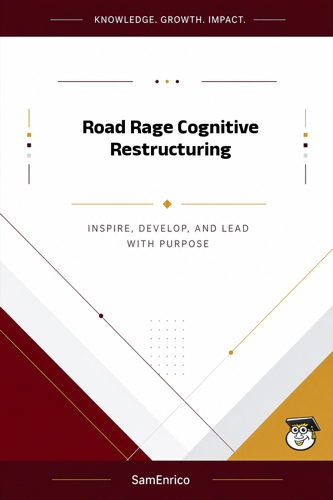
Road Rage Cognitive Restructuring eBook
Changes interpretations like 'they did that on pur
by Kohl Liberty
Changes interpretations like 'they did that on purpose'.
Formats
Free sample
Chapter 1: The 7 Seconds--–- The man who would later tell me he “almost killed someone over a parking spot” was sitting in my office on a Tuesday morning. His name was David, a 43-year-old architect with no criminal record, two children, and a mortgage. He had come to see me not because a judge had ordered him to, but because his wife had given him an ultimatum: get help for his driving anger, or she would take the kids and leave. David did not think he had a problem. He thought other drivers were idiots.Three weeks before our first session, David had been driving home from work on a four-lane suburban road.
A driver in a silver sedan merged into his lane without signaling. David perceived the merge as a cut-off—a deliberate, personal insult. He later described the sequence in precise, almost clinical detail: “I saw the car start to move over. There was plenty of space behind me. They could have waited.
They chose not to. They did it on purpose.” He honked. The other driver did not respond. David pulled alongside the silver sedan at the next red light, rolled down his window, and screamed, “Learn how to drive, you piece of garbage.” The other driver—a 19-year-old woman on her way to pick up her younger brother from soccer practice—began to cry. She had not seen David’s car when she changed lanes.
Her blind spot had been obstructed by the passenger-side headrest. She was not malicious. She was not an idiot. She was a teenager who made a mistake that all new drivers make.David did not know any of this at the time. He saw her crying and felt a surge of satisfaction.
“Good,” he told me. “She deserved to feel bad.” Then the light turned green, and he drove away. That night, he told his wife the story as a victory. She told him she was scared of him. That was the moment David realized he might have a problem—not because he had made a woman cry, but because his wife’s fear of him felt, for the first time, justified.David is not an anomaly.
He is not a monster. He is a normal person with a normal brain that has been hijacked by a normal cognitive process gone wrong. And the seven seconds between the silver sedan merging without signaling and David rolling down his window to scream—those seven seconds contain the entire story of road rage. In those seven seconds, David’s brain performed a series of operations that are the subject of this book. His brain filled in missing information with the most emotionally charged explanation available.
His brain converted a minor inconvenience (slowing down slightly to let a car merge) into a personal violation (someone deliberately disrespecting him). His brain activated a fight-or-flight response to a situation that posed no physical threat whatsoever. And his brain convinced him that his anger was not just justified but righteous.The purpose of this chapter—and this entire book—is to help you understand what happened in David’s brain during those seven seconds, to recognize the same sequence happening in your own brain, and to give you the tools to interrupt that sequence before it destroys your peace, your relationships, or your freedom.The Hidden Epidemic No One Is Talking About Road rage is not a fringe problem affecting a small minority of unstable drivers. It is a mainstream epidemic. The statistics are staggering, and they have only worsened in the last decade.
According to the AAA Foundation for Traffic Safety, nearly 80 percent of drivers in the United States reported experiencing significant anger, aggression, or road rage at least once in the past year. That is four out of five drivers. More than half of all fatal crashes involve some form of aggressive driving behavior, including speeding, tailgating, erratic lane changes, and intersection violations. The National Highway Traffic Safety Administration attributes approximately 30,000 deaths per year to aggressive driving—more than homicides involving firearms.But the statistics tell only part of the story. The lived experience of road rage is measured not only in fatalities but in the slow erosion of daily peace.
It is the morning commute that ruins your mood before you even reach the office. It is the hour-long drive home that leaves you tense, angry, and short with your family. It is the escalation of minor annoyances into major conflicts—the honk that becomes a middle finger that becomes a confrontation at the next red light that becomes a police report. And in the worst cases, it is the road rage shooting that makes the evening news, leaving one family planning a funeral and another planning a legal defense.The COVID-19 pandemic accelerated this trend dramatically. Traffic volumes dropped in 2020, but aggressive driving incidents increased.
Drivers sped more, tailgated more, and engaged in more dangerous maneuvers on emptier roads. When traffic returned to pre-pandemic levels, the aggressive driving behaviors did not recede. They remained. Law enforcement agencies across the country reported a 20-30 percent increase in road rage incidents compared to 2019 baselines. What was once a simmering problem became a boiling one.And yet, despite the scale of the problem, road rage remains dramatically undertreated.
There are thousands of books on anger management generally. There are dozens of clinical protocols for treating aggressive behavior. But very few resources address the specific cognitive environment of the driver—the unique psychological stressors that emerge only when you are behind the wheel, anonymous, territorial, and time-pressured. Most general anger books tell you to breathe deeply, count to ten, or “just calm down.” These interventions fail for drivers because they do not address the root cause of driving anger: the interpretation.This book exists to fill that gap. It is not a general anger management book that happens to mention driving.
It is a driving-specific cognitive restructuring program based on the Albany Model for aggressive driving treatment, a clinical protocol developed by psychologists at the University at Albany and validated in multiple peer-reviewed studies. The Albany Model is not a collection of feel-good platitudes. It is a structured, evidence-based approach that targets the specific cognitive distortions that cause drivers to interpret ambiguous events as hostile attacks. The model has been shown to reduce aggressive driving behaviors by 50-70 percent in clinical trials, with effects lasting up to 12 months after treatment. This book adapts that clinical protocol for individual use, so you can do the work without a therapist—though the book also includes guidance on when professional help is necessary.Why General Anger Books Fail Drivers If you have ever tried to use a general anger management technique while driving, you have probably noticed that it does not work very well.
You might have tried deep breathing when someone cut you off, only to find that you were still furious. You might have tried counting to ten, only to find that by the time you reached seven, the other driver had already disappeared into traffic and you were left seething alone. You might have tried to “just let it go,” only to find that the anger returned…
This is the end of the free sample. Get the eBook to keep going. Buy now
About this book
Details
- Author
- Kohl Liberty
- Publisher
- SamEnrico
- Language
- English
- Genre
- Non-Fiction, Self-Help, CBT
- Released
- 2026-06-06
- Pages (approx.)
- 146
- Available as
- eBook, Audiobook

Read better in the ZLOADR app
Your eBooks on your phone or tablet. Sign in with your SamEnrico account and start reading.
More by Kohl Liberty
 Retirement Account Bankruptcy ProtectionKohl Liberty$11.99
 Treehouse Rest VisualizationKohl Liberty$11.99
 The Scream ArtistKohl Liberty$11.99
 Vegan Child Growth GuideKohl Liberty$11.99
 The Jade Serpent’s Last WhisperKohl Liberty$11.99
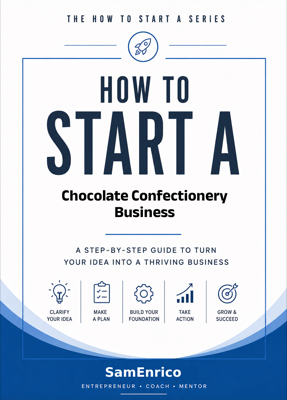 How to Start a Chocolate Confectionery Business (Beginners Guide)Kohl Liberty$11.99
 Mail & Supplies SpecialistKohl Liberty$11.99
 Petco SWOT LibraryKohl Liberty$12.99
 Scholarships for African Medical StudentsKohl Liberty$12.99
 Understanding Neuroectodermal Tumors PrimitiveKohl Liberty$17.99
You may also like
 Hong Kong Handover 1997Dunn Johnnie$11.99
 Zumba For Postnatal Recovery CourseNeal Christian$11.99
 Zumba for BeginnersLadner Nikia$11.99
 YouTube Comment Mining GuideHumes Pandora$12.99
 Worry Box MeditationCarlin Rudy$11.99
 Workplace Stress MeditationNguyen Lynn$11.99
 Workplace Stress and Sleep RepairHawley Ivory$11.99
 Workplace Perfectionism CureDelaney Jeffry$11.99
 Workplace Injustice Anger GuideWallen Isabelle$11.99
 Work Addiction and Burnout LinkGreenwood Ester$11.99
 Women in Yoga and WellnessBeattie Galina$11.99
 Women in Stand Up ComedyChun Evangeline$11.99