
Non-FictionBusiness BriefSpace Planning
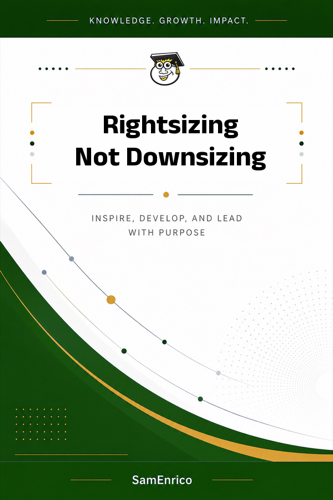
Rightsizing Not Downsizing eBook
Select square footage that matches actual post ret
Select square footage that matches actual post retirement lifestyle needs.
Formats
Free sample
Chapter 1: The Albatross Awakening--It begins not with a bang, but with exhaustion.You are standing in your living room—the one you paid for, the one you cleaned last Tuesday, the one you haven't genuinely used in eleven months—and you feel something you cannot name. It is not quite regret. It is not quite fear. It is a low, humming weight behind your ribs, the sensation of a house that has shifted from sanctuary to obligation.This is the Albatross Awakening.You do not hate your home. That is the problem.
You loved it once. You loved the high ceilings and the sprawling kitchen island and the four bedrooms that seemed so necessary when the children were small and the holidays were loud and the future felt infinite. You loved the lawn that stretched green and proud, the garage that held two cars and a decade of accumulated life, the staircase that your toddlers once slid down on cardboard sleds.But somewhere between the last child leaving and the first knee replacement, between the second floor becoming a museum of unused bedrooms and the basement turning into a repository of things no one remembers owning, your home stopped being your ally.It became your albatross.The term comes from Samuel Taylor Coleridge's ancient mariner, who shoots an albatross and is forced to wear the dead bird around his neck as penance. The albatross is not the burden itself. The albatross is the symbol of a mistake you keep carrying long after the mistake has ended.
Your too-large house is not the problem. The problem is that you keep carrying it—the mortgage, the maintenance, the stairs, the guilt—as if letting go would be a confession of failure.This chapter is your permission to stop carrying it.But before we can talk about where you are going, we must first name where you are standing. And that requires dismantling the most dangerous word in the retirement vocabulary: downsizing.The D-Word: Why "Downsizing" Is a Trap Let us say the word aloud. Downsizing. Feel how it lands in your mouth.
It tastes of reduction, of subtraction, of something taken away. It is a word from corporate boardrooms, where "downsizing" meant layoffs and severed ties and smaller severance packages than anyone deserved. It is a word of scarcity, of making do with less, of accepting a diminished version of what you once had.When you say "I am going to downsize my home," what you are really saying is "I am going to lose something."This is not a semantic quibble. Language shapes action. When you believe you are losing something, you behave like someone in mourning.
You procrastinate. You cling. You keep the formal dining room set because "someday" there will be another Thanksgiving with all twenty-two relatives, even though last Thanksgiving you had seven people and three of them ate off TV trays in the family room. You keep the china cabinet because your grandmother gave it to you, even though your own children have already told you—gently, then less gently—that they do not want it. You keep the house because selling it feels like admitting that the chapter of family life is closed.But what if you reframed the entire question?What if, instead of asking "How much space can I afford to lose?" you asked "How much space do I need to live well?"This is the difference between downsizing and rightsizing.
Downsizing is a subtraction problem. Rightsizing is an alignment problem. You are not trying to fit your life into a smaller container. You are trying to match your container to the life you actually live—not the life you lived twenty years ago, not the life you imagine you might live if your health were better or your children visited more often, but the life of next Tuesday morning.The life where you wake up, make coffee, read the newspaper, and spend an hour on your hobby before lunch. The life where you do not dread the stairs.
The life where cleaning the house takes ninety minutes instead of six hours. The life where you can lock the door and leave for three weeks without worrying about burst pipes or uncollected mail.That life exists. It is not smaller. It is more precise.The Mc Mansion Hangover: How We Got Here To understand why so many retirees are trapped in homes that no longer serve them, we must first understand how those homes were sold to us in the first place.The American dream of the 1990s and 2000s was not a home. It was a monument.
Square footage became a status symbol, a measurable metric of success that could be compared across dinner parties and holiday newsletters. If your neighbor had 2,400 square feet, you needed 2,800. If your cousin built a three-car garage, you needed a four-car garage and a half-court basketball pavilion.This was the era of the Mc Mansion—a term coined by architects to describe homes that prioritized volume over coherence, quantity over quality. The Mc Mansion had a two-story foyer because it looked impressive, never mind that the heat from the first floor rose uselessly into a vaulted ceiling that no one occupied. The Mc Mansion had a formal living room and a formal dining room and a family room and a media room and a bonus room above the garage, because more rooms meant more value, more status, more proof that you had arrived.And for a while, it worked.
You did arrive. You raised children in those rooms. You hosted birthday parties and graduations and Super Bowl watch parties. You filled the spaces with noise and love and the chaos of a family in motion.But then the children left. One bedroom became a guest room.
The second bedroom became a home office that no one used because you retired. The third bedroom became storage for the exercise equipment you bought in 2019. The fourth bedroom—the one above the garage—became a tomb for holiday decorations and old tax returns and the crib you cannot bear to donate even though your youngest grandchild is starting high school.And the formal dining room? You have not sat in there since 2017.This is not a moral failing. This is a mathematical inevitability.
You did not design your home for the empty nest. You designed it for a family of five with a dog and a social life and the energy of middle age. That home was perfect then. It is not perfect now. And the only thing worse than admitting that is pretending otherwise.The Cost of Carrying What You Do Not Use Let us do some math together.
It will not be complicated math, but it will be uncomfortable math. Because until you see the actual numbers—the real, line-item, dollar-by-dollar cost of the space you are not using—you will continue to believe that your too-large home is an asset rather than a liability.Consider a typical suburban home of 2,800 square feet, purchased in 2005 for $400,000, now worth $600,000. Assume a remaining mortgage of $150,000 and annual property taxes of $8,000. Add insurance at $1,500 per year. Add…
This is the end of the free sample. Get the eBook to keep going. Buy now
About this book
Details
- Author
- Butterfield Lissa
- Publisher
- SamEnrico
- Language
- English
- Genre
- Non-Fiction, Business Brief, Space Planning
- Released
- 2026-06-08
- Pages (approx.)
- 132
- Available as
- eBook, Audiobook

Read better in the ZLOADR app
Your eBooks on your phone or tablet. Sign in with your SamEnrico account and start reading.
More by Butterfield Lissa
 Shift Work for Restaurant WorkersButterfield Lissa$11.99
 Body Image and Vitiligo CourseButterfield Lissa$11.99
 The Virtual NetworkerButterfield Lissa$11.99
 Self Esteem Parenting TogetherButterfield Lissa$11.99
 The Vanishing of the Silk Road ScholarButterfield Lissa$11.99
 The Forgotten Cartographer: How a Medieval Monk Mapped the UnknownButterfield Lissa$11.99
 Understanding Essential HypertensionButterfield Lissa$17.99
 How to Become a Motorboat MechanicButterfield Lissa$11.99
 Force Majeure Clause ToSButterfield Lissa$12.99
 Healthcare CV Writing ServiceButterfield Lissa$12.99
 Mineral CollectingButterfield Lissa$11.99
You may also like
 Hong Kong Handover 1997Dunn Johnnie$11.99
 Zumba For Postnatal Recovery CourseNeal Christian$11.99
 Zumba for BeginnersLadner Nikia$11.99
 YouTube Comment Mining GuideHumes Pandora$12.99
 Worry Box MeditationCarlin Rudy$11.99
 Workplace Stress MeditationNguyen Lynn$11.99
 Workplace Stress and Sleep RepairHawley Ivory$11.99
 Workplace Perfectionism CureDelaney Jeffry$11.99
 Workplace Injustice Anger GuideWallen Isabelle$11.99
 Work Addiction and Burnout LinkGreenwood Ester$11.99
 Women in Yoga and WellnessBeattie Galina$11.99
 Women in Stand Up ComedyChun Evangeline$11.99