
Non-FictionSelf-HelpAir QualityHealth
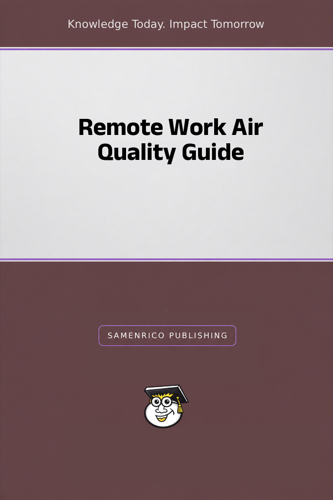
Remote Work Air Quality Guide eBook
Ventilate your workspace properly to prevent drows
Ventilate your workspace properly to prevent drowsiness and maintain focus.
Formats
Free sample
Chapter 1: The Invisible Hangover...--–- It is 2:17 PM on a Tuesday. You have slept seven and a half hours, perhaps eight. You drank your morning coffee, maybe two. You ate a reasonable lunch—a salad, a sandwich, something that was not pure sugar. And yet, as you stare at your second monitor, the words on the screen seem to swim.
You have read the same email three times. The cursor blinks at you, patient and accusing. Your eyelids feel heavy, not with the satisfying weight of impending sleep, but with the dull, grinding exhaustion of someone who has been awake for eighteen hours rather than six.You are not lazy. You are not broken. You are not experiencing early burnout, undiagnosed depression, or the inevitable decline of中年 cognitive function.
You are, quite literally, suffocating yourself in slow motion, one breath at a time.This is the Invisible Hangover.The Great Remote Work Lie When the world shifted to remote work in 2020, the narrative was overwhelmingly positive. You would save two hours of commuting. You would eat healthier food from your own kitchen. You would see your children more. You would finally have the focused, uninterrupted work environment you had always dreamed of, free from the fluorescent-lit, open-office hellscape of overheard sales calls and shared microwave popcorn.And for the first few weeks, that narrative held true.
You were productive. You were happy. You wore comfortable pants.But then something shifted. Around week six or eight, the afternoon slump became an afternoon wall. By month three, you noticed that your best thinking happened not at your desk, but in the five minutes after you stepped outside to check the mail.
By month six, you had tried everything: standing desks, kneeling chairs, pomodoro timers, blue light glasses, meditation apps, and a shamefully expensive ergonomic keyboard. Nothing worked consistently.The remote work industry sold you on the freedom. It forgot to mention the air.The Closed-Loop Nightmare Here is what no one told you about working from home: when you sleep, work, and live in the same sealed box, you become the pollution source.Your bedroom, guest room, or converted closet is not an office. It is a closed-loop system. Every breath you take pulls oxygen from the room.
Every breath you release adds carbon dioxide. In a commercial office building, industrial-grade HVAC systems cycle the air completely every hour, sometimes more. Your home has no such system. Your home was designed to keep heat in during winter and cool air in during summer. It was designed to be energy efficient.
It was designed, in other words, to trap your exhaled breath.Let me give you a number that will change how you think about your workspace: 1,000.That is the carbon dioxide concentration, measured in parts per million, at which your cognitive function begins to fall apart.The Harvard Study That Should Terrify You In 2015, researchers at the Harvard T.H. Chan School of Public Health conducted a now-landmark study. They brought knowledge workers into a controlled office environment and exposed them to varying levels of carbon dioxide while measuring their performance across nine cognitive domains: crisis response, information seeking, strategy development, and others.The results were staggering. When CO₂ rose from 500 parts per million to 1,000 parts per million, cognitive scores dropped by an average of 50 percent. Not ten percent.
Not twenty percent. Fifty percent. Half of your brain's strategic processing power, gone, simply because the air in the room became slightly stale.Let me put that in human terms. At 500 ppm, you are sharp. You can solve novel problems, anticipate objections in a client call, and write persuasive prose.
At 1,000 ppm, you can answer email. That is it. The complex stuff—the reason you were hired, the work that commands your salary—becomes nearly impossible.Now here is the part that should make you set this book down and open a window: your home office, without mechanical ventilation, will cross 1,000 ppm by 11:00 AM. Sometimes earlier.The Bathtub Analogy Think of your workspace as a bathtub. The faucet is running constantly—that is your breathing, adding CO₂ to the room.
The drain is your ventilation, removing CO₂. In a commercial building, the drain is wide open; water flows in and out, and the tub never fills. In your home office, the drain is mostly closed. The faucet keeps running. The water rises.Your body produces approximately 0.3 to 0.5 liters of CO₂ per minute at rest, more when you are thinking hard or speaking on the phone.
In a small, sealed bedroom—say, twelve feet by twelve feet by eight feet, which is 1,152 cubic feet—your breathing alone will push CO₂ from a baseline of approximately 450 ppm (normal outdoor air) to over 1,400 ppm within four hours.That is the Red zone. That is the place where your brain works at half speed.I have watched remote workers measure their home offices for the first time and stare at the monitor in disbelief. One woman, a marketing director I will call Sarah, had spent three years convinced she was developing a chronic illness. She had seen three doctors, undergone two sleep studies, and spent over three thousand dollars on blood work, supplements, and a standing desk that now served as a clothes rack. Her bedroom office, she discovered, regularly hit 2,500 ppm by 2:00 PM.
She was not sick. She was not lazy. She was working in a room with the same CO₂ concentration as a packed elevator.The Three Zones of Cognitive Function To make this actionable, we will use a simple framework that will appear throughout this book. Think of your CO₂ level as a traffic light:Green Zone: Below 600 ppm In the Green zone, you are operating at full capacity. Your working memory is sharp.
You can switch between tasks without mental friction. Creative insights come more easily, and you can sustain deep focus for ninety minutes or more. This is where you want to be for important work: writing proposals, coding complex features, designing presentations, or negotiating with clients.Yellow Zone: 600 to 1,000 ppm In the Yellow zone, the first cracks appear. You might not notice them immediately—they are subtle. You read a paragraph and realize you have to read it again.
You lose your train of thought mid-sentence. You find yourself checking your phone or opening social media not because you are distracted, but because your brain is seeking lower-friction stimulation. Problem-solving feels like wading through water. You are still productive, but only on routine tasks. Complex work becomes frustrating.Red Zone: Above 1,000 ppm In the Red zone, your cognitive function has dropped by approximately half according to the Harvard data.
You yawn frequently, not because you are sleepy in the normal sense, but because your brain is desperately trying to increase oxygen intake. You make mistakes on simple arithmetic. You re-read the same email three times without comprehending it. Emotional regulation suffers—small frustrations feel like major setbacks. By the time you hit 1,400 ppm, your performance is roughly equivalent to the legal limit of alcohol intoxication in most jurisdictions.
You are, quite literally, impaired.The CO₂ Stealth Problem Here is what makes carbon dioxide so insidious: you cannot smell it. You cannot…
This is the end of the free sample. Get the eBook to keep going. Buy now
About this book
Details
- Author
- Tolliver Joey
- Publisher
- SamEnrico
- Language
- English
- Genre
- Non-Fiction, Self-Help, Air Quality, Health
- Released
- 2026-06-11
- Pages (approx.)
- 140
- Available as
- eBook, Audiobook

Read better in the ZLOADR app
Your eBooks on your phone or tablet. Sign in with your SamEnrico account and start reading.
More by Tolliver Joey
 The Unfollow Movement GuideTolliver Joey$11.99
 International Trade Supply BriefTolliver Joey$11.99
 The Mexico Vendor maquiladora GuideTolliver Joey$11.99
 The Star Navigators of the Indian Ocean: The Swahili Mariners' SecretTolliver Joey$11.99
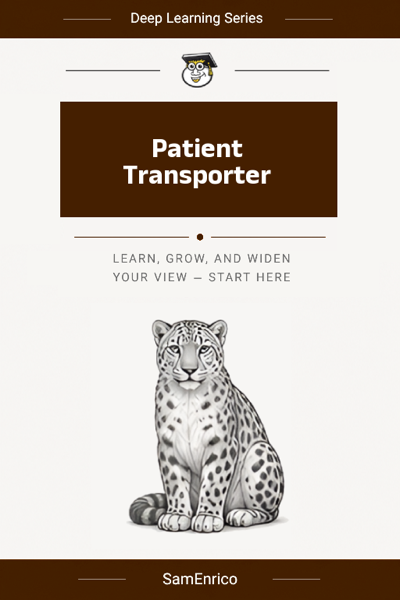 Patient TransporterTolliver Joey$11.99
 Remote Team Success StoriesTolliver Joey$12.99
 Learn to Play the ViolaTolliver Joey$11.99
 10 Ways to Use Green Kern (Recipe Book)Tolliver Joey$11.99
You may also like
 Hong Kong Handover 1997Dunn Johnnie$11.99
 Zumba For Postnatal Recovery CourseNeal Christian$11.99
 Zumba for BeginnersLadner Nikia$11.99
 YouTube Comment Mining GuideHumes Pandora$12.99
 Worry Box MeditationCarlin Rudy$11.99
 Workplace Stress MeditationNguyen Lynn$11.99
 Workplace Stress and Sleep RepairHawley Ivory$11.99
 Workplace Perfectionism CureDelaney Jeffry$11.99
 Workplace Injustice Anger GuideWallen Isabelle$11.99
 Work Addiction and Burnout LinkGreenwood Ester$11.99
 Women in Yoga and WellnessBeattie Galina$11.99
 Women in Stand Up ComedyChun Evangeline$11.99