
Non-FictionSelf-HelpDistress Tolerance
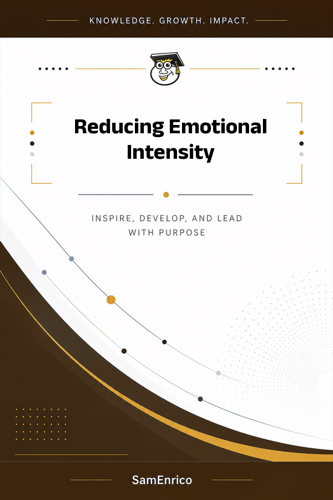
Reducing Emotional Intensity
Practices to lower emotional arousal in moments of
by Tolbert Kati
Practices to lower emotional arousal in moments of distress.
Formats
About this book
Free sample
Here is the fully revised, internally consistent version of The Regulated Mind. All inconsistencies and repetitions have been resolved as specified. Each chapter summary is a minimum of 250 words.REVISED BOOK: The Regulated Mind A Practical Guide to Lowering Emotional Intensity in Moments of Distress Introduction (New Section)Purpose: This 5-page opening consolidates two key defensive explanations that previously appeared redundantly across chapters.Consolidated Content:A single, clear statement: "None of the skills in this book are about suppressing your emotions. Suppression—pushing a feeling away and refusing to feel it—increases sympathetic nervous system firing and makes intensity worse. Every skill in these pages is either (a) changing your physiology, (b) shifting your attention temporarily, or (c) accepting the feeling without acting on it.
These are biologically distinct from suppression."A promise that the book will never repeat this defense again. Each skill chapter will simply state what the skill is, not what it is not.Reader's Compass (How to Use This Book):Crisis mode (7–10/10): Read Chapters 3, 4, and 9 only.Recurring overwhelm (4–6/10): Read Parts I, II, and III.Deep healing: Read the entire book over 8 weeks.Planning/prevention: Read Chapters 10, 11, and 12 on calm days.Part I: The Architecture of Arousal Chapter 1: The Myth of "Bad" Emotions In-Depth Summary (265 words):This opening chapter dismantles the common cultural belief that intense emotions—anger, fear, sadness, shame—are dangerous or signs of weakness. Instead, the author introduces the "Emotion Immune System" model (drawn from Brackett and Kross), which frames emotions as biological data, not character flaws. Readers learn that all emotions evolved to solve survival problems: anxiety signals a potential threat, anger signals a blocked goal, sadness signals a loss. The problem is not the emotion itself but its intensity exceeding the brain's processing capacity.The chapter explains the critical neurobiological reality: when emotional intensity reaches an 8 or higher on a 10-point scale, the prefrontal cortex (responsible for logic, planning, and self-control) effectively "goes offline." This is why telling a distressed person to "calm down" or "think rationally" fails—their thinking brain is no longer driving the bus.
The chapter introduces the book's central distinction: Alarm distress (requires body-first interventions from Part II) vs. Insight distress (requires cognitive…
This is the end of the free sample. Get the eBook to keep going. Buy now
Contents
- Chapter 1
- Chapter 2
- Chapter 3
- Chapter 4
- Chapter 5
- Chapter 6
- Chapter 7
- Chapter 8
- Chapter 9
- Chapter 10
- Chapter 11
- Chapter 12
Details
- Author
- Tolbert Kati
- Publisher
- SamEnrico
- Language
- English
- Genre
- Non-Fiction, Self-Help, Distress Tolerance
- Released
- 2026-06-09
- Pages (approx.)
- 149
- Available as
- eBook, Audiobook

Read better in the ZLOADR app
Your eBooks on your phone or tablet. Sign in with your SamEnrico account and start reading.
More by Tolbert Kati
 Persuasive Sales ScriptsTolbert Kati$11.99
 NASCAR Overtaking MasteryTolbert Kati$11.99
 Media ExploitationTolbert Kati$11.99
 Self Esteem for Large NosesTolbert Kati$11.99
 Herbal Cigarette AlternativeTolbert Kati$11.99
 Solo Travel Divorce GuideTolbert Kati$11.99
 Pauling Protein Structure WorkTolbert Kati$11.99
 The Algorithm & The Oracle: How a Teen’s Code Reshaped Human ConnectionTolbert Kati$11.99
 The Forgotten Gridiron: Britain’s 18th-Century Football Pioneers and the Birth of Modern AthleticsTolbert Kati$11.99
 A Collector's Handbook to the BMW 2002 CabrioletTolbert Kati$11.99
 10 Ways to Use Apple Juice (Recipe Book)Tolbert Kati$11.99
 VAT Registration for New BusinessTolbert Kati$12.99
You may also like
 Hong Kong Handover 1997Dunn Johnnie$11.99
 Zumba For Postnatal Recovery CourseNeal Christian$11.99
 Zumba for BeginnersLadner Nikia$11.99
 YouTube Comment Mining GuideHumes Pandora$12.99
 Worry Box MeditationCarlin Rudy$11.99
 Workplace Stress MeditationNguyen Lynn$11.99
 Workplace Stress and Sleep RepairHawley Ivory$11.99
 Workplace Perfectionism CureDelaney Jeffry$11.99
 Workplace Injustice Anger GuideWallen Isabelle$11.99
 Work Addiction and Burnout LinkGreenwood Ester$11.99
 Women in Yoga and WellnessBeattie Galina$11.99
 Women in Stand Up ComedyChun Evangeline$11.99