
Non-FictionBusiness BriefService Operations
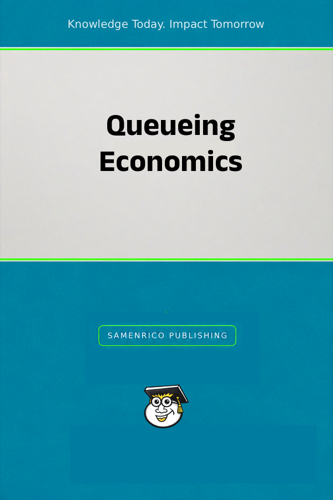
Queueing Economics eBook
Analyze wait times as non-price rationing during e
Analyze wait times as non-price rationing during excess demand periods.
Formats
Free sample
Chapter 1: The Hidden Currency--–- At 8:47 on a Tuesday morning, 847 people already stood in line outside the Vatican Museums. By 10:30 AM, the queue would snake past the Vatican walls, stretch along Viale Vaticano, and eventually require an estimated wait of three hours and forty-two minutes. Inside, the Sistine Chapel—a room measuring just 40 meters by 13 meters—would hold more than 2,000 visitors simultaneously, far beyond its capacity of 300 for any reasonable viewing experience. Yet every single person in that line had paid an entrance fee. The price was fixed.
The queue was the rationing mechanism. And nobody in charge seemed to notice that the waiting time itself had become the real price of admission.This is the paradox that launches our investigation into queueing economics. The Vatican Museum is not an anomaly. It is a perfect laboratory for understanding what happens when money stops being the primary currency of exchange and time takes its place. From the DMV to Disney World, from emergency rooms to e-commerce checkout pages, the same dynamic repeats itself: prices that do not rise to clear demand create waiting lines that allocate resources by time rather than treasure.
But here is the question that will haunt every page of this book: if waiting is so wasteful, why does it persist? And more provocatively, who actually benefits?The answer requires us to abandon a comfortable assumption embedded in introductory economics textbooks. Most students learn that markets clear through prices. When demand exceeds supply, prices rise. When supply exceeds demand, prices fall.
Equilibrium restores balance. This elegant model works beautifully for wheat futures and crude oil. But it fails to describe vast swaths of real economic life—concert tickets that sell out at $50 while scalpers command $500, restaurants that refuse to raise menu prices despite hour-long waits, healthcare systems that use waiting lists instead of fees, and museums that charge the same admission whether you visit in January or June.Something else is happening. Something that economists have studied for decades but that has never been properly synthesized for the general reader. That something is queueing economics: the hidden system of rationing by waiting that governs everything from which preschool your child attends to whether you receive a kidney transplant.The Vatican Museum Problem Let us linger on the Vatican Museum for a moment because it encapsulates five fundamental insights that will organize our entire journey through this book.First, the museum is not free.
It charges an admission price of €17. Yet that price fails to ration demand. Why? Because the price is set administratively, not by market forces. It reflects bureaucratic decisions, political constraints, or simple inertia rather than the intersection of supply and demand curves.
The museum’s leadership could raise the price tomorrow. They choose not to. That choice is the first clue that something beyond simple efficiency is at work.Second, the resulting shortage creates a queue. That queue is not a failure of the system; it is the system operating under a different logic. The queue is doing what prices would otherwise do: it is allocating a scarce resource among competing claimants.
The only difference is the currency of exchange.Third, the queue imposes costs—the time of 847 people multiplied by their hourly opportunity costs. Those waiting costs often exceed the monetary price of admission. For a professional earning €50 per hour, a three-hour wait adds €150 to the cost of seeing the Sistine Chapel. That is nearly nine times the entrance fee. The queue has effectively raised the price for that professional to €167, while the retiree with ample time still pays only €17 plus whatever modest value they place on three hours.Fourth, the people in that queue are not identical.
They have different opportunity costs, different levels of patience, different degrees of desperation to see Michelangelo’s frescoes. Some are tourists on a once-in-a-lifetime trip who will wait any amount of time. Others are locals who could return any day and will abandon the queue if it looks too long. Still others are tour guides whose time is literally money. The queue sorts these people, imposing heavier burdens on those with higher time costs.Fifth, and most unsettling, the museum has little incentive to fix this arrangement.
From the museum’s perspective, the queue signals popularity, generates free publicity through social media posts of snaking lines, and imposes no direct cost on management. The people waiting are not the museum’s employees. Their time is free to the museum. This is the critical asymmetry: the costs of waiting are borne entirely by customers, while the benefits of the queue (demand management, signaling, crowd control) accrue to the provider. No wonder queues persist.This last point is the key that unlocks the entire field of queueing economics.
Waiting lines are not merely unfortunate byproducts of sticky prices. They are often actively maintained by the very organizations that could eliminate them. Understanding why requires us to think like an economist, a psychologist, a game theorist, and a strategist all at once.What Is Really Being Allocated?Let us begin with the economist’s first question: what is being allocated here? The obvious answer is access to the Sistine Chapel. But the more precise answer is that the museum is allocating a scarce resource—a fixed number of visitor slots per hour—among a larger number of potential visitors.
Any allocation mechanism must solve the same problem: deciding who gets the scarce resource and who does not.Economists have identified four primary mechanisms for allocating scarce resources:Price rationing allocates by willingness and ability to pay. Those who value the good most in monetary terms, and who have the money to back that valuation, receive it. This is the default mechanism in market economies for most goods and services.Queue rationing allocates by willingness to wait. Those who value the good most in terms of time, or who have the lowest opportunity cost of time, receive it. This mechanism predominates when prices are fixed below market-clearing levels.Lottery rationing allocates by luck.
Each potential consumer has an equal chance of receiving the good, regardless of wealth or patience. This mechanism is often used for goods with extremely high demand relative to supply, such as coveted event tickets or public housing units.Administrative rationing allocates by rule or authority. A bureaucrat, committee, or algorithm decides who receives the good based on criteria such as need, merit, or priority. This mechanism is common in healthcare, education, and public housing.Each mechanism has different efficiency properties, equity implications, and behavioral consequences. The Vatican Museum has chosen a hybrid system.
The official mechanism is price rationing: everyone who pays the entrance fee may enter. But because the price is too low, excess demand creates a secondary rationing mechanism: time. The queue operates alongside the price, not instead of it.This hybrid system is far more common than pure queue rationing. Pure queues occur when the monetary price is zero, as with free public goods or first-come-first-served services. But most real-world queues involve both a monetary payment and a time payment.
The effective price is the sum of both.The Concept of Full Price This brings us to the central analytical tool that will recur…
This is the end of the free sample. Get the eBook to keep going. Buy now
About this book
Details
- Author
- Ruth Sheridan
- Publisher
- SamEnrico
- Language
- English
- Genre
- Non-Fiction, Business Brief, Service Operations
- Released
- 2026-06-09
- Pages (approx.)
- 151
- Available as
- eBook, Audiobook

Read better in the ZLOADR app
Your eBooks on your phone or tablet. Sign in with your SamEnrico account and start reading.
More by Ruth Sheridan
 Meditation for EmetophobiaRuth Sheridan$11.99
 Dental School Pressure ReliefRuth Sheridan$11.99
 Research Proposal for Fulbright GrantRuth Sheridan$11.99
 Bounty Hunter Stress ManagementRuth Sheridan$11.99
 Badminton Reflex HypnosisRuth Sheridan$11.99
 Kurtis Conner FunnyRuth Sheridan$11.99
 Executive Talent MigrationRuth Sheridan$11.99
 Cooperative Risk Management GuideRuth Sheridan$12.99
 The Silent Revolution: How a Small Town Changed the WorldRuth Sheridan$11.99
 The Ballad of the Bard and the Banker: How Chaucer Launched a Literary EmpireRuth Sheridan$11.99
 Growing Dischidia Pectinoides (Ant Plant)Ruth Sheridan$11.99Cooperative Risk Management GuideRuth Sheridan$12.99
You may also like
 Hong Kong Handover 1997Dunn Johnnie$11.99
 Zumba For Postnatal Recovery CourseNeal Christian$11.99
 Zumba for BeginnersLadner Nikia$11.99
 YouTube Comment Mining GuideHumes Pandora$12.99
 Worry Box MeditationCarlin Rudy$11.99
 Workplace Stress MeditationNguyen Lynn$11.99
 Workplace Stress and Sleep RepairHawley Ivory$11.99
 Workplace Perfectionism CureDelaney Jeffry$11.99
 Workplace Injustice Anger GuideWallen Isabelle$11.99
 Work Addiction and Burnout LinkGreenwood Ester$11.99
 Women in Yoga and WellnessBeattie Galina$11.99
 Women in Stand Up ComedyChun Evangeline$11.99