
Non-FictionCompliance & Risk ArchiveMarket Manipulation
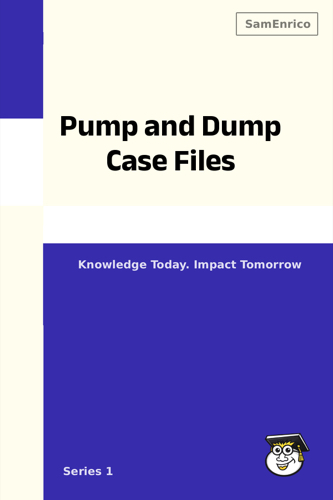
Pump and Dump Case Files eBook
Review enforcement actions against microcap stock
Review enforcement actions against microcap stock manipulation schemes.
Formats
Free sample
Chapter 1: The Nominee Web...--–- The email arrived at 2:17 PM on a Tuesday, and it changed everything. Special Agent Daniel Cross of the FBI’s Microcap Fraud Task Force had been staring at spreadsheets for eleven hours when his screen pinged with a new Blue Sheet return from a small brokerage in Delaware. The data looked ordinary at first—a series of sell orders for a pharmaceutical penny stock called Neuro Vax, ticker NRVX. But Cross had learned to trust the anomaly, not the pattern. He filtered the timestamps and saw it: three different accounts, registered to three different LLCs in Belize, had placed sell orders within 47 milliseconds of each other.
No human being types that fast. No algorithm accidentally coordinates across three unrelated accounts. Cross leaned back in his chair and said to the empty room, “Got you.”That moment—the digital trap snapping shut—is the heart of every pump-and-dump investigation. But to understand how the trap works, you have to understand what the hunters are chasing. This chapter is the first case file in the prosecutorial playbook: The Control Conduit.
It is the most common evasion tactic in microcap fraud, appearing in 14 of the 22 enforcement actions analyzed from 2024 through 2026. And it begins with a simple rule that almost everyone breaks.The Five Percent Rule Under Section 13(d) of the Securities Exchange Act of 1934, any person or group that acquires more than 5% of a company’s outstanding shares must file a public disclosure. This is not a suggestion. It is a statutory requirement, enforced by the SEC with penalties that include disgorgement, civil fines, and in egregious cases, referral for criminal prosecution. The disclosure is filed on Schedule 13D (for activist investors who intend to influence or control the company) or Schedule 13G (for passive investors who simply hold the shares).
The form requires the beneficial owner to identify themselves, state the number of shares they control, and disclose any plans to merge, sell, or change the company’s structure.The purpose of the rule is transparency. If a single investor accumulates a large block of shares, the market has a right to know. Other shareholders need to see who is building a position. The company needs to know if control is shifting. And regulators need to detect potential manipulation before it happens.But fraudsters have a simple workaround: don’t be a single investor.
Break the position into pieces, each under 5%, and hide each piece behind a different legal entity. A Belizean LLC here. A family trust in Nevada there. A former spouse’s brokerage account as a decoy. A foreign national who signs papers without asking questions.
None of these entities, on its own, crosses the 5% threshold. None triggers a filing requirement. And to the casual observer—including the company’s transfer agent and most retail investors—the selling pressure appears to come from dozens of unrelated, ordinary traders.This is the nominee web. And it is the most common concealment method in microcap fraud.The Carrillo Syndicate The case that broke the pattern wide open was SEC v. Carrillo, Wilson, and Wall, filed in the Southern District of New York in 2024.
The three defendants were not sophisticated financiers. Carrillo had been a used car salesman in Miami before discovering penny stocks. Wilson was a former real estate agent who had lost his license after a fraud conviction in 2019. Wall was the ringleader—a self-styled “capital markets consultant” with a office in a strip mall and a website full of stock photos of people who did not actually work for him.Their target was Neuro Vax, a struggling biotech company trading on the OTC Markets under the symbol NRVX. Neuro Vax had a promising Alzheimer’s drug in early-stage trials, but it had run out of cash.
Its market capitalization had fallen to $12 million. Its public float—the number of shares available for trading—was approximately 8 million shares. And its shareholder base was largely dormant, with most investors having bought at higher prices and simply walking away.The syndicate began accumulating shares in early 2023. They did not buy openly. Instead, they used a web of nominee entities that took months to construct.
Carrillo set up three LLCs in Belize: Prometheus Holdings, Atlas Capital Partners, and a third entity with the intentionally bland name of “Global Equity Fund.” Each LLC opened a brokerage account at a different discount broker—E*TRADE, TD Ameritrade, and a small firm called Lighthouse Securities that catered to foreign clients. Wilson used his elderly mother’s IRA account, which he had power of attorney over, to buy an additional 1.2 million shares. Wall used a former brother-in-law who owed him money, paying the man $10,000 to open an account in his own name and execute trades at Wall’s direction.By April 2023, the syndicate controlled 1.8 million shares of Neuro Vax—approximately 18.5% of the outstanding stock. But no single entity held more than 4.9%. No Schedule 13D or 13G was filed.
No one at Neuro Vax knew that three men in Florida effectively controlled the company’s trading fate.The Pump With the position accumulated, the syndicate needed to drive up the price. They had paid an average of $0.42 per share. To make a meaningful profit, they needed to sell at $1.20 or higher. The problem was that Neuro Vax had no news. The Alzheimer’s trial was moving slowly.
No revenue. No partnerships. No catalysts.So they invented one.On May 15, 2023, a newswire service distributed a press release under Neuro Vax’s name. The headline read: “Neuro Vax Announces Breakthrough in Alzheimer’s Treatment: Phase II Trial Shows 40% Reduction in Cognitive Decline.” The release quoted a fictional “Dr. James Morrison, Chief Scientific Officer,” who did not exist.
It cited data from a trial that had not yet completed enrollment. And it ended with a forward-looking statement about “potential partnership discussions with major pharmaceutical companies.”The release was entirely fake. But it looked real. It used proper formatting. It included a disclaimer at the bottom.
It was picked up by Yahoo Finance, Bloomberg Terminal, and several smaller news aggregators that did not verify sources. Within hours, the stock began to move.By the close of trading on May 16, NRVX had risen from $0.42 to $0.89. Volume exploded from an average of 120,000 shares per day to over 4 million shares. Retail investors—the “dumb money”—piled in, convinced they had found the next big biotech winner. Message boards on Reddit and Stock Twits lit up with speculation.
One user wrote, “NRVX to $5 easy. This is the cure.” Another posted, “Just mortgaged my house. Let’s go.”The syndicate did not sell immediately. They waited for the peak. On May 18, the stock hit $1.47.
That was the signal.The Dump The sell orders began at 9:32 AM on May 19. They were disguised as ordinary retail trades—lots of 100 shares, 500 shares, occasionally 1,000 shares. But the SEC’s data analytics team would later reconstruct the pattern: across the eight nominee accounts, the syndicate sold 1.4 million shares in just under six hours. The selling was relentless but careful. They never placed an order large enough to trigger a circuit breaker or attract attention from the brokerage’s compliance department.
They used limit orders to maintain price discipline, selling into the buy-side liquidity that the fake press release had generated.By…
This is the end of the free sample. Get the eBook to keep going. Buy now
About this book
Details
- Author
- Swanson Benjamin
- Publisher
- SamEnrico
- Language
- English
- Genre
- Non-Fiction, Compliance & Risk Archive, Market Manipulation
- Released
- 2026-06-09
- Pages (approx.)
- 136
- Available as
- eBook, Audiobook

Read better in the ZLOADR app
Your eBooks on your phone or tablet. Sign in with your SamEnrico account and start reading.
More by Swanson Benjamin
 Sustainable Success Habits WorkbookSwanson Benjamin$11.99
 Daycare Insurance BrokersSwanson Benjamin$11.99
 Beginner Fitness in Small SpacesSwanson Benjamin$11.99
 Antwerp Diamond Heist Interrogation RoomSwanson Benjamin$11.99
 The Last Flight of Flight 752: A Rescue Mission in the ShadowsSwanson Benjamin$11.99
 Frozen Genes: The Arctic Expedition That Rewrote Evolutionary ScienceSwanson Benjamin$11.99
 Understanding Diabetes MellitusSwanson Benjamin$17.99
 EU Beneficial Ownership GuideSwanson Benjamin$12.99
 CTA Software SolutionsSwanson Benjamin$12.99
 Active Directory EngineerSwanson Benjamin$11.99
 How to Start a Hobby in JuggerSwanson Benjamin$11.99
You may also like
 Hong Kong Handover 1997Dunn Johnnie$11.99
 Zumba For Postnatal Recovery CourseNeal Christian$11.99
 Zumba for BeginnersLadner Nikia$11.99
 YouTube Comment Mining GuideHumes Pandora$12.99
 Worry Box MeditationCarlin Rudy$11.99
 Workplace Stress MeditationNguyen Lynn$11.99
 Workplace Stress and Sleep RepairHawley Ivory$11.99
 Workplace Perfectionism CureDelaney Jeffry$11.99
 Workplace Injustice Anger GuideWallen Isabelle$11.99
 Work Addiction and Burnout LinkGreenwood Ester$11.99
 Women in Yoga and WellnessBeattie Galina$11.99
 Women in Stand Up ComedyChun Evangeline$11.99