
Pricing Script Guide eBook
Present price confidently with scripts that frame
by Bearden Kala
Present price confidently with scripts that frame value before revealing cost.
Formats
Free sample
Chapter 1: The Million-Dollar Flinch--–- The CEO looked across the table, pen in hand, contract signed on all but one line. "Just give me the price," he said. "We're ready to move today."I opened my mouth. And then I did something I didn't even notice at the time. Something I had done thousands of times before.
Something that would cost me $48,000 in the next sixty seconds.I flinched."So, uh, our fee is normally $60,000 for this scope," I heard myself say, my voice climbing up at the end like a question instead of a statement. "But, you know, since we're just getting started, I'm sure we can work something out. I mean, we want to be reasonable. What were you thinking?"The CEO put down his pen. Not because the price was too high.
Because I had just told him it was too high. My apology, my hedge, my upward inflection—they had all screamed one thing: Even I don't believe this price is fair.He leaned back. "Let me think about it," he said. We both knew what that meant.I walked out of that office having delivered the exact same solution that my competitor down the street sold for $78,000 the next week. The difference wasn't the product.
The difference was that my competitor said his price like he meant it. I said mine like I was sorry.That was the day I learned about the flinch. And this chapter is about making sure you never make the same mistake.The Anatomy of a Flinch Every seller has a number. Not the number on the price tag—the number inside their head where confidence turns to fear. For some, it's 500.Forothers,it′s500.
For others, it's 500.Forothers,it′s50,000. But somewhere on the spectrum, there is a threshold beyond which your voice changes, your posture shifts, and your words start apologizing before the buyer has said a single thing.That threshold is your Flinch Point.The flinch is not a conscious decision. It is a neurological reflex, rooted in the same ancient circuitry that makes you pull your hand back from a hot stove before your brain registers pain. When you approach a price that feels "high" to you—regardless of whether it is actually high for the buyer—your amygdala (the brain's fear center) activates. Your vocal cords tighten.
Your breathing becomes shallow. And your mouth produces what I call the Price Apology: a string of weakening words designed to soften the blow of your own number.Here is the brutal truth that Chapter 2 will explore in depth: the buyer almost never rejects the price. They reject the uncertainty in your voice when you say it.Let me prove this to you with a simple experiment you can run today. Find a colleague or friend. Say the following sentence two different ways:First way: "The price for this project is $5,000." Say it flat, neutral, like you're reading a grocery list.Second way: "The price for this project is $5,000?" Let your voice rise at the end.
Add a little shrug. Maybe a "so, yeah" before it.Ask your friend which version made them want to ask questions. Which version sounded like the seller was confident? Which version made them suspicious?Every single time I run this exercise, the result is the same. The upward inflection—the verbal flinch—triggers doubt.
The flat, confident statement triggers acceptance. The words are identical. The delivery changes everything.Why Buyers Ask for Price First (But Buy on Value)The most dangerous moment in any sales conversation is not when you state the price. It is the thirty seconds before that, when the buyer says, "Just give me the price."On the surface, this request seems reasonable. The buyer wants to know what something costs before investing time in understanding it.
But beneath the surface, something else is happening. When a buyer asks for price first, they are attempting to anchor the conversation on their terms. They want to establish a low reference point before you have had a chance to establish a high one.This is not manipulation. It is simply how the human brain works.Let me introduce you to Daniel Kahneman and Amos Tversky, the psychologists who won a Nobel Prize for discovering the cognitive biases that govern every pricing interaction. Their research revealed three principles that you must understand before you ever say a number out loud.The first principle is Anchoring.The anchor is the first number the brain hears.
And once that number lands, everything else is judged in relation to it. In one famous study, Kahneman and Tversky spun a wheel of fortune in front of participants. The wheel was rigged to land on either 10 or 65. After seeing the number, participants were asked: "What percentage of African nations are in the United Nations?"Those who saw the wheel land on 10 guessed an average of 25 percent. Those who saw 65 guessed an average of 45 percent.
The random number on a wheel—completely unrelated to the question—had anchored their estimates.Now apply this to pricing. If the buyer asks for the price and you say "$5,000," that number becomes the anchor. Everything you say afterward—"but it includes this feature, and this warranty, and this support"—is now fighting against that anchor. You are trying to justify a number that already feels high because it was the first number mentioned.But if you control the anchor, everything changes.The anchor script, which we will cover in Chapter 3, works like this: before you reveal your actual price, you place a higher number in the buyer's mind. "The fully-loaded enterprise solution typically runs 25,000."Now25,000." Now 25,000."Now25,000 is the anchor.
When you then say, "For your specific needs, we've structured a solution at $8,000," the second number feels like a bargain.The buyer does not consciously compare the two numbers. Their brain does it automatically. And the gap between 25,000and25,000 and 25,000and8,000 triggers a feeling of savings, even though they were never going to pay $25,000 in the first place.The second principle is Framing.Framing is the difference between asking, "Do you want the good news or the bad news first?" The same information, presented as a gain or a loss, produces completely different emotional responses.Consider this classic experiment. Two groups of doctors were asked whether they would recommend a surgery with the following survival rates:Group A heard: "Ninety percent of patients survive this surgery."Group B heard: "Ten percent of patients die during this surgery."The surgery was identical. The numbers were mathematically equivalent.
But 84 percent of Group A recommended the surgery, while only 50 percent of Group B did. The frame—survival versus death—changed everything.In pricing, framing is the difference between saying, "This will cost you 1,200"(alossframe)andsaying,"Youwillsave1,200" (a loss frame) and saying, "You will save 1,200"(alossframe)andsaying,"Youwillsave8,000 by solving this problem, and the solution costs 1,200"(againframewrappedaroundaloss).Thebuyerstillpays1,200" (a gain frame wrapped around a loss). The buyer still pays 1,200"(againframewrappedaroundaloss).Thebuyerstillpays1,200. But in the second frame, they are not spending money—they are keeping $6,800. (We will build this exact script in Chapter 7.)The third principle is Loss Aversion.Loss aversion is the most powerful bias in all of pricing psychology.…
This is the end of the free sample. Get the eBook to keep going. Buy now
About this book
Details
- Author
- Bearden Kala
- Publisher
- SamEnrico
- Language
- English
- Genre
- Non-Fiction, First 30 Days, Pricing
- Released
- 2026-06-01
- Pages (approx.)
- 134
- Available as
- eBook, Audiobook

Read better in the ZLOADR app
Your eBooks on your phone or tablet. Sign in with your SamEnrico account and start reading.
More by Bearden Kala
 Plant Based Selenium HandbookBearden Kala$11.99
 The Remote Work Desk SetupBearden Kala$11.99
 Resentment in In-Law RelationshipsBearden Kala$11.99
 The Chef Wrist and BackBearden Kala$11.99
 Zachary Taylor Old Rough ReadyBearden Kala$11.99
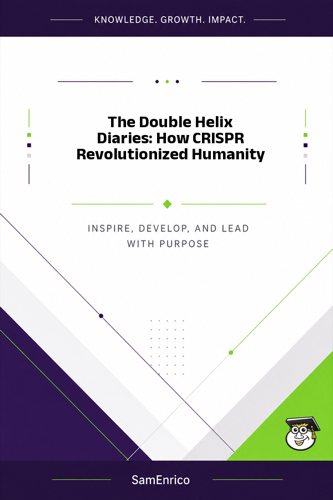 The Double Helix Diaries: How CRISPR Revolutionized HumanityBearden Kala$11.99
 The Blackwater Plague: Medieval Deep-Sea Secrets and the Birth of Medical HorrorBearden Kala$11.99
 How to Become a Chemical Laboratory ChiefBearden Kala$11.99
 Stock ManagerBearden Kala$11.99
 International Search Fee GuideBearden Kala$12.99
 Understanding Cryptomicrotia Brachydactyly SyndromeBearden Kala$17.99