
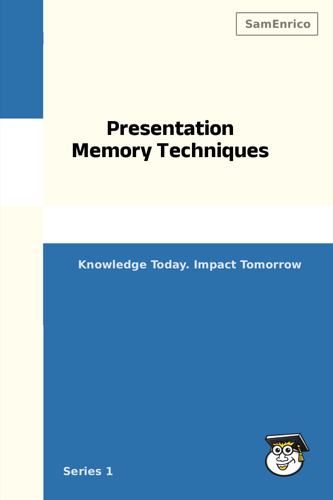
Presentation Memory Techniques Audiobook
Use mnemonics and structures to recall your conten
Use mnemonics and structures to recall your content without notes.
Formats
Free sample
Chapter 1: The Mark Twain Paradox--The great American writer Mark Twain once confessed that he needed to paint the first few words of his lecture on his fingernails. Before walking on stage, he would glance down at his left hand, read the opening line from his thumb, and begin. Then, as he spoke, he would glance at his index finger for the second point, his middle finger for the third, and so on. He called these his “mental fingernail notes.” And yet, despite this ingenious hack, Twain lived in perpetual terror of forgetting. He wrote, “A public speaker’s worst fear is not that the audience will boo.
It is that they will sit in silence while you stand there, frozen, with no idea what comes next.”Here is the paradox that gives this chapter its name: Mark Twain was one of the most celebrated speakers of his era. He traveled the world delivering sold-out lectures. He could memorize entire novels. And still, he was terrified of losing his place. If Twain—with his literary genius and decades of stage experience—struggled to hold a 60-minute talk in his head, what hope is there for the rest of us?The answer, as this book will demonstrate, is that Twain was using the wrong tool for the job.
He relied on rote rehearsal and linear memory. He tried to store words as words. And that is precisely why he failed. The moment you treat your brain like a filing cabinet—a place where you stuff facts and hope to find them later—you set yourself up for the very public humiliation that Twain so desperately feared.This book is built on a radically different premise. Your brain is not a filing cabinet.
It is a palace. More specifically, it is an ancient, exquisitely designed architecture for remembering spaces, images, emotions, and journeys. The problem is not that you have a bad memory. The problem is that you have been asking your memory to do something it was never designed to do: store abstract bullet points, linear scripts, and Power Point slides.In this chapter, we will explore the hidden cost of modern presentation habits, introduce the concept of cognitive offloading, and lay the foundation for a counterintuitive truth: the best way to remember your speech is to stop trying to remember your speech. Instead, you will learn to transform your content into a…
This is the end of the free sample. Get the Audiobook to keep going. Buy now
About this book
Details
- Author
- Ladner Kenneth
- Publisher
- SamEnrico
- Language
- English
- Genre
- Non-Fiction, Self-Help, Memory
- Released
- 2026-06-06
- Pages (approx.)
- 141
- Available as
- eBook, Audiobook

Listen in the VoxFlicks app
Audiobooks and audio dramas wherever you go. Sign in with your SamEnrico account and press play.
More by Ladner Kenneth
 Digital File CleanupLadner Kenneth$11.99
 Affirmation Music IntegrationLadner Kenneth$11.99
 The Sleep and Emotion GuideLadner Kenneth$11.99
 Lowitja O'Donoghue Stolen GenerationsLadner Kenneth$11.99
 Habit Formation for WritersLadner Kenneth$11.99
 Business Credit Dispute ManualLadner Kenneth$11.99Business Credit Dispute ManualLadner Kenneth$11.99
 Podcast for CommutersLadner Kenneth$11.99
 Beneath the Waves: The Lost City of Dwarka's SecretsLadner Kenneth$11.99
 The Man Who Discovered the Beatles: Brian Epstein and the Birth of a LegendLadner Kenneth$11.99
 How to Produce Trash Compactor AccessoriesLadner Kenneth$11.99
 How to Produce Matte Finish Interior PaintLadner Kenneth$11.99
You may also like
 Senior Memory Loss EsteemFaison Karleen$11.99
 Senior Memory Decline CopingLockhart Dot$11.99
 Networking Memory StrategiesBock Cheryll$11.99
 Senior Photo Album MemoryBritt Lelah$11.99
 Self Hypnosis for Memory EnhancementSanchez Tina$11.99
 Memory Palace for DreamsStiles Chandra$11.99
 Legacy Photo Book GuideHarley Ozell$11.99
 The Name Memory TrickNeil Frederica$11.99
 The Anger Trigger Memory BankBeaulieu Waltraud$11.99
 Forgetting Curve BeaterChestnut Antwan$11.99
 Imposter Syndrome Memory GuideRounds Venita$11.99
 Emotional Memory ReconsolidationStorey Abbie$11.99