

Non-FictionMental WealthWorkplace SurvivalRecovery Guide
Post Work Recovery Protocol eBook
Prevent toxic boss stress from ruining your nights
Prevent toxic boss stress from ruining your nights, weekends, and relationships. Covers commute debriefing rituals, physical separation cues, and thought-stopping for rumination.
Formats
Free sample
Chapter 1: The 4:47 PM Disaster--–- The clock on Maya’s computer read 4:47 PM when her boss’s name appeared in her inbox. Not a calendar invite. Not a scheduled check-in. Just a subject line: “Quick chat before you leave?” Her heart rate jumped from 72 to 98 beats per minute in the three seconds it took her to open the message. The body of the email was three words: “My office.
Now.” Maya spent the next thirteen minutes sitting in her boss’s office, being told that her “attitude problem” was affecting team morale, that she needed to be “more of a team player,” and that her recent request to work from home two days a week came across as “entitled.” She did not cry in the office. She waited. She smiled. She said, “I understand, I’ll work on it.” Then she walked to her car, closed the door, and sobbed for eight minutes before she could safely drive home.By the time Maya walked through her front door at 5:52 PM, the 4:47 PM disaster was no longer a work problem. It was a marriage problem.
It was a parenting problem. It was a sleep problem. It was, Maya would later tell a friend, “a problem that followed me around like a smell I couldn’t wash off.” Her husband asked how her day was. She snapped, “How do you think it was?” Her six-year-old wanted to show her a drawing. She looked at it blankly and said, “That’s nice, honey,” in a voice that conveyed the opposite.
She ate dinner in silence, scrolled Instagram for two hours, and lay awake from 2:00 AM to 4:00 AM rehearsing what she should have said to her boss. The 4:47 PM disaster had stolen her evening, her presence, and her peace.This book exists because Maya’s story is not an outlier. It is the average Tuesday for millions of workers who have toxic bosses and cannot simply quit. The standard advice—“just ignore him,” “don’t take it personally,” “leave work at work”—is worse than useless. It is gaslighting disguised as wisdom.
You cannot ignore a threat your nervous system has already registered. You cannot avoid taking it personally when the attack is personal. And you cannot leave work at work when your boss sends a 4:47 PM email that guarantees you will carry them home.This chapter introduces the central problem that the rest of this book solves: the gap between when a toxic work event happens and when you have a chance to recover from it. I call this gap the Carryover Window. In Maya’s case, the Carryover Window lasted sixty-five minutes—from 4:47 PM to 5:52 PM.
During that window, her unprocessed stress hormones multiplied, her rumination loops began, and her ability to be present with her family was destroyed. The Post Work Recovery Protocol is a systematic method for closing that window. Not managing it. Not coping with it. Closing it.By the end of this chapter, you will understand exactly what happens inside your body and brain during the Carryover Window.
You will learn why traditional advice fails. And you will take a self-assessment that reveals how much of your off-hours are currently being stolen by boss-induced stress. This is not a warm-up chapter. This is the diagnosis that makes the rest of the book necessary.The Anatomy of the Carryover Window The Carryover Window is the period of time between a stressful work event and your first opportunity to deliberately process and release that stress. For most workers, this window is not a few minutes.
It is hours. And those hours are not neutral. They are actively destructive.Let me walk you through what happened inside Maya’s body and brain between 4:47 PM and 5:52 PM. This is not speculation. This is based on decades of research in psychoneuroendocrinology, cognitive neuroscience, and occupational health psychology.Minute 0 to 3 (4:47 PM to 4:50 PM): Threat Detection.
Maya’s amygdala, the brain’s rapid-response threat detection system, processed her boss’s email in 200 milliseconds. Before she had consciously read the words “My office. Now.,” her sympathetic nervous system had already activated. Her adrenal glands released epinephrine (adrenaline) and norepinephrine. Her heart rate increased.
Her breathing became shallower. Blood flowed away from her digestive system and toward her large muscle groups. This is the fight-or-flight response. It is designed for saber-toothed tigers, not passive-aggressive managers. But her brain could not tell the difference.Minute 3 to 16 (4:50 PM to 5:03 PM): The Confrontation.
During the thirteen minutes in her boss’s office, Maya’s cortisol levels began to rise. Cortisol is a slower-acting stress hormone that sustains the stress response over time. Unlike adrenaline, which peaks and falls quickly, cortisol can remain elevated for hours. Maya’s prefrontal cortex—the part of the brain responsible for rational thought, impulse control, and decision-making—was partially suppressed. This is why she said “I understand, I’ll work on it” instead of what she actually wanted to say.
Her brain had prioritized survival over self-expression.Minute 16 to 24 (5:03 PM to 5:11 PM): The Walk to the Car. Maya walked through the parking lot in a dissociative state. Dissociation is not a pathology in this context; it is a protective mechanism. Her brain was reducing her emotional contact with the present moment because the present moment was overwhelming. She remembers walking to her car but cannot recall the route.
She remembers unlocking the door but not sitting down. This is stress-induced memory fragmentation, and it is alarmingly common.Minute 24 to 32 (5:11 PM to 5:19 PM): The Car Cry. The eight minutes Maya spent crying in her car were not a failure of coping. They were an involuntary stress release. Emotional tears contain higher concentrations of stress hormones than reflex tears (from chopping onions) or basal tears (from lubrication).
By crying, Maya was literally excreting cortisol. This is why crying provides relief. But eight minutes was not enough. The stress had already begun to consolidate into memory.Minute 32 to 65 (5:19 PM to 5:52 PM): The Drive Home. During the thirty-three-minute drive, Maya’s brain began the process of rumination.
Rumination is not the same as reflection. Reflection is deliberate, time-limited, and solution-focused. Rumination is repetitive, open-ended, and emotion-focused. Maya replayed her boss’s phrases—“attitude problem,” “not a team player,” “entitled”—on a loop. Each replay triggered another small cortisol spike.
By the time she pulled into her driveway, her cortisol levels were actually higher than they had been immediately after the confrontation. She had spent the drive home escalating her own stress.Minute 65 to 120 (5:52 PM to 6:52 PM): The Spillover. Maya walked through her front door already depleted. Her husband’s innocent question—“How was your day?”—landed as an accusation. Her daughter’s drawing landed as an interruption.
Maya was not choosing to be irritable. Her prefrontal cortex was still suppressed, and her amygdala was still primed. She was, in a very real sense, not fully in control of her behavior. The 4:47 PM disaster had hijacked her nervous system.By 6:52 PM, the original work event was over. But its effects would persist for hours.
Maya would scroll Instagram (a passive coping behavior that research shows prolongs stress). She would lie awake ruminating (further consolidating the negative memory). She would wake…
This is the end of the free sample. Get the eBook to keep going. Buy now
About this book
Details
- Author
- Reichert Milissa
- Publisher
- SamEnrico
- Language
- English
- Genre
- Non-Fiction, Mental Wealth, Workplace Survival, Recovery Guide
- Released
- 2026-05-29
- Pages (approx.)
- 139
- Available as
- eBook, Audiobook

Read better in the ZLOADR app
Your eBooks on your phone or tablet. Sign in with your SamEnrico account and start reading.
More by Reichert Milissa
 Stress Reaction Observation WorkbookReichert Milissa$11.99
 Anecdote Persuasion MethodReichert Milissa$11.99
 Earle's NOAA Chief ScientistReichert Milissa$11.99
 Unrealistic Deadlines Stress GuideReichert Milissa$11.99
 The Magnesium for RLS HandbookReichert Milissa$11.99
 Kali's Shadow: The Dark Goddess and the Demon KingReichert Milissa$11.99
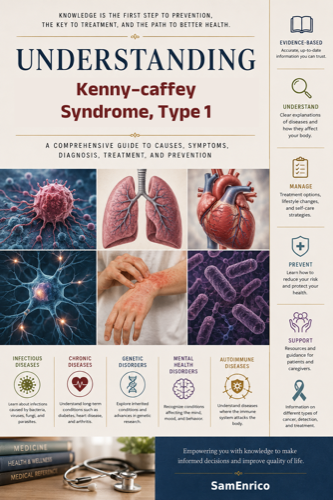 Understanding Kenny–caffey Syndrome, Type 1Reichert Milissa$17.99
 How to Start a Chalk (ground) Production Business (Beginners Guide)Reichert Milissa$11.99
 Women in STEM MigrationReichert Milissa$12.99
 Service Account ManagerReichert Milissa$11.99
You may also like
 Hong Kong Handover 1997Dunn Johnnie$11.99
 Zumba For Postnatal Recovery CourseNeal Christian$11.99
 Zumba for BeginnersLadner Nikia$11.99
 YouTube Comment Mining GuideHumes Pandora$12.99
 Worry Box MeditationCarlin Rudy$11.99
 Workplace Stress MeditationNguyen Lynn$11.99
 Workplace Stress and Sleep RepairHawley Ivory$11.99
 Workplace Perfectionism CureDelaney Jeffry$11.99
 Workplace Injustice Anger GuideWallen Isabelle$11.99
 Work Addiction and Burnout LinkGreenwood Ester$11.99
 Women in Yoga and WellnessBeattie Galina$11.99
 Women in Stand Up ComedyChun Evangeline$11.99