
Pilot Instructor Stress eBook
Train student pilots whose mistakes could kill you
Train student pilots whose mistakes could kill you both.
Formats
Free sample
Chapter 1: The Fragile Trust...–- The instructor straps into the right seat for the fourth time that day. The student is new—twenty-two years old, 120 hours, eager. The pre-flight brief went well. The student repeated back the emergency procedures correctly. The weather is perfect.
By every measurable standard, this flight should be routine. And yet, as the engine fires and the student’s hand trembles slightly on the throttle, the instructor feels something he cannot name. It is not fear. It is not fatigue—not yet. It is the quiet, unspoken weight of a contract that no one signed but both parties understand: I am putting my life in your hands, and you are not ready to hold it.This chapter is about that contract.
It is about the unique, almost absurd psychological position of the Certified Flight Instructor—the only teaching profession in which the teacher’s survival depends on the student’s performance. A math teacher whose student fails a test does not crash into a tree. A driving instructor has dual controls and a passenger brake. But a flight instructor, at 200 feet above the runway, cannot reach across and fix a student’s frozen feet on the rudder pedals fast enough to prevent a ground loop. The instructor can only see the mistake coming, feel the aircraft begin to depart controlled flight, and react.The Fragile Trust is not a metaphor.
It is the daily reality of every CFI who has ever watched a student overshoot final, freeze on the controls, or pull back on the yoke when the stall horn screams. And yet, remarkably, the aviation industry spends almost no time examining the psychological toll of this arrangement on the instructor. We teach students about stress. We teach them about aeronautical decision-making. We do not teach instructors how to survive the slow erosion of trust that comes from repeatedly putting their lives in the hands of novices.This chapter has three goals.
First, to name and define the Dual Hazard framework—distinguishing between the acute stress of sudden student errors and the chronic stress of systemic occupational pressures. Second, to explore the Legacy of Silence—the cultural and institutional pressures that force instructors to hide their fatigue, fear, and frustration. And third, to argue that trust in flight training is fragile not because students are dangerous, but because instructors cannot trust the system to protect them. By the end of this chapter, the reader will understand why the most dangerous person in the cockpit is not the student who freezes—it is the instructor who has stopped believing that anyone cares whether they live or die.The Unspoken Contract Every professional relationship rests on a contract. Some are written.
Some are verbal. The contract between a flight instructor and a student pilot is neither. It is unspoken, unwritten, and yet absolute. It says: I will teach you to fly. In exchange, you will try not to kill me.Consider the asymmetry.
The student risks their own life, yes. But the student is also the agent of risk. They control the controls. They decide when to turn final. They choose whether to add power or pull back.
The instructor can only advise, correct, and ultimately take over—but taking over requires time. At 90 knots, one second of delayed reaction is 150 feet. At 200 feet AGL, that is the difference between a go-around and a crash.This asymmetry creates a psychological burden that has no parallel in any other teaching profession. A surgical resident operates under the direct supervision of an attending surgeon who can physically intervene. A truck driving trainee has an instructor in the passenger seat with a brake pedal.
A flight instructor has nothing but their voice and their reflexes. And when those fail, they die alongside their student.The literature on human factors in aviation has extensively documented the stress of student pilots. We have studies on test anxiety, on first-solo nerves, on the psychological challenges of checkrides. But there is a striking gap in the research: almost nothing examines the instructor’s experience of repeated, cumulative exposure to student error. A CFI with 1,000 hours of dual given has likely experienced dozens of near-misses.
Each one triggers a full fight-or-flight response. Each one leaves a physiological residue. And each one, quietly, chips away at the instructor’s sense of safety.What makes this contract particularly fragile is that it is invisible. No one discusses it. No debrief includes the question, “How did you feel when your student froze on short final?” No flight school owner asks, “Has your trust in your students been eroded by repeated close calls?” The assumption is that instructors are professionals, and professionals do not feel fear—or if they do, they do not admit it.This assumption is deadly.The Dual Hazard: Acute vs.
Chronic Stress To understand instructor stress, we must first distinguish between two qualitatively different hazards. The Dual Hazard framework, introduced here and developed throughout this book, separates the sudden from the slow, the visible from the invisible.Acute Operational Stress is what instructors expect. It is the student who fails to maintain directional control during takeoff roll. It is the student who enters a stall-spin scenario during power-on stall practice. It is the student who forgets to lower the landing gear, or who turns base to final at 45 degrees of bank, or who pulls back on the yoke when the aircraft sinks below glideslope.
These events are sudden, life-threatening, and demand immediate intervention. They trigger a classic sympathetic nervous system response: heart rate spikes to 140 beats per minute, cortisol and adrenaline flood the bloodstream, fine motor skills degrade, peripheral vision narrows, and the instructor enters a state of hyperarousal.Acute stress is what CFIs train for. They practice emergency scenarios. They brief “my controls” procedures. They expect that at some point, they will need to save the aircraft.
And when they do, and when they succeed, they experience a powerful rush of competence and relief. This is the Masking Effect, which we will explore in detail in Chapter 2: the temporary high of successful intervention that hides the deeper toll.Chronic Occupational Stress is what instructors ignore. It is the slow grind of 14-hour duty days. It is the financial insecurity of poverty wages. It is the scheduling chaos that destroys sleep cycles.
It is the career stagnation of time-building. It is the emotional exhaustion of managing student anxiety while suppressing your own. Chronic stress does not trigger a dramatic fight-or-flight response. It triggers something far more insidious: a gradual, cumulative erosion of cognitive reserve, emotional regulation, and physical health.The critical insight of the Dual Hazard framework is that chronic stress amplifies acute stress. An instructor who is already exhausted, financially anxious, and sleep-deprived will have a slower reaction time, narrower situational awareness, and poorer decision-making when the student suddenly errs.
The chronic primes the acute to be worse. And yet, the industry focuses almost exclusively on acute events. We investigate accidents caused by student error. We do not investigate the instructor’s sleep history, duty schedule, or financial strain.This chapter introduces the framework. Subsequent chapters will build the evidence.
But for now, the reader should understand a simple truth: the greatest threat to flight safety in General Aviation training…
This is the end of the free sample. Get the eBook to keep going. Buy now
About this book
Details
- Author
- Buckley Saturnina
- Publisher
- SamEnrico
- Language
- English
- Genre
- Non-Fiction, Self-Help, Aviation
- Released
- 2026-06-05
- Pages (approx.)
- 146
- Available as
- eBook, Audiobook

Read better in the ZLOADR app
Your eBooks on your phone or tablet. Sign in with your SamEnrico account and start reading.
More by Buckley Saturnina
 Sarcopenia Reversal WorkbookBuckley Saturnina$11.99
 Comparison Culture and FaithBuckley Saturnina$11.99
 Breath for COPDBuckley Saturnina$11.99
 The MBSR Retreat GuideBuckley Saturnina$11.99
 Polar Light GuideBuckley Saturnina$11.99
 Rewiring Contempt Self TalkBuckley Saturnina$11.99
 Harlan Fiske StoneBuckley Saturnina$11.99
 Robber Barons or CaptainsBuckley Saturnina$11.99
 The Southern Lights: New Zealand’s Scientific and Cultural DawnBuckley Saturnina$11.99
 Justinian's Vision: The Golden Age of ByzantiumBuckley Saturnina$11.99
 The Silk Road That Wasn't: How Marco Polo Never Made It to ChinaBuckley Saturnina$11.99
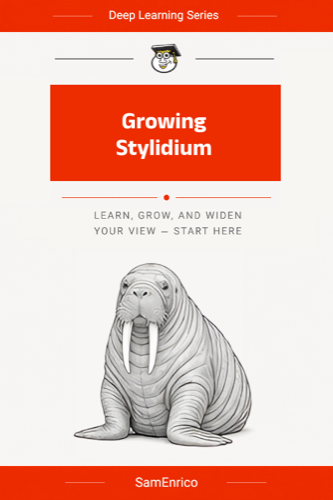 Growing StylidiumBuckley Saturnina$11.99
You may also like
 Hong Kong Handover 1997Dunn Johnnie$11.99
 Zumba For Postnatal Recovery CourseNeal Christian$11.99
 Zumba for BeginnersLadner Nikia$11.99
 YouTube Comment Mining GuideHumes Pandora$12.99
 Worry Box MeditationCarlin Rudy$11.99
 Workplace Stress MeditationNguyen Lynn$11.99
 Workplace Stress and Sleep RepairHawley Ivory$11.99
 Workplace Perfectionism CureDelaney Jeffry$11.99
 Workplace Injustice Anger GuideWallen Isabelle$11.99
 Work Addiction and Burnout LinkGreenwood Ester$11.99
 Women in Yoga and WellnessBeattie Galina$11.99
 Women in Stand Up ComedyChun Evangeline$11.99