
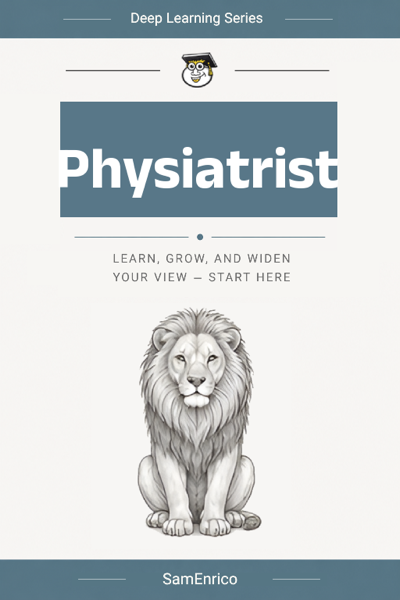
Physiatrist
A Coursebook on Physiatrist
by Sams Takisha
A Coursebook on Physiatrist
Formats
About this book
Free sample
Chapter 1: The Question Most Doctors Never Ask...--The physiatrist watches the patient walk from the waiting room.Not the casual glance most physicians offer, but a slow, deliberate dissection of every moving part. The way the left foot slaps the ground instead of rolling smoothly—that is peroneal weakness, possibly an L5 radiculopathy. The slight pelvic drop on the right during left stance—that is a positive Trendelenburg sign, hip abductor failure. The way the patient grips the doorframe with one hand while pretending not to need it—that is compensation masking impairment, and it tells the physiatrist more than any MRI ever could.By the time the patient sits down, the physiatrist already has a working diagnosis. Not of a disease, but of a person in trouble.This is the art and science of Physical Medicine and Rehabilitation, and the person practicing it is called a physiatrist (fizz-ee-AT-rist).
Few medical specialties are as misunderstood, as poorly named, or as critically important to the modern healthcare system. The physiatrist is not a psychiatrist who forgot how to spell. The physiatrist is not a physical therapist with a medical degree. The physiatrist is a fully trained physician who specializes in the nonsurgical management of musculoskeletal and neurological conditions with one overriding goal: restoring function and maximizing quality of life.But to understand what a physiatrist does, one must first understand what most of medicine does not.The Pathology Trap For the last century, medical education has been built on a deceptively simple question: What is the disease?The neurologist asks this and localizes a lesion to the corticospinal tract. The rheumatologist asks this and measures an elevated anti-CCP antibody.
The orthopedic surgeon asks this and identifies a torn meniscus on MRI. These are all valid, important questions. They save lives. They diagnose conditions. They identify targets for surgery, for biologics, for life-saving interventions.But they are incomplete.A patient can have a perfect diagnosis and a perfect treatment and still be unable to walk, unable to work, unable to live independently.
The pathology-centered model asks what is wrong but rarely asks so what—so what can this person still do, and what…
This is the end of the free sample. Get the eBook to keep going. Buy now
Contents
- Chapter 1
- Chapter 2
- Chapter 3
- Chapter 4
- Chapter 5
- Chapter 6
- Chapter 7
- Chapter 8
- Chapter 9
- Chapter 10
- Chapter 11
- Chapter 12
Details
- Author
- Sams Takisha
- Publisher
- SamEnrico
- Language
- English
- Genre
- Non-Fiction, Informative, Educational
- Released
- 2026-06-03
- Pages (approx.)
- 159
- Available as
- eBook, Audiobook

Read better in the ZLOADR app
Your eBooks on your phone or tablet. Sign in with your SamEnrico account and start reading.
More by Sams Takisha
 Religious And Spiritual Grief After Loss WorkbookSams Takisha$11.99
 Metta for Chronic IllnessSams Takisha$11.99
 Cross Race Identification FailuresSams Takisha$11.99
 Luxury Goods ESG BenchmarkSams Takisha$11.99
 The Letting Go of Regret GuideSams Takisha$11.99
 The Phantom of Austerlitz: Napoleon's Ghostly TacticsSams Takisha$11.99
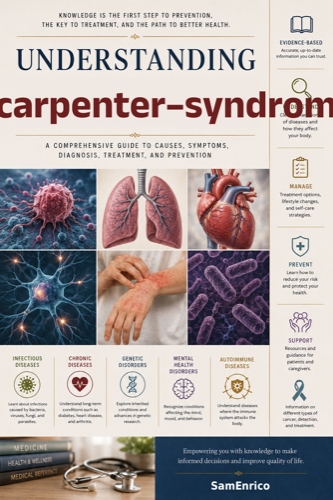 Understanding Say–carpenter–syndromeSams Takisha$17.99
 Business Address Credit ImpactSams Takisha$12.99
 First 30 Days LinkedIn Mentor GuideSams Takisha$12.99
 How to Become a Dry-kiln OperatorSams Takisha$11.99