
Non-FictionInformativeEducational
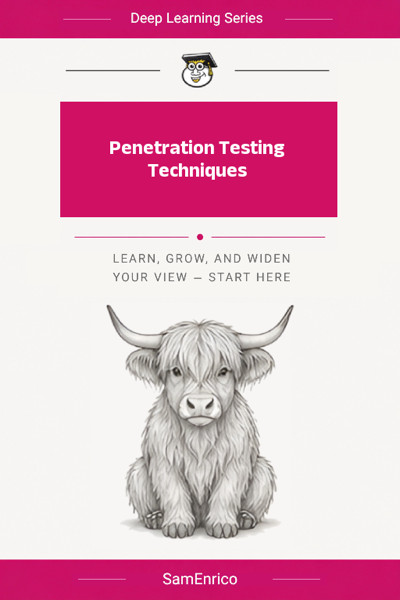
Penetration Testing Techniques Audiobook
A Coursebook on Penetration Testing Techniques
A Coursebook on Penetration Testing Techniques
Formats
Free sample
Chapter 1: The Permission Paradox...--Every aspiring penetration tester remembers the moment they first ran a password cracker against a live target. The heart races. The fingers hover over the Enter key. A quiet voice whispers, “Is this legal?” That discomfort—that ethical friction—is not a weakness. It is the single most important filter separating a professional security tester from a criminal.This chapter does not begin with a tool installation or a command line.
It begins with a paradox. The most skilled technical hacker in the world, without proper authorization, is a liability. The most junior security analyst, armed with a signed contract and a clear scope, is an asset. Penetration testing is not defined by the exploits you run. It is defined by the permission you hold.Many beginners approach penetration testing as a purely technical discipline.
They believe that mastering Nmap, Metasploit, and Burp Suite is sufficient. They are dangerously wrong. Every year, security professionals lose their careers—and sometimes their freedom—not because their technical skills failed, but because their legal and ethical understanding failed. They tested outside scope. They touched data they should not have accessed.
They assumed that “being a good person” was enough.This chapter dismantles that assumption.By the end of this chapter, you will understand with absolute clarity what penetration testing actually is, how it differs from related disciplines, what legal frameworks govern your work, and why the most valuable skill you will learn from this book is not exploitation—it is knowing exactly where the line is drawn and staying firmly on the authorized side.1.1 Defining the Discipline: Three Distinct Activities The cybersecurity industry suffers from a terminological crisis. Organizations use “vulnerability assessment,” “penetration testing,” and “red teaming” interchangeably. They are not the same. Understanding the differences is not academic pedantry. It determines how you scope a project, how you report findings, and how you are legally protected.Vulnerability Assessment: The Mapmaker A vulnerability assessment answers one question: What is weak?This is the broadest and least intrusive of the three activities.
A vulnerability assessment involves running automated scanners—tools like Nessus, Open VAS, or Qualys—against a target environment to identify known vulnerabilities, missing patches, and configuration issues. The output is a report containing a list of potential weaknesses, typically ranked by severity using the Common Vulnerability Scoring System (CVSS).Key characteristics of a vulnerability assessment:Passive or minimally active: Most scanning uses…
This is the end of the free sample. Get the Audiobook to keep going. Buy now
About this book
Details
- Author
- Huggins Annamaria
- Publisher
- SamEnrico
- Language
- English
- Genre
- Non-Fiction, Informative, Educational
- Released
- 2026-05-11
- Pages (approx.)
- 148
- Available as
- eBook, Audiobook

Listen in the VoxFlicks app
Audiobooks and audio dramas wherever you go. Sign in with your SamEnrico account and press play.
More by Huggins Annamaria
 Alpha Diversity InterpretationHuggins Annamaria$11.99
 Meditation for Sleep Apnea CopingHuggins Annamaria$11.99
 Eyes Closed Meditation TechniqueHuggins Annamaria$11.99
 Medical Worker Sleep AidHuggins Annamaria$11.99
 Moving Stress Couple GuideHuggins Annamaria$11.99
 CFA Formula Peg SystemHuggins Annamaria$11.99
 UAE Remote Tax GuideHuggins Annamaria$11.99
 Neuropathic Pain BooksHuggins Annamaria$11.99
 Bipolar Exercise Energy ManagementHuggins Annamaria$11.99
 Zero Day: The Hunt for Stuxnet's Shadow ArchitectsHuggins Annamaria$11.99
 The Underground Warriors: Europe's Forgotten MMA Pioneers (1950-1980)Huggins Annamaria$11.99
 The Ghost in the Machine: How a Hacker Almost Stole an ElectionHuggins Annamaria$11.99
You may also like
 Hong Kong Handover 1997Dunn Johnnie$11.99
 Zumba For Postnatal Recovery CourseNeal Christian$11.99
 Zumba for BeginnersLadner Nikia$11.99
 YouTube Comment Mining GuideHumes Pandora$12.99
 Worry Box MeditationCarlin Rudy$11.99
 Workplace Stress MeditationNguyen Lynn$11.99
 Workplace Stress and Sleep RepairHawley Ivory$11.99
 Workplace Perfectionism CureDelaney Jeffry$11.99
 Workplace Injustice Anger GuideWallen Isabelle$11.99
 Work Addiction and Burnout LinkGreenwood Ester$11.99
 Women in Yoga and WellnessBeattie Galina$11.99
 Women in Stand Up ComedyChun Evangeline$11.99