
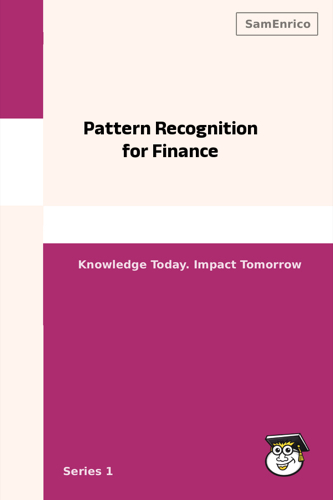
Pattern Recognition for Finance
Spot accounting patterns and ratio relationships f
by Carlos Mari
Spot accounting patterns and ratio relationships for faster analysis.
Formats
About this book
Free sample
Chapter 1: The Analyst’s Blind Spot...–- The quarterly earnings call had just ended. Maria, a seasoned equity analyst with twelve years of experience, stared at her screen. She had run twenty-seven ratios on the retail company’s latest 10-Q. Current ratio? 1.8.
Debt-to-equity? 0.45. Gross margin? 38.2%, up 150 basis points year-over-year. Revenue growth?
12%. Everything looked healthy, even impressive. She typed her “Buy” recommendation and sent it to the portfolio manager.Nine months later, the company restated three years of financials. The stock dropped 74%. The “healthy” gross margin was an illusion created by capitalizing ordinary operating expenses.
The revenue growth was real, but it came from channel stuffing that would reverse violently in the following quarters. Maria had all the data. She had run all the ratios. She had done everything her training told her to do. And she still missed it.This book exists because Maria’s story happens thousands of times every year—not because analysts are lazy or incompetent, but because they are trained to look at the wrong thing in the wrong way.
Traditional ratio analysis treats each number as an isolated fact. Pattern recognition treats numbers as relationships in motion. This chapter will rewire how you see financial statements, moving you from a calculator-wielding technician to a visual detective who spots trouble before the market does.The Hidden Failure of Ratio Analysis Let us begin with a blunt truth that most finance textbooks refuse to acknowledge: calculating a ratio is not analysis. It is arithmetic. Real analysis begins when you compare that ratio to something else—its own history, its industry peers, its relationship with other ratios—and then recognize the shape those comparisons make over time.The problem with traditional ratio analysis is not the ratios themselves.
It is the way analysts use them. Consider the typical approach. An analyst pulls a company’s financial statements, calculates twenty or thirty ratios, compares each to an industry benchmark, and looks for anything that falls outside a “normal” range. If the current ratio is above 2.0, that is good. If debt-to-equity is below 1.0, that is good.
If gross margin is stable or rising, that is good. On the surface, this seems logical. But this method has…
This is the end of the free sample. Get the eBook to keep going. Buy now
Contents
- Chapter 1
- Chapter 2
- Chapter 3
- Chapter 4
- Chapter 5
- Chapter 6
- Chapter 7
- Chapter 8
- Chapter 9
- Chapter 10
- Chapter 11
- Chapter 12
Details
- Author
- Carlos Mari
- Publisher
- SamEnrico
- Language
- English
- Genre
- Non-Fiction, Self-Help, Finance
- Released
- 2026-06-08
- Pages (approx.)
- 157
- Available as
- eBook, Audiobook

Read better in the ZLOADR app
Your eBooks on your phone or tablet. Sign in with your SamEnrico account and start reading.
More by Carlos Mari
 Meth Recovery Exercise Therapy WorkbookCarlos Mari$11.99
 Honey Bee Hive WatchCarlos Mari$11.99
 Parentified Child Liberation WorkbookCarlos Mari$11.99
 Asking For Raise Difficult ConversationCarlos Mari$11.99
 Letting Go of Narcissistic AbuseCarlos Mari$11.99
 CRE Letter of Intent GuideCarlos Mari$11.99
 Resume Immigration PathwaysCarlos Mari$11.99
 Self Esteem For WomenCarlos Mari$11.99
 The Jade Lords of the Olmec: Africa’s Forgotten Architects of MesoamericaCarlos Mari$11.99
 Golden Handshakes: The FIFA Corruption TakedownCarlos Mari$11.99Golden Handshakes: The FIFA Corruption TakedownCarlos Mari$11.99
 Lost Cities of the Pacific: Decoding the Quantum Secrets of YonaguniCarlos Mari$11.99
You may also like
 The OKR for Finance TeamsStratton Jed$11.99
 Financial Confidence HypnosisStanley Jean$11.99
 Workaholism in FinanceMattos Dorathy$11.99
 Workaholism and Financial SuccessLeone Queen$11.99
 Venture Capitalist StressRatcliff Delcie$11.99
 The Financial Presentation GuideClanton Abe$11.99
 Senior Financial Self EsteemCotton Arminda$11.99
 Investment Banker Stress GuideNiles Freeda$11.99
 Financial Stress of Terminal IllnessHouck Mitchel$11.99
 Financial Abundance ScriptsMurdock Eugenie$11.99
 Daily Review for Financial AdvisorsLilley Vanna$11.99
 Remote Financial Advising CommunicationChapin Broderick$11.99