
Non-FictionHealth & WellnessOMAD
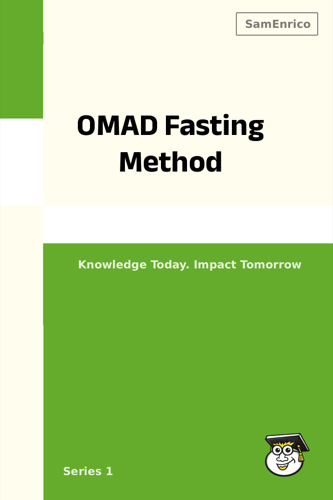
OMAD Fasting Method eBook
Eat one meal a day for maximum fasting benefits.
by Bush Patty
Eat one meal a day for maximum fasting benefits.
Formats
Free sample
Chapter 1: Beyond Three Squares--For most of human history, the question was never when to eat, but whether food was available at all. Your ancestors did not own refrigerators, meal-prep containers, or calorie-tracking applications. They woke before dawn, moved through a world of scarcity, and often walked for an entire day before finding their first—and sometimes only—meal. Breakfast was not the most important meal of the day. It was not a meal at all.
It was a luxury reserved for times of abundance.Somewhere in the past fifty years, everything flipped. We now live in a world where food is not scarce but omnipresent. Grocery stores glow twenty-four hours a day. Vending machines lurk in office hallways. Gas stations sell heated sandwiches at three in the morning.
Drive-through windows never close. Delivery applications bring restaurant meals to your door in under twenty minutes. The problem is no longer finding food. The problem is escaping it.And yet, despite this unprecedented access to calories, we are sicker, heavier, and more metabolically broken than ever before. Rates of obesity, type 2 diabetes, fatty liver disease, and metabolic syndrome have exploded across every demographic.
We are eating more frequently than any generation in history—three meals, plus snacks, plus dessert, plus late-night bites—and our bodies are paying the price. The average American now eats across a fifteen-hour window each day, starting with sweetened coffee before dawn and ending with a late-night refrigerator raid. Our digestive systems never rest. Our insulin levels never drop. Our fat cells never release their stored energy because they never receive the signal that food has stopped arriving.This book offers a radical return to something ancient.
Not a diet. Not a deprivation plan. Not another complicated system of points, portions, or prohibited food groups. The OMAD Fasting Method—One Meal A Day—is exactly what it sounds like. You eat one meal.
In one hour. And then you do not eat again until the same time tomorrow. Twenty-three hours of fasting. One hour of feasting. No calorie counting.
No weighing food. No chasing the latest superfood. Just a simple, sustainable, biologically coherent way of aligning your eating habits with the metabolic machinery your body already possesses.If that sounds extreme, consider this: your body was designed for periods of not eating. Every organ, every hormone, every cellular pathway evolved in an environment where meals were separated by long stretches of hunting, gathering, walking, and waiting. The modern pattern of constant grazing is the true historical aberration.
OMAD is simply a return to normal.This first chapter will establish the foundational definition of OMAD, distinguish it from other popular fasting protocols, introduce the philosophical framework that makes it sustainable, and dismantle the most common myths that keep people trapped in cycles of chronic dieting. By the end, you will understand not only how OMAD works, but why it works so much better than the endless eat-less-move-more advice that has failed you in the past.What OMAD Actually Means Let us begin with absolute clarity. OMAD stands for One Meal A Day. The protocol is a 23:1 schedule—twenty-three consecutive hours of fasting followed by a single one-hour feeding window. That means you consume zero calories for twenty-three hours.
Then, during your chosen one-hour window, you eat one meal. Not three meals compressed into an hour. Not a series of small plates stretched across sixty minutes. One meal, consumed at a relaxed pace, until you are satisfied.The simplicity of this definition is its greatest strength. There are no complicated phase transitions.
No weekly cycles. No alternating low-calorie days. No tracking of eating windows that shift from day to day. You choose the same one-hour window each day—perhaps 5:00 PM to 6:00 PM, or 1:00 PM to 2:00 PM, or any hour that fits your life—and you eat once. The remaining twenty-three hours, you consume only water, black coffee, or unsweetened tea.
Nothing else.This absolute simplicity is what separates OMAD from other intermittent fasting methods. Many of those protocols require constant decision-making. Should I eat now or wait another hour? Is this within my eight-hour window? Did I fast for sixteen hours yesterday or only fourteen?
The mental overhead adds up. OMAD eliminates that overhead entirely. The rule is binary: it is either your eating hour, or it is not. There is no gray zone. No negotiation.
No tracking apps necessary beyond perhaps a glance at the clock.The phrase "fasting" deserves special attention here, because many people misunderstand what it means in this context. Fasting is not starvation. Fasting is the voluntary, time-limited abstinence from caloric intake. It is controlled. It is intentional.
And it is temporary—twenty-three hours of fasting followed by one hour of nourishing, satisfying eating. Starvation, by contrast, is involuntary, prolonged, and characterized by chronic caloric deficiency that leads to muscle wasting, hormonal collapse, and metabolic downregulation. The difference is not subtle. People who fast choose to stop eating temporarily. People who starve have no choice and no end in sight.One critical clarification before we proceed: OMAD does not prescribe a specific caloric floor or ceiling.
You are not required to eat a minimum number of calories, nor are you restricted to a maximum. The guidance is simple—eat until you are satisfied during your one-hour window. For some people, especially those with significant weight to lose, satisfaction may occur at a caloric intake that creates a substantial deficit. For others, particularly active individuals close to their goal weight, satisfaction may occur at maintenance calories or even a slight surplus. Both are acceptable.
The body has sophisticated hunger and satiety signals that, when unclouded by constant snacking and processed foods, do a remarkably good job of regulating intake. Later chapters will discuss troubleshooting for those who experience fatigue or weight loss that is too rapid. But for the foundational definition, know this: OMAD is not a calorie-restriction diet. It is a timing protocol that leverages your body's natural metabolic flexibility.Where OMAD Fits in the Fasting Family Tree Intermittent fasting has exploded in popularity over the past decade, and with that popularity has come a bewildering array of protocols, each with its own acronym, schedule, and set of rules. Understanding where OMAD fits within this landscape will help you appreciate both its uniqueness and its appropriateness for different goals and lifestyles.The most common intermittent fasting protocol is 16:8.
This schedule involves fasting for sixteen consecutive hours and eating all meals within an eight-hour window. For example, you might eat between noon and 8:00 PM, then fast from 8:00 PM until noon the next day. Within that eight-hour window, most people eat two or three meals. The 16:8 protocol is an excellent starting point for beginners because it is relatively easy to achieve—skipping breakfast and moving lunch slightly later often accomplishes the sixteen-hour fast without significant discomfort. Many people find they can adopt 16:8 permanently with minimal lifestyle disruption.
However, because 16:8 includes multiple meals within the eating window, it does not produce the same depth of ketosis or the same peak of autophagy that longer fasts achieve. It is, in many ways, a maintenance protocol or a stepping stone to more extended fasting.The 5:2 diet takes a different…
This is the end of the free sample. Get the eBook to keep going. Buy now
About this book
Details
- Author
- Bush Patty
- Publisher
- SamEnrico
- Language
- English
- Genre
- Non-Fiction, Health & Wellness, OMAD
- Released
- 2026-06-11
- Pages (approx.)
- 141
- Available as
- eBook, Audiobook

Read better in the ZLOADR app
Your eBooks on your phone or tablet. Sign in with your SamEnrico account and start reading.
More by Bush Patty
 HGH and DHEA SynergyBush Patty$11.99
 Injury Comeback Resilience GuideBush Patty$11.99
 Disturbed Sleep After TraumaBush Patty$11.99
 Whistleblower Stress Survival KitBush Patty$11.99
 TM for Documentary FilmmakersBush Patty$11.99
 Slovak Green Tax CreditsBush Patty$11.99
 HGH And SenolyticsBush Patty$11.99
 The Collaboration Space DesignBush Patty$11.99
 The Spice Route's Last Frontier: How a Forgotten Explorer Mapped North America's Hidden Trade SecretsBush Patty$11.99
 The Last Moorish Queen: Love and War in Granada's FallBush Patty$11.99
 The Dancer's Guide to MarineraBush Patty$11.99
 Growing Sanvitalia (Creeping Zinnia)Bush Patty$11.99
You may also like
 Hong Kong Handover 1997Dunn Johnnie$11.99
 Zumba For Postnatal Recovery CourseNeal Christian$11.99
 Zumba for BeginnersLadner Nikia$11.99
 YouTube Comment Mining GuideHumes Pandora$12.99
 Worry Box MeditationCarlin Rudy$11.99
 Workplace Stress MeditationNguyen Lynn$11.99
 Workplace Stress and Sleep RepairHawley Ivory$11.99
 Workplace Perfectionism CureDelaney Jeffry$11.99
 Workplace Injustice Anger GuideWallen Isabelle$11.99
 Work Addiction and Burnout LinkGreenwood Ester$11.99
 Women in Yoga and WellnessBeattie Galina$11.99
 Women in Stand Up ComedyChun Evangeline$11.99