
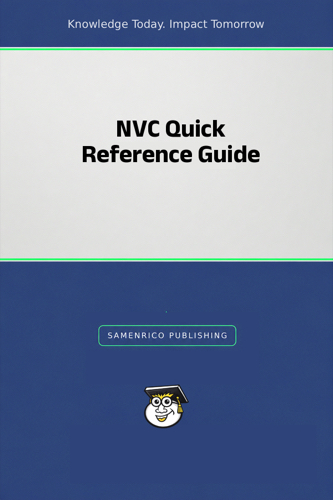
NVC Quick Reference Guide Audiobook
Pocket-sized reminder of Nonviolent Communication'
Pocket-sized reminder of Nonviolent Communication's four components and needs inventory.
Formats
Free sample
Chapter 1: The Four Questions...--–- You are about to learn a sequence of four questions that, when asked in order, can stop a fight in under ninety seconds. This is not a metaphor. This is not positive thinking. This is a neurological intervention. The questions interrupt the brain’s default fight-or-flight response and redirect cognitive resources toward what actually matters: getting a need met without destroying a relationship in the process.Most people communicate in a way that guarantees the opposite of what they want.
They want to be heard, so they speak louder. They want respect, so they demand it. They want connection, so they criticize the very person they are trying to reach. This is not a moral failure. It is a mechanical one.
They lack a structure. This chapter gives you that structure.The structure is called OFNR, which stands for Observation, Feeling, Need, Request. These are the four components of Nonviolent Communication. They are not abstract ideals. They are a sequence of operations, like a recipe or a software protocol.
If you follow the sequence, you will be understood more often than not. If you skip a step, you will trigger defensiveness, argument, or emotional shutdown.Think of OFNR as a map. Without a map, two people lost in the woods will wander further apart, each convinced their direction is correct. With a map, they can stop arguing about who is right and start discussing where they actually are. The four questions are the map.The first question is: What did I observe?
Not what I think about it. Not what I assume it means. Not what the other person intended. Just the sensory data. What did I see?
What did I hear? What did a video camera capture? This is the hardest question for most people because their brains automatically add interpretation. They do not see a person arriving at 7:03 PM. They see disrespect.
They do not hear a voice raised. They hear an attack. The first question forces you to strip away interpretation and return to observable fact.The second question is: How do I feel? Not what do I think about them. Not what do I believe they did wrong.
Not what would be fair or unfair. Just the emotion in your body right now. Sad, scared, angry, joyful, lonely, grateful, frustrated, tender. One word. If you cannot reduce it to one…
This is the end of the free sample. Get the Audiobook to keep going. Buy now
About this book
Details
- Author
- Hines Alfredo
- Publisher
- SamEnrico
- Language
- English
- Genre
- Non-Fiction, Self-Help, Reference
- Released
- 2026-06-11
- Pages (approx.)
- 124
- Available as
- eBook, Audiobook

Listen in the VoxFlicks app
Audiobooks and audio dramas wherever you go. Sign in with your SamEnrico account and press play.
More by Hines Alfredo
 Baby and Toddler Disaster KitHines Alfredo$11.99
 The Tear Gas DecisionHines Alfredo$11.99
 Tenzing Everest Boots DebateHines Alfredo$11.99
 Work Addiction in FinanceHines Alfredo$11.99
 Intention vs Impact DistinctionHines Alfredo$11.99
 Cash Flow for Pet BoardingHines Alfredo$11.99
 Overachievers Recovery WorkbookHines Alfredo$11.99
 Cleopatra's Naval Defense ManualHines Alfredo$11.99
 The Last Voyage of the SS Great Eastern: A Titan’s FallHines Alfredo$11.99
 The Gold Standard: How Western Medicine Conquered DiseaseHines Alfredo$11.99
 Silent Sovereigns: The Puppet Kings of the Silk RoadHines Alfredo$11.99
 Newsletter Monetization StrategiesHines Alfredo$11.99
You may also like
 Loneliness FAQ GuideAmato Marva$11.99
 Flow FAQ GuideHughey Tristan$11.99
 Children's Dream FAQColburn Corrin$11.99
 Improv FAQ GuideGreiner Akiko$11.99
 Emotion Regulation HandoutsFerrer John$11.99
 Creative Block FAQWeber Viola$11.99
 Priority Cheat Sheet GuideBeasley Lou$11.99
 Drug Dependency FAQHawley Ara$11.99
 Envy FAQ GuideMeeker Marya$11.99
 Divorce FAQ GuideBurchfield Allie$11.99
 Walking Meditation FAQ GuideUtley Elna$11.99
 The Conversation Starter BibleBobo Jeanice$11.99